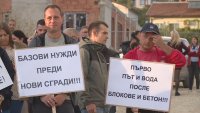
The Bulgarian Constitutional Court ruled that the Parliament’s decision to extend the moratorium on agricultural land purchases by foreign nationals until 1st January 2020 did not comply with the Constitution. According to the Constitutional...
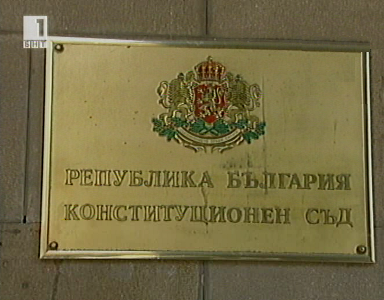
The Bulgarian Constitutional Court ruled that the Parliament’s decision to extend the moratorium on agricultural land purchases by foreign nationals until 1st January 2020 did not comply with the Constitution.
According to the Constitutional Court, the decision is not compliant with the Constitution and Bulgaria’s treaty of accession to the EU. According to the treaty within seven years from the date of accession, all the restrictions laid down in its legislation regarding the acquisition of agricultural land by nationals of EU Member States should be removed.
On 22 October 2013, the Bulgarian Parliament voted to extend the moratorium on agricultural land purchases by foreign investors until 2020.
Prime Minister, Plamen Oresharski and his deputy Zinaida Zlatanova did their best to explain that any extension of the moratorium would result in a review of the pre-accession treaty as well as new negotiations with the other EU member states. Bulgaria’s accession treaty did not provide for any possibility to extend the ban on land sales.
According to the agreement to join EU in 2007, Bulgaria’s moratorium on foreign nationals’ purchase of arable land was due to expire on 1st of January 2014 and any violation of the deal would lead to EU infringement procedures.
After prolonged debates in Parliament however, on 22nd October 2013, the MPs from the centre-left Bulgarian socialist Party (BSP), the centre-right Citizens for a European Development of Bulgaria (GERB) and from the nationalist ‘Ataka’ voted in favour of extending the ban. The motion to extend it was proposed by the nationalist ‘Ataka’ party leader, Volen Siderov.
The arguments for wanting the ban extended were the low price of land in Bulgaria and fears that a surge in foreign demand would damage Bulgarian farmers’ ability to buy land and would push them out of the market. Another argument was that the end of moratorium would reduce their competitiveness in Europe, because they would be forced to rent out land or to reduce the cultivated area.
From the 240-seated Parliament, 171 MPs voted in favour, 38 against (34 from the party ‘Movement for Rights and Freedoms’ (MRF) and 4 from BSP) and 12 from BSP abstained.
After the end of the debates, the leader of the MRF party, Lyutvi Mestan, stated that his party would challenge the decision in the Constitutional Court.
On 1st of November 2013, MPs from MRF and BSP submitted a request to the Bulgarian Constitutional Court, asking the court to pronounce its judgment on whether the decision to extend the moratorium complied with the Constitution or not.
The MPs’ populist decision resulted in accelerated drafting of amendments to the Law on Ownership and Use of Agricultural Land, concerning the transactions with foreign nationals. The amendments envisaged some limitations.


 “Cities and Villages Have Come to Resemble Las Vegas”: PM Radev Announces Ban on Casino Lights and Gambling Advertising
 ‘John Atanasov Awards’: How is Bulgaria Building Its Next Generation of IT Talent?
 Bulgaria Marks Independence Day: Veliko Tarnovo Is the Centre of Official Celebrations
 Протест и контрапротест пред Столичната община за украинското знаме и даренията на Терзиев за групата от „Петрохан“ (СНИМКИ)









 Чуй новините
 Подкаст