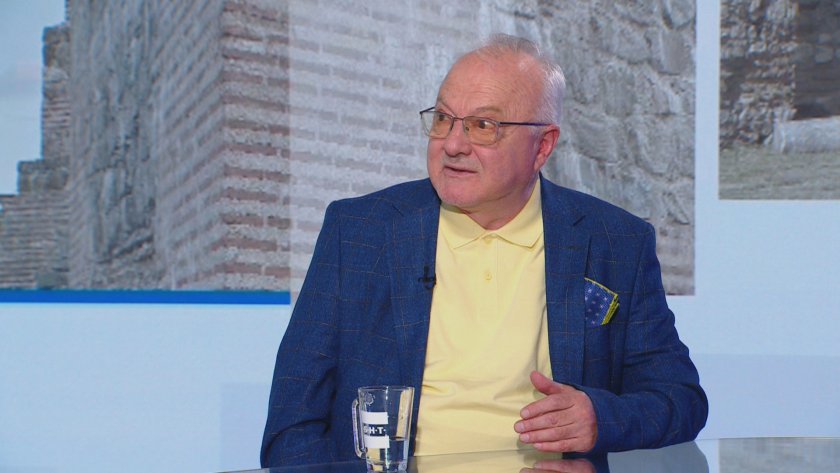
Byzantine chroniclers described Bulgarian Tsar Samuil as “invincible in strength and unsurpassed in courage” – a ruler who spent 40 years fighting one of the best-known emperors in Constantinople, Basil II. The emphasis on his tragic death following the blinding of his soldiers became a recurring theme in the 19th and 20th centuries and gradually became established in the public consciousness, historian and Sofia University lecturer Prof Georgi Nikolov said on a special edition of BNT's Oshte ot Denya (More from the Day) programme on September 29.
Historic Return: Tsar Samuil’s Remains Will Be Returned to Bulgaria after More than 1,000 Years
Interestingly, Samuil was short for his time, probably no taller than 1.55 metres, the professor added.
Prof Georgi Nikolov, medieval historian and lecturer at Sofia University “St Kliment Ohridski”: “A short man with a small face, as shown by the remains of the skull, with large eye sockets, a prominent nose, European features but also Caucasian elements.”
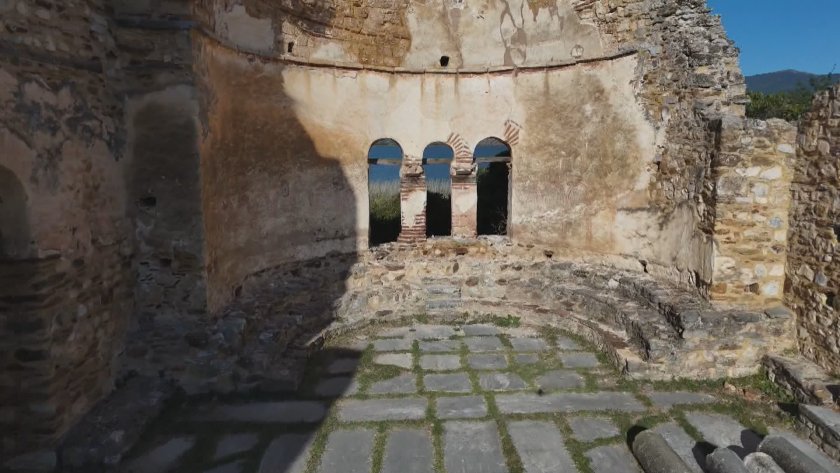
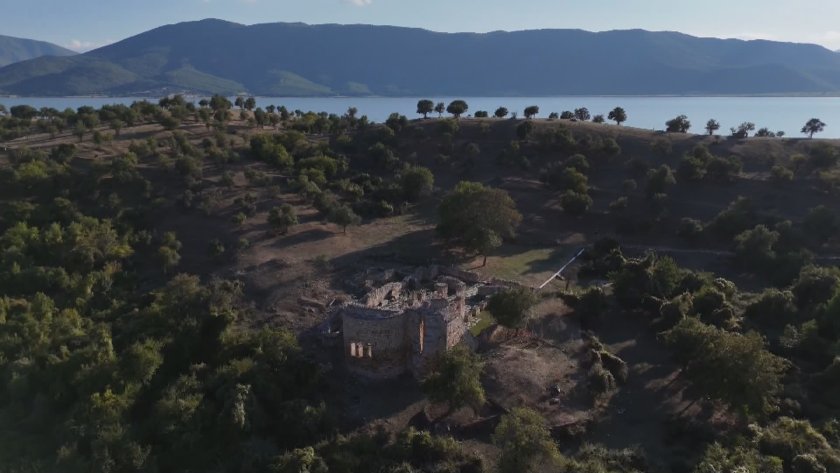
Although it has officially been announced that Tsar Samuil’s remains are being returned to Bulgaria, the scientific evidence is circumstantial, Georgi Nikolov said.
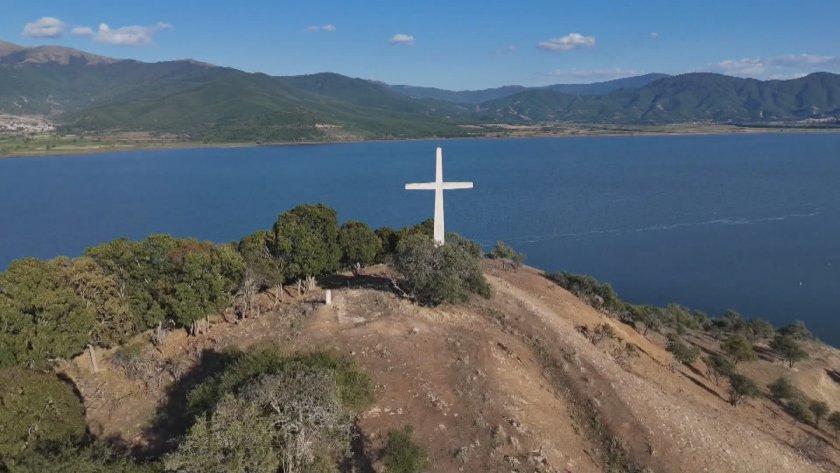
Prof Georgi Nikolov, medieval historian and lecturer at Sofia University “St Kliment Ohridski”: “If anyone expects an inscription saying, ‘Here lies Samuil’, there is no such inscription. We know from many sources that Prespa was his favourite residence. The first piece of evidence is that he brought the relics of St Achilleios from Larissa and placed them in the basilica he built, where his tomb is now located. It is no coincidence that these four tombs discovered by Prof Moutsopoulos are in the southern nave, next to the wall, and we believe that one of them is Samuil’s. The strongest evidence he presents is the damage to the skeleton. But what is more important for historians is a written account. It comes from the Byzantine historian Michael Attaleiates, who, describing the Battle of Kleidion, says afterwards that ‘Samuil fled in fear and died on the marshy island of Prespa’. Taken together, all these facts provide an argument that Samuil may have been buried there. When we add the gold-woven fabric found beneath the skeleton, all of this indicates that this is indeed the tomb of Tsar Samuil.”
He added that Samuil’s story has captured the imagination of people far beyond Bulgaria. A Mexican novel entitled 'The Blind Army', which won the Mario Vargas Llosa Prize, is devoted to the tragic fate of the ruler and his soldiers.
“– Was it with this novel that he won the prize?
Yes.
– With The Blind Army?
Yes.
– With the story of Samuil?
Yes. Exactly. This is the novel in which the main characters are the blind men, the blinded soldiers, who bear names such as Kubrat, Alcek and Kosara – Proto-Bulgarian names.”
The novel was written over a period of 20 years. The author had initially lacked the confidence to write it, but a meeting in Mexico with people who were blind changed his mind.
“He spoke to them and asked them how they lived. Usually, we tend to look at them with pity, as people who will supposedly disappear tomorrow. But he told me that they were very vital. They were thinking about what they would do the next day, each in their own profession, and that is precisely what he incorporated into the novel The Blind Army.”
Once Bulgaria receives the ruler’s remains, they should be examined by anthropologists to establish whether there is a connection with the remains found in the other two sarcophagi, which are believed to belong to his son, Gavril Radomir, and his nephew, Ivan Vladislav, Prof Nikolov said.
The need for modern research was also highlighted by Dr Georgi Sengalevich, an assistant at the National Archaeological Museum.
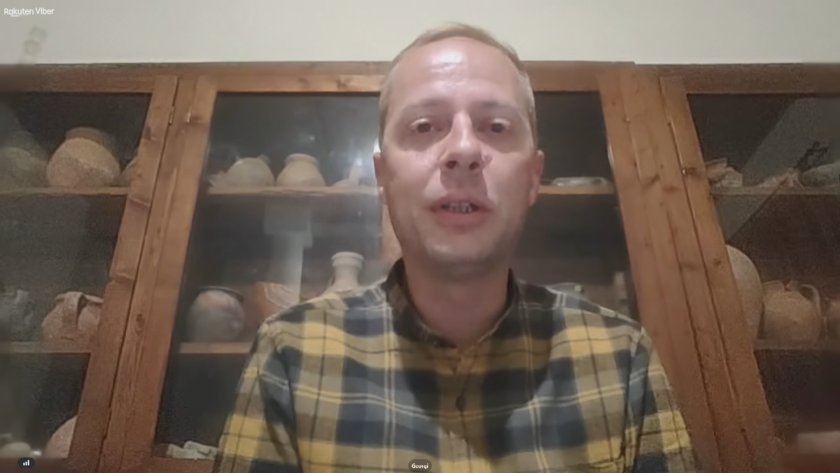
Dr Georgi Sengalevich, archaeologist at the National Archaeological Institute and Museum, Bulgarian Academy of Sciences: “Of course, receiving these skeletal remains gives Bulgarian scientists the opportunity to conduct anthropological and perhaps genetic research on them, in order to establish whether there is a family relationship between Samuil, who is believed to have been buried in Tomb Gamma in the southern nave of the basilica in Prespa, and the other individuals buried there, whose remains will also be received.”
Georgi Sengalevich also highlighted another important outcome of the memorandum signed today:
“Without a doubt, the return of the remains of a Bulgarian ruler – perhaps the only medieval Bulgarian ruler for whom we can say with a high degree of certainty that we know where he was buried – will also be a resounding slap in the face to all kinds of Macedonist claims and encroachments on Bulgarian medieval history.”






 Чуй новините
 Подкаст