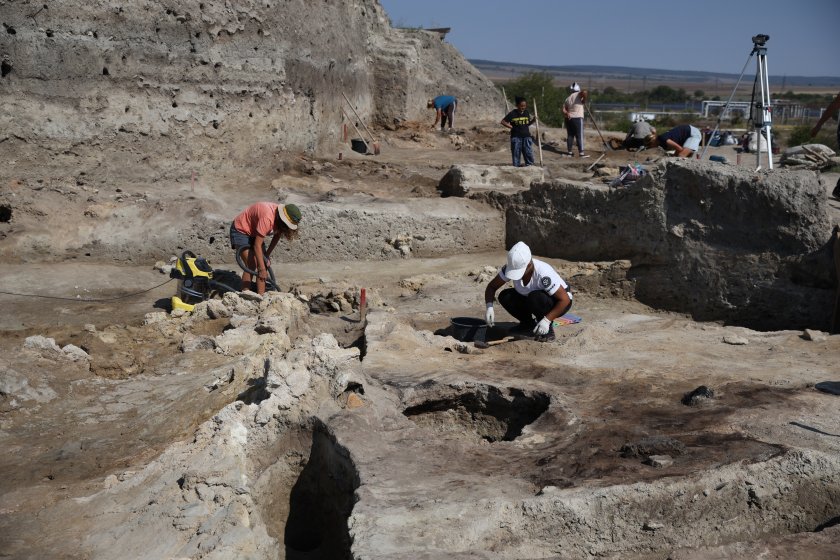
Evidence has been found this year that beer was produced at “Provadia-Solnitsata” (5600–4350 BC), Europe’s oldest salt-producing and urban centre, said Academician Vasil Nikolov, head of the excavations. He presented journalists with the finds uncovered by his team during this summer’s archaeological season.
Prehistoric Complex "Provadia - Saltworks" Received the European Heritage Label for 2025
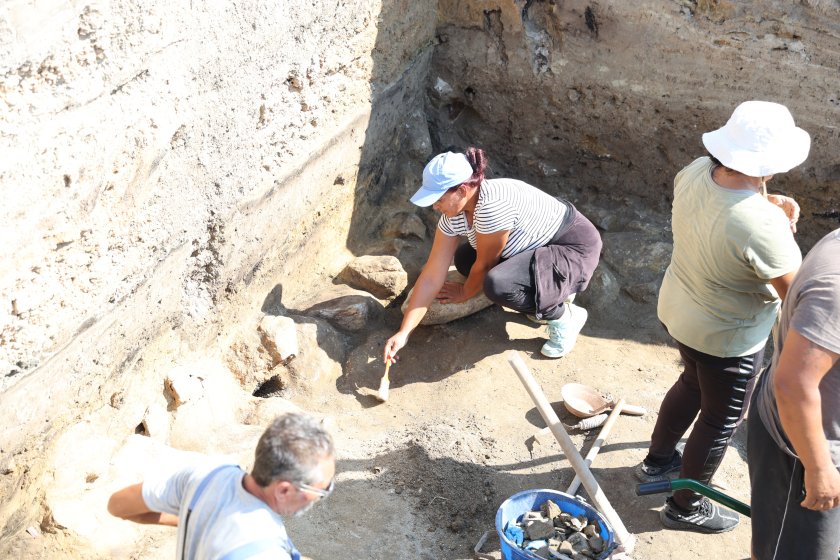
According to him, this was probably the earliest production of the drink in what is now Bulgaria, and it may even have been the earliest in all of Europe.
A split vessel was discovered containing grains of two-grained emmer wheat that had sprouted in a way that produces malt.
It was previously thought that beer production began during the Bronze Age in the Near East and Egypt, but we now have the first evidence that beer was being made here around 4,500 BC, Nikolov said.
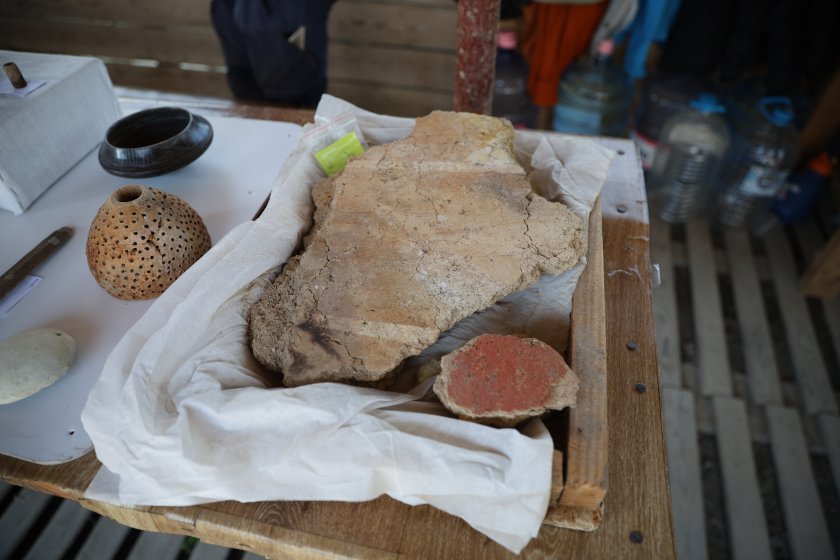
He recalled that all the houses discovered at the site were two or three storeys high. People stored their wealth – namely salt – on the first floor, while the household lived on the second.
This year, fragments of plaster bearing painted decoration have been found in almost all the houses being excavated, Nikolov added. According to him, different colours were used for the wall paintings, but it is impossible to say what they depicted. In one house, a wooden post covered with plaster and red paint was discovered, but it is in poor condition and the original design cannot be established.
As the people living in the settlement were wealthy, they could afford to hire craftsmen to build multi-storey houses and decorate them, the archaeologist said. Workers from nearby villages were also employed in salt production, he added. Around 400 people, including children, lived in the fortified settlement, Nikolov noted, meaning they could not have managed salt production, trade, food supplies and maintenance of the fortifications on their own. This indicates that there was a hired workforce.
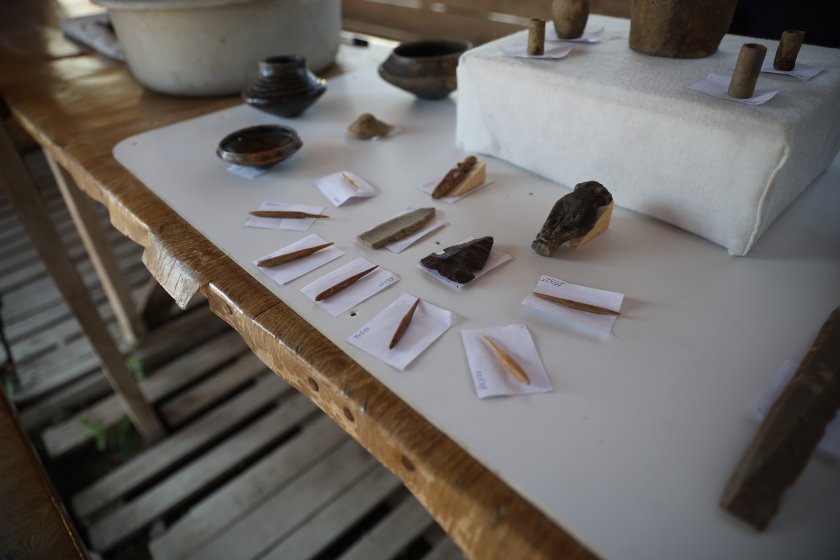
The Late Chalcolithic was a period of rich material culture, and these people were wealthy, Nikolov explained. He showed a completely preserved vessel discovered this year that had been used as a mould for salt. Smaller moulds were also found again, which ancient people used to produce salt ingots that were purchased by customers.
According to Nikolov, the moulds had different “denominations” and were in use between 4700 and 4350 BC.
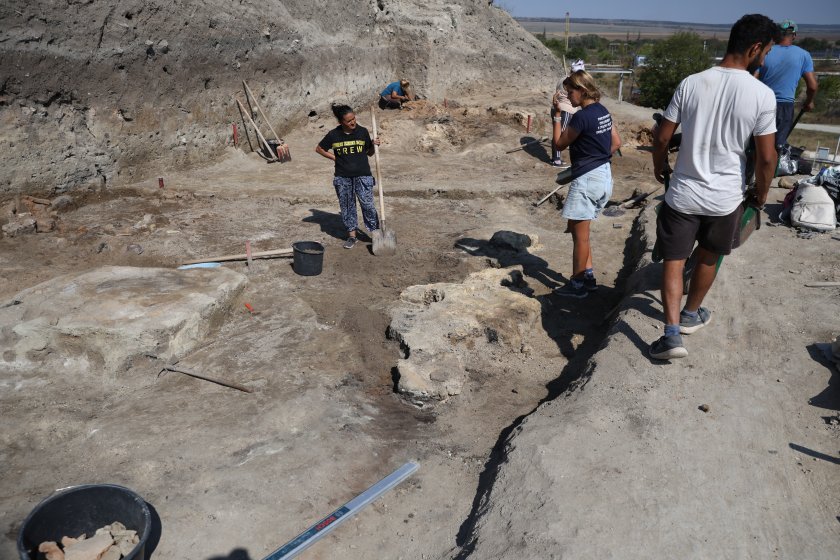
Among this summer’s finds is an unusual polished stone with two holes, flat on one side and bulging like a hemisphere on the other. Similar finds from the Late Chalcolithic have been discovered in southern Bulgaria, but they are rare and do not have holes, Nikolov said. According to him, it is believed that these unusual stones were used to make ceramic vessels because people at the time did not know the potter’s wheel, yet they produced finely crafted and richly decorated pottery.
The head of the excavations also showed an unusual vessel resembling a colander. He believes, however, that the ancient inhabitants did not use it for straining, but for churning butter.
Many arrowheads were also found again during the season, providing evidence that those who lived at Solnitsata had good reason to build the first fortified walls in Europe. A spearhead was also discovered, as well as a flint-pointed object that was probably a dagger for close combat.
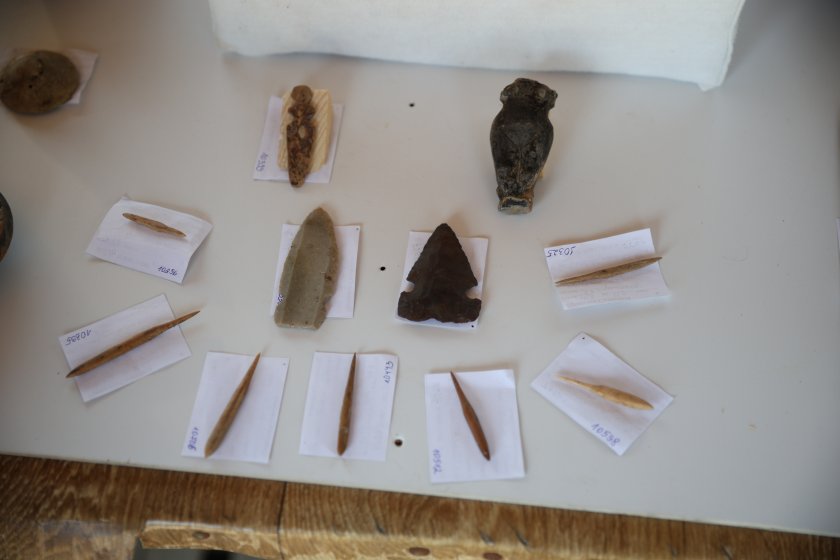
Alongside evidence of military aggression, archaeologists again found bone and ceramic figurines that shed light on the religious and mythological system of the ancient inhabitants.
Nikolov also presented details of discoveries linked to the residence of a Thracian aristocrat, which was effectively built on top of the prehistoric settlement. The prehistoric settlement mound is around nine metres high, while the burial mound above it is about 13 metres high. The chronological gap between the two parts is around 4,300 years.
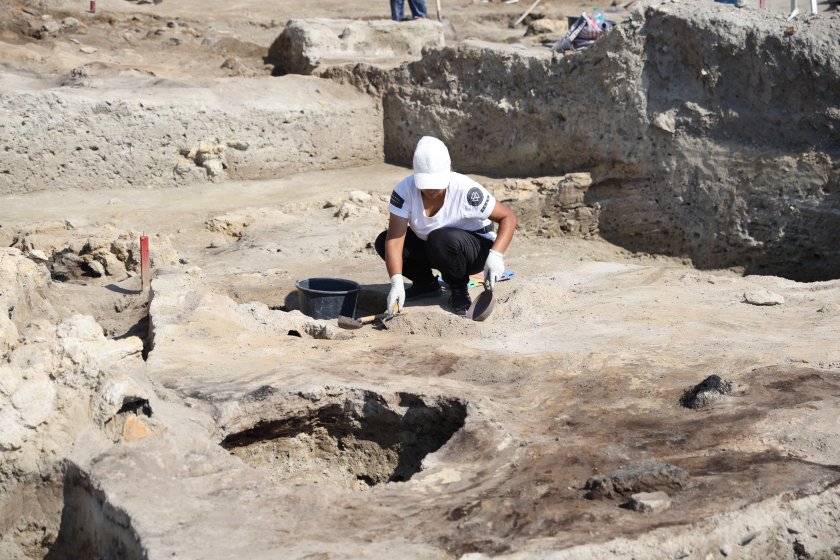
Nikolov said this year’s research into the Thracian period at the site showed that the aristocrat had divided the mound with a massive wall, part of which has been uncovered. It has a high stone foundation topped with unfired bricks. There was also a high gateway, which archaeologists have almost completely uncovered. A house was found on one side of the wall, along with a grave, part of which is still in the unexcavated section of the mound. The other part of the area is covered with ritual pits.
PHOTOS: BTA
A white coating made of a special fine clay and kaolin was also discovered directly on the mud-brick wall, bearing painted decoration. Archaeologists will study the secrets of these decorations in the coming years, as there are currently no parallels for the wall painting, which dates from the first century BC.
While uncovering the grave cut into the remains of the buildings associated with the Thracian aristocrat, archaeologists discovered that one of the stones bore drawings. The stones had been brought from elsewhere. The stone bearing the engravings had been placed vertically, with the drawings on one side. According to the archaeologist, the artist probably also used a knife to carve them. A deer and two does can be seen, while below them there is another unclear image that could be a horse.
***
Solnitsata ("The Saltworks") was a prehistoric town located near the present day town of Provadia, Varna district, not far from the Bulgarian Black Sea coast. It is believed by archaeologists to be the oldest town in Europe. Solnitsata ("The Saltworks") was a fortified stone settlement - citadelle, inner and outer city with pottery production site and the site of a salt production facility approximately six millennia ago.


 Румънски изтребител F-16 е свалил два дрона в териториалните води на страната










 Чуй новините
 Подкаст