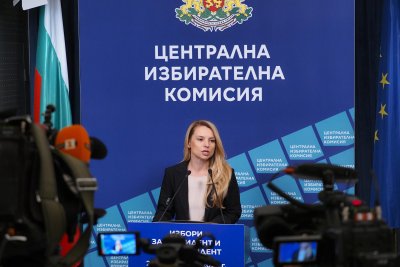
Following the European Central Bank's decision yesterday, June 11, to raise its key interest rate by 0.25 percentage points to 2.25%, questions have emerged over whether the move could lead to a cooling of lending activity and the property market.
Boyana Kostadinova recently took out a consumer loan to purchase a car and currently pays a monthly instalment of around €70. News of the interest rate increase has made her more cautious about taking on future borrowing.
"It is very important for people to know whether their interest rate is variable or fixed. In my case, it is fixed under the contract, so there should not be any issues from that perspective. Life is unpredictable, and if we decide to take out another, larger loan in the future, I will pay much closer attention to the terms and conditions," she said.
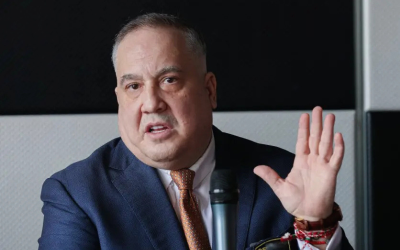
However, Bulgarian commercial banks remain highly liquid, and the ECB's 25-basis-point increase is unlikely to have a short-term impact on lending rates in Bulgaria, according to financial analyst Zdravko Pirinliev.
"For there to be a significant adjustment in what borrowers pay, the increase in interest rates would need to be much larger – more than 1% to 2%. The ECB's actions influence consumers mainly through the Euribor rate, which depends entirely on the minimum interest rate set by the European Central Bank. Euribor is the rate at which banks lend to one another on the interbank market. In Bulgaria, however, the situation is somewhat different because of the way banks operate here," he explained.
At present, commercial banks in Bulgaria typically use a so-called local index for mortgage loans. Interest rates remain around one percentage point lower than those in eurozone countries.
In the longer term, however, decisions taken in Frankfurt could contribute to a slowdown in lending and, consequently, in the property market, according to financial analyst Martin Tarpanov.
"The cost of borrowing will rise. As interest rates increase, credit becomes more expensive and therefore less accessible to businesses and households. It is unlikely that mortgage and consumer loan rates will rise sharply, and even if they do, the process would take considerable time – between six and nine months – and would occur at a much slower pace," he said.
The Bulgarian National Bank continues to report monthly growth in mortgage lending, although growth in deposits has begun to slow.
The value of mortgage loans issued in Bulgaria has increased by nearly one-third over the past year, but trends in monetary statistics are beginning to shift.
Household loans in Bulgaria continue to rise, with data from the Bulgarian National Bank (BNB) showing that they exceeded €30 billion at the end of April. On an annual basis, they grew by 20.8%.
At the same time, deposits also continued to increase. However, their annual growth rate has begun to slow compared with that of lending, rising by 19.9% year-on-year.







 Чуй новините
 Подкаст