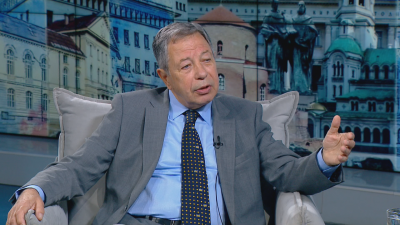
Ageing and diseases can wait - artificial intelligence can help delay them in time, says programmer Ivan Tsenov. He is one of the participants in the conference "Artificial Intelligence and Cybersecurity", organised by the Confederation of Employers and Industrialists in Bulgaria.
Imagine a digital doppelganger of yourself being tested for all the diseases that could happen to you in the future and, through individual, easy-to-implement guidelines, helping you avoid or delay them for as long as possible. This is now entirely possible with the development of artificial intelligence.
"We take a lot of information from the human body, DNA, epigenetics, and all sorts of other parameters, and we can test how those parameters will evolve over time to optimise the process, which in this case is aging. In this way, we can help everybody age more slowly and healthily," says Ivan Tsenov.
With the help of artificial intelligence, the risk of chronic diseases such as diabetes, cancer, multiple sclerosis and dementia can be significantly reduced.
"We detect the risk and prevent it before it happens, which also saves a lot of finances over time, because we all only realise we are sick when we get symptoms, and then it is too late and costs much more to get well ourselves," says Ivan Tsenov.
With prevention based on AI results, the pressure on the healthcare system can be reduced. According to the National Institute of Statistics, households in the country spent 23% more on healthcare in 2022 compared to a year earlier.
Over the past decade, the rise has been two-fold, with healthcare tending to continue to take up an increasing share of household budgets.


 Sheep and Goat Pox Outbreak Confirmed by the Food Safety Agency at a Farm near Shabla
 Bulgarian Scientists Contribute to Uncovering the Molecular Mechanisms Behind DNA Organisation in the Cell Nucleus
 'Pirogov' Emergency Hospital: We Took All Necessary Measures to Save the 10-Year-Old Child from Etropole
 10-Year-Old Child Dies at 'Pirogov' Hospital: Prosecutors Investigate Possible Negligence









 Чуй новините
 Подкаст