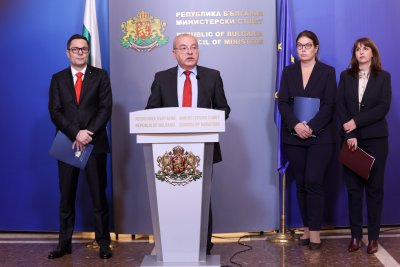
he incidence of acute respiratory infections is rising rapidly, with an increasing number of confirmed flu cases. The A(H1N1) strain is currently dominant, while COVID-19 is also showing an upward trend. Most flu vaccines have now been delivered, and there is still time to get vaccinated. This was explained by Prof Iva Hristova, Director of the National Centre of Infectious and Parasitic Diseases (NCIPD), during an interview on the Bulgarian National Television programme 'The Day Begins' on November 16.
In the latest reported week alone, around 2,600 cases of acute respiratory infections were recorded, compared with 1,600 the previous week. The incidence rate rose from 48 to 75 cases per 10,000 people. By comparison, the peak recorded last year was 150 cases per 10,000.
"The incidence of acute respiratory infections is undoubtedly increasing. It is rising quite rapidly. There were 2,600 cases in the previous week, compared with 1,600 in the week before that. So we are seeing a rapid upward trend," Prof Hristova explained.
Parainfluenza viruses and rhinoviruses are currently predominant, but an increasing number of influenza infections are also being confirmed. COVID-19 is also spreading, with cases almost doubling from one week to the next. The specialist recommends consulting a GP if symptoms develop, as different viral and bacterial infections often present with similar symptoms.
"Influenza infections can also be confused with other illnesses. The symptoms are quite similar. Influenza-like illnesses encompass a very broad range of conditions, both bacterial and viral. This is important when it comes to treatment. An experienced doctor, supported by sound clinical assessment and appropriate tests, is key to successful treatment," said the NCIPD director.
Prof Hristova also urged people to take extra care during the cold weather:
"It is important to make sure that children's feet are kept warm at all times. Secondly, they should avoid getting cold around the head and neck. We tend to underestimate the risks of open necklines and scarves that hang loosely in front, leaving the neck exposed. It is important to keep the throat warm when it is cold outside," she advised.
The A(H1N1) influenza strain is expected to be the predominant one this year, in contrast to last season, when A(H3N2) was dominant. In the latest reported week alone, eight cases of A(H1N1), two of A(H3N2) and one case of influenza B were confirmed.
"At present, A(H1N1) is the dominant strain, unlike last year, when A(H3N2) prevailed. In the latest week, we confirmed eight cases of A(H1N1), compared with two of A(H3N2) and one case of influenza B. Nevertheless, all these strains are included in the vaccine, so anyone who has the opportunity should get vaccinated," Prof Hristova said.
Young children, older people and patients with chronic conditions are at greatest risk of complications. Medical attention should be sought if there is no improvement after the first few days, the cough becomes more severe or the fever persists.
Most flu vaccines have already been delivered, particularly those supplied under the national vaccination programme. According to Prof Hristova, there is still time to get vaccinated, as it takes approximately two weeks for immunity to develop.
"Cases are increasing, but numbers are still low. Now is an extremely good time to get vaccinated, as most of the vaccines have already been delivered. It is certainly not too late. It takes two weeks for immunity to develop, which is more than enough time. Influenza activity is currently increasing, but remains at a very low level. There is still ample time to get vaccinated this week or next week," she explained.
Even if someone contracts the virus during the period when their body is developing immunity following vaccination, the vaccine can help make the infection milder. Simultaneous infection with influenza and COVID-19 is possible, although relatively few such co-infections have been recorded so far. According to Prof Hristova, they account for less than 10% of the cases tested.
"There are quite a number of cases, and this is something we are currently investigating. The proportion of co-infections is not particularly high at present, but during the peak of COVID-19 and the peak of influenza, co-infections are extremely common. There are, of course, many cases involving both influenza and COVID-19. They account for less than 10% of all the cases we have tested," she explained.
When viral infections occur simultaneously, the illness can be more severe, and treatment depends on the pathogens identified. Where specific antiviral treatment is available, it is administered alongside the necessary medication to control inflammation and relieve symptoms. Prof Hristova advises against the indiscriminate use of immune-boosting supplements, recommending instead a balanced lifestyle based on sufficient sleep, a healthy diet and regular physical activity.
The NCIPD director also commented on the spread of measles in Bulgaria. The number of cases has now reached around 650, placing Bulgaria first in Europe. Although the epidemic is gradually being brought under control, new cases continue to be reported.
In the districts of Vratsa, Pleven and Lovech, which initially recorded the highest numbers of cases, infections are declining. In recent weeks, however, new cases have been reported in Sofia, primarily among children under the age of five, almost all of whom are unvaccinated.








 Чуй новините
 Подкаст