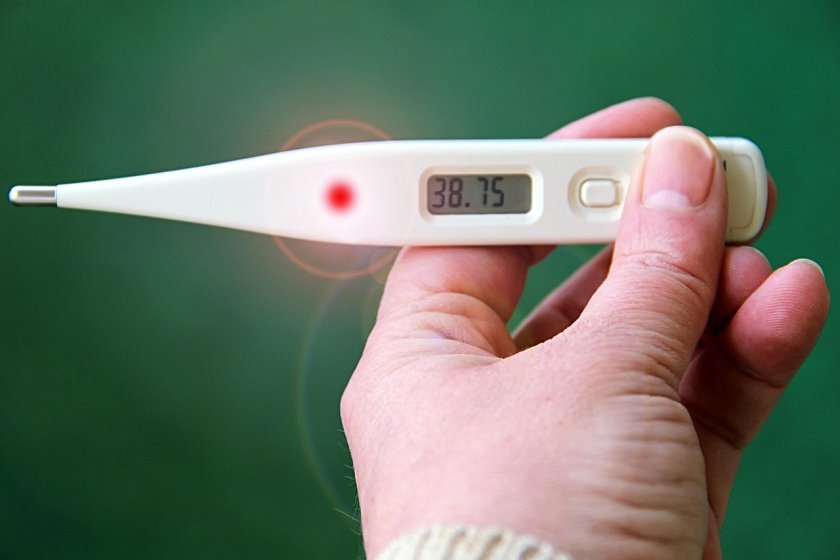
Experts warn - self-medication can worsen our condition

The flu wave is beginning to be felt across the entire country, with a growing number of people seeking medical help for severe flu-like symptoms. Specialists warn that influenza is now clearly taking hold and that self-medication can worsen patients’ condition.
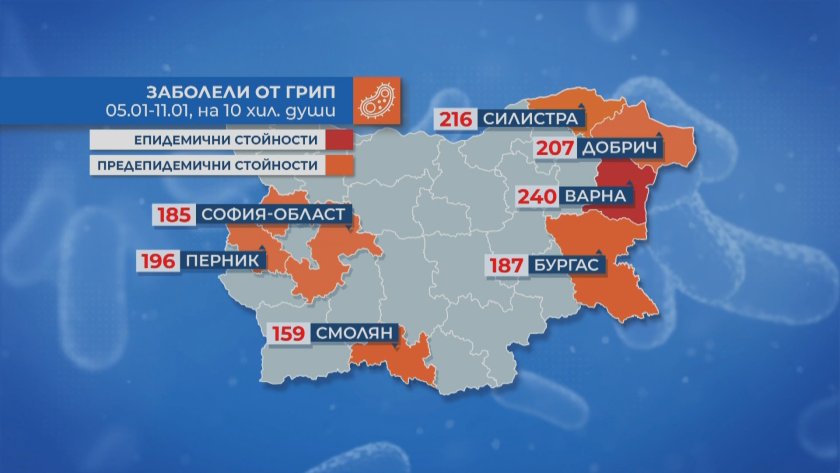
A flu epidemic has been declared in Varna starting tomorrow, while several other regions are in a pre-epidemic phase. The highest infection rates have been recorded in Burgas, Dobrich and Silistra. In response, the outgoing Minister of Health has met with the directors of the regional health inspectorates.
Children under the age of 14 are the most affected by the current flu wave, which has put parents on heightened alert.
Deyana Ilieva, a parent, said:
“This is something that happens every year. We can get infected anywhere – on a walk, at the playground or at school – so we take some basic precautions. We hope it will pass without serious problems.”Dr Petko Zhelyazkov, Chairman of the Union of General Practitioners in Burgas, explained:
“The flu is definitely coming. In Bulgaria, a new mutated variant of the influenza virus, AH3N2, is dominant. It spreads slightly faster than usual because its altered genetic structure partially evades the population’s immune protection.”
Doctors advise people to stay at home during the first 24 hours after symptoms appear and then contact their GP. They warn that self-treatment and excessive use of immune stimulants can be harmful.
Prof Dobroslav Kyurkchiev, Head of the Laboratory of Clinical Immunology at Ivan Rilski University Hospital, said:
“First, tests should be carried out, and only on the basis of the results should it be decided whether treatment is needed, how much, or whether it is needed at all. Overloading the body with immune stimulants increases the risk of an unfavourable course of the illness because of a possible overreaction of the immune system.”
Several regions are already in a pre-epidemic situation, including Burgas.
Dr Daniela Atanasova from the Regional Health Inspectorate in Burgas said:
“We take into account data on hospital admissions, bed occupancy, and school attendance. It is not just about the raw figures; all these indicators matter when deciding whether to declare a flu epidemic.”
In Varna, which was the first city to declare a flu epidemic, pupils will switch to online learning from tomorrow. The measure is expected to limit the spread of infection without disrupting the educational process.
Outgoing Education Minister Krasimir Valchev:
“There are problems when there is no electricity, as in the case of Ruse. That is why we did not introduce distance learning there. Every year, the peak of the flu wave coincides with the end of the school term. Teachers manage to finalise students’ grades, whether in an online environment or in another way.”
He added that it was possible more schools would move to online learning if the flu epidemic continued to expand.
Doctors have also warned of shortages of rapid flu tests at the height of the outbreak.
Dr Petko Zhelyazkov:
“Rapid flu tests have started to disappear. This makes diagnosis and treatment more difficult.”Pharmacists, however, say the issue is more isolated than widespread.

photos: illustrative
Vasil Hodzhev, a board member of the Bulgarian Pharmaceutical Union, said:
“There is increased demand for all products related to flu prevention and treatment. At the moment we have sufficient quantities, though I cannot speak for the entire pharmacy network.”
Health authorities say they will continue to monitor the situation closely across the country.


 Scientists in Plovdiv Develop Plant-Based Combination to Support Metabolic Health
 Three Doctors Charged Over Death of a 6-Year-Old Child in Plovdiv To Stand Trial
 Как ще се гласува в чужбина? МВнР с подробности за организацията на вота
 Йотова от Ню Йорк: След декларациите е време за конкретни решения за постигането на мир










 Чуй новините
 Подкаст