Large floating debris visible on the surface is only part of the plastic invasion affecting the lower reaches of the Danube. Plastic waste becomes trapped in shrubs and tree roots, breaks down into smaller fragments, settles in sediments and continues its journey along the riverbed. But where does it actually come from, and who are the biggest polluters?
BNT journalists Milen Atanasov and Bilyana Boneva, together with their colleagues from the Romanian public broadcaster TVR, Alina Salanți and Ana-Maria Stancu, set out in search of plastic pollution along the Danube. The second part of their investigation takes them to the Persina Nature Park, aboard the research vessel Rexdan, to beaches in Romania and near the port of Ruse.
The Crackle of Pollution
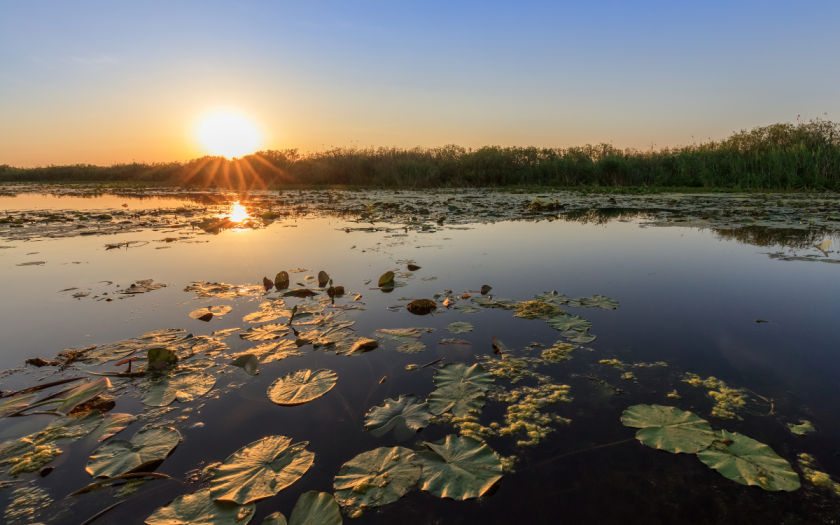
Spring fills the air of the protected Kaikusha wetland with the fluttering of wings, the buzz of insects, birdsong and the rustle of grasses. Yet a strange crackling sound disrupts this natural idyll.
The unsettling noise comes from sacks of plastic bottles collected by volunteers during the latest clean-up campaign in the marshland, located around five kilometres south-west of the Danube town of Belene.
The same sound can also be heard from nearby reed beds. At the base of the reeds lie piles of discarded plastic bottles, expanding, contracting and cracking under the heat of the sun.
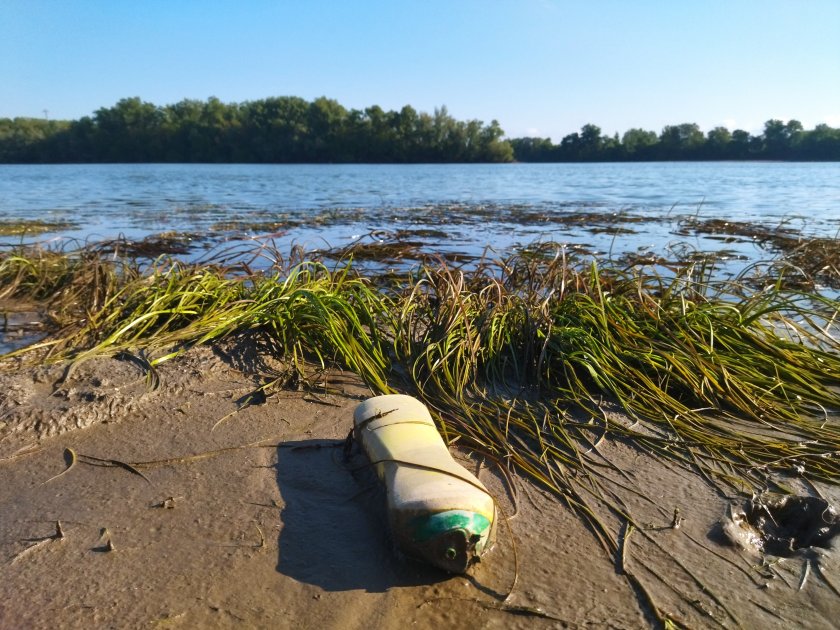 Photo: Plastic waste on the beach in the town of Belene, opposite Magarets Island
Kaikusha is a wetland that offers a glimpse of the floodplains that once lined the Danube. Located five kilometres south-east of Belene, it forms part of the vast Persina Nature Park, one of the wildest areas along the lower Danube and home to around 1,100 animal species.
It is easy to understand why ecologist Stoyan Mihov chose to settle in Belene 25 years ago. Protecting and restoring the Danube's wetlands has become his life's mission.
In recent years, Mihov and park staff have also been studying the reproduction of the Danube shad, a migratory fish species that enters the river from the Black Sea to spawn along the lower Danube. Finding its eggs, Mihov explains, is like searching for a single drop of water in the river.
"Their eggs are extremely light. They float in the water and are completely transparent. The fish developing inside the egg is transparent. Its eyes are transparent. Everything is transparent. This is a natural adaptation that helps protect it from predators.
"We use fine plankton and ichthyoplankton nets to collect these eggs and count them. Although the net has a small diameter, it captures a wide range of natural and artificial materials.
"Unfortunately, in recent years we have increasingly found plastic particles and other forms of pollution caused by human activity in our samples alongside the eggs.
"Sometimes we find no eggs at all, but we find more plastic in the sample instead."

Photo: Searching for Danube shad eggs near the Belene Archipelago.
Time seems to slip away as we watch herons and cormorants from the research boat used by ecologist Stoyan Mihov and biodiversity expert Veselin Koev to study the river zone around Magarets Island, part of the local Danube archipelago.
Perspective also begins to shift as Mihov's explanation draws us into the microscopic world of the vast plastic invasion affecting the river.
"We can see the plastic container floating on the surface, but the tiny fragments suspended in the water near the riverbed are much harder to detect.
"Very often, living organisms themselves break down plastic mechanically when it passes through the digestive system of fish. A fragment measuring five millimetres may become one millimetre. It is then consumed by small crustaceans living on the riverbed.
"They break it down even further while trying to extract food from it, because plastic becomes covered with algae. The crustaceans cannot distinguish between algae growing on plastic and a natural food source. As they try to feed, they fragment the plastic even more.
"And all of this ends up in the river. To us, the water may appear clear, but in reality it carries with it a great deal of plastic that was once discarded in a field, by a roadside, or in a ravine."
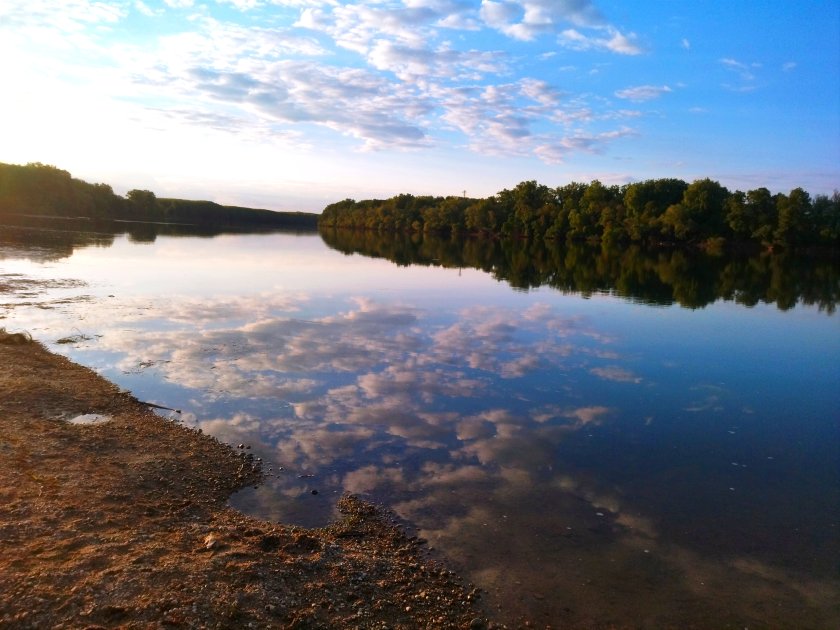
Photo: View of part of the Belene Archipelago on the Danube River.
This is just one of many pollution scenarios in which large pieces of plastic cracking apart along the Danube’s riverbanks are transformed into a stream of microplastic particles carried downstream.
New insights into these particles are also being provided by Romanian scientists aboard Rexdan – the largest and most advanced vessel for comprehensive monitoring of the Danube River.
Aboard the Floating Laboratory
TVR journalist Alina Salanți was granted access aboard Rexdan while scientists were collecting plastic particles from beneath the surface near the Romanian city of Galați.
The sampling device uses a much finer mesh than the nets employed to collect fish eggs during spawning periods. It captures all particles larger than 50 microns.
After the samples are collected and processed under laboratory conditions, the separated plastic particles form a colourful kaleidoscope across a white filter.
It is difficult to determine the exact quantity, but significant amounts of this microplastic undoubtedly accumulate in the Danube Delta – a region renowned for its unique natural environment and biodiversity.
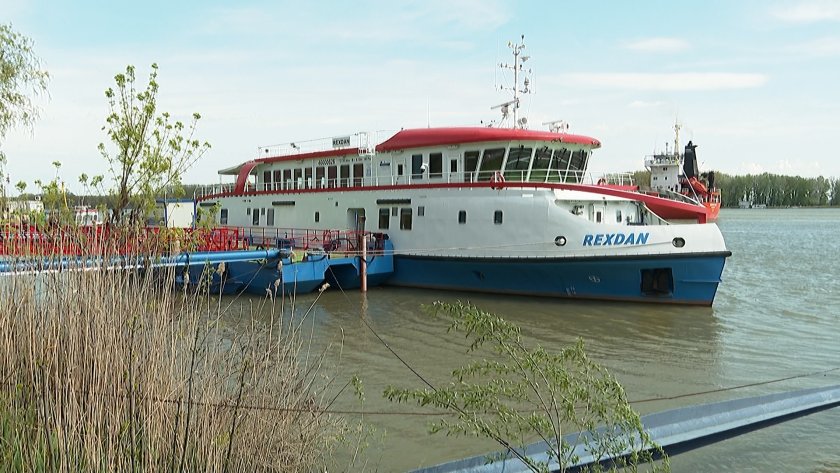
Photo: The research vessel Rexdan near the Romanian city of Galați.
"The Danube Delta is part of UNESCO World Heritage. We are talking about exceptionally rich biodiversity, and microplastics have a serious impact on aquatic organisms, animals and birds. There are studies showing the presence of microplastics even in birds," explained Madalina Călmuc, a researcher at the Faculty of Science and Environment at the "Lower Danube" University.
Scientists discovered microplastics in every water and sediment sample collected aboard the research vessel Rexdan. However, these plastics do not occur in a pure form in the natural environment, Professor Lucian Georgescu, coordinator of the Rexdan research complex, pointed out.
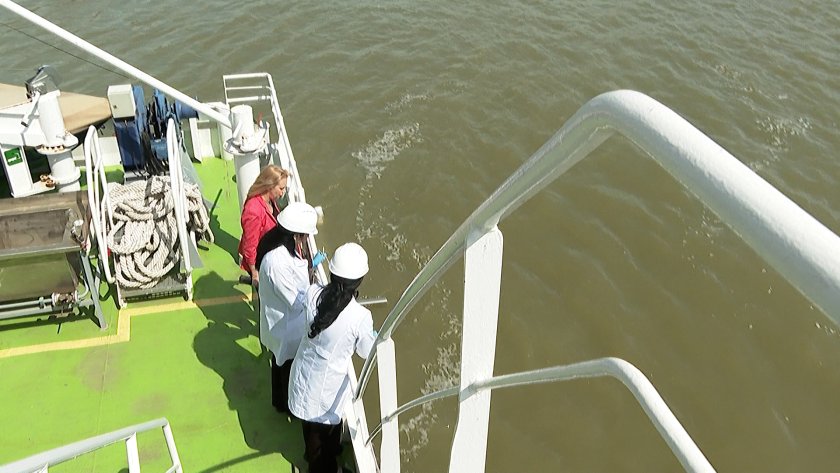
Photo:Research into microplastic particles in the Danube current near Galați
Prof Lucian Puiu Georgescu, "Lower Danube" University:
"When a microplastic particle enters an organism, it does not enter alone. Along with it come the substances attached to its surface — heavy metals, pharmaceutical residues, pesticides, as well as pathogens, viruses and bacteria."
A small polymer time bomb. That is what fragmented plastic particles become. They act as carriers of biological and chemical contaminants, ready to trigger a wide range of reactions when they come into contact with, attach to, or enter living organisms.
All of this is happening while many people fear that someone might implant chips in us to alter our habits, perceptions or even our DNA...
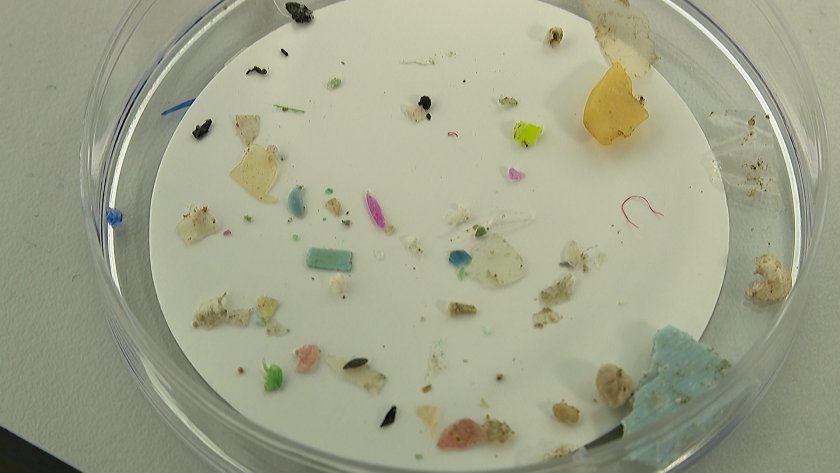
Photo: Plastic particles collected from the river current along the lower course of the Danube
We no longer think the term "plastic soup" is an exaggeration when talking about the tons of macro and microplastics on the lower Danube. However, Bulgaria and Romania are hardly entirely responsible for this pollution. In fact, Professor Georgescu is well aware of what proportion of it is caused by the two countries.
The term "plastic soup" no longer seems exaggerated when describing the tonnes of macroplastics and microplastics found along the lower Danube. Yet Bulgaria and Romania can hardly be held solely responsible for the pollution.
In fact, Professor Lucian Georgescu has a clear understanding of how much of it originates from the two countries.
Prof Lucian Puiu Georgescu, Lower Danube University:
"The Danube Basin covers around 33% of the territory of the European Union. Our research vessel travels as far as Vienna and conducts analyses along the entire course of the river. The data show that Romania and Bulgaria contribute less than 15% of the microplastic pollution. The remaining 85% comes from sections upstream, before the Iron Gates.
"Floating plastic, however, finds its way through the vast hydropower complex between Serbia and Romania. It continues along the Bulgarian and Romanian banks, fills the Danube Delta and ultimately reaches the Black Sea."
A Day at the Seaside – With a Taste of Salt and Plastic
"If you come to the seaside and do not eat a portion of anchovies, it hardly feels like a real holiday. But we recently detected microplastics in the digestive tracts of some fish species traditionally consumed in Romania, Bulgaria and Turkey," says Elena Stoica, Senior Researcher at the Grigore Antipa National Institute for Marine Research and Development.
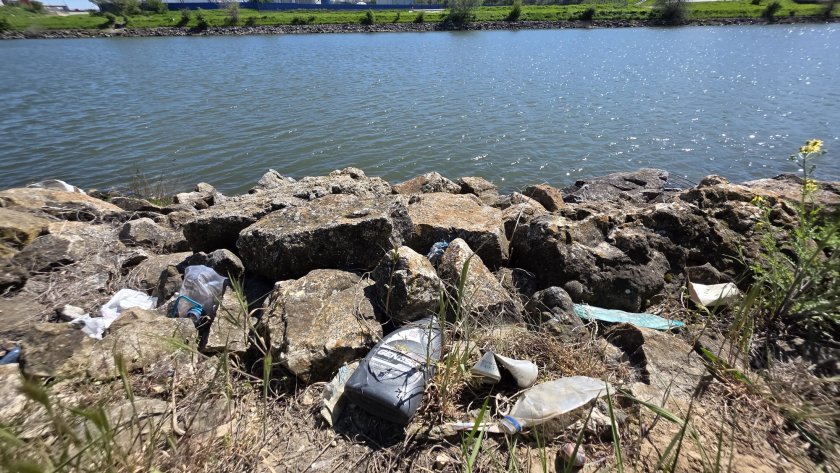
Photo: Plastic waste near the Danube–Black Sea Canal close to the city of Constanța.
Romanian journalist Ana Maria Stancu from Constanța meets researchers from the institute to learn more about the findings and conclusions of their latest studies into the spread of microplastics in the coastal zone.
The story told by Ana Maria and the scientists seems to contain everything: gastronomy, predators and prey, consumers, textiles, laundry, wastewater, treatment plants and a polluted marine environment.
Elena Stoica, Senior Researcher at the Grigore Antipa National Institute for Marine Research and Development:
"Besides anchovies, mussels and rapa whelks are becoming increasingly popular in Romania. We examined both species. Rapa whelks are predators and feed on mussels, so we wanted to find out whether the concentration of microplastics in them might be even higher."
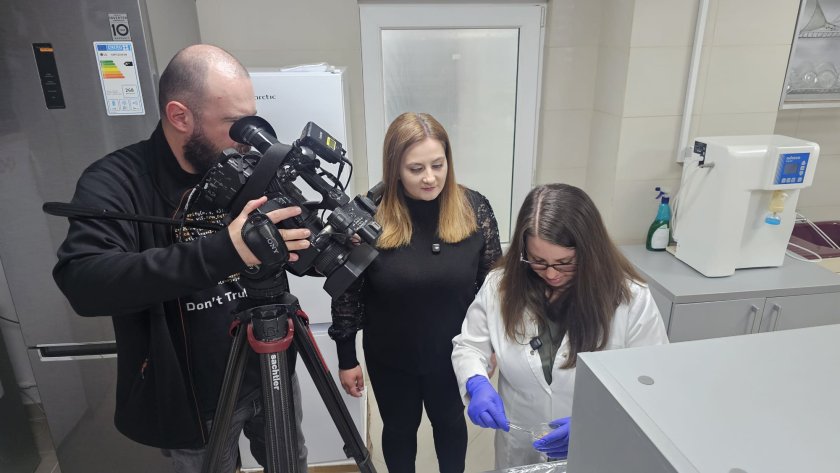
Photo: Examination of mussels in a laboratory at the Grigore Antipa Institute in Constanța.
Scientists found an average of 40 microplastic particles in each mussel examined from the port area of Constanța.
There is a logical explanation for this concerning finding. Ports are enclosed environments where microplastics can accumulate more easily. The Romanian researchers' findings on the type and shape of plastic particles found in marine organisms are similar to those of their Bulgarian counterparts. The evidence points to tiny fibres.
Elena Stoica, Senior Researcher at the Grigore Antipa National Institute for Marine Research and Development:
"Microfibres are one of the most widespread forms of microplastic pollution in the world's oceans and in the Black Sea. Their main source is human activity. They are released during the washing of synthetic clothing.
"These plastic textile fibres enter the sewage system, and wastewater treatment plants still do not have sufficiently effective technologies to retain them. As a result, the microfibres eventually reach the marine environment."
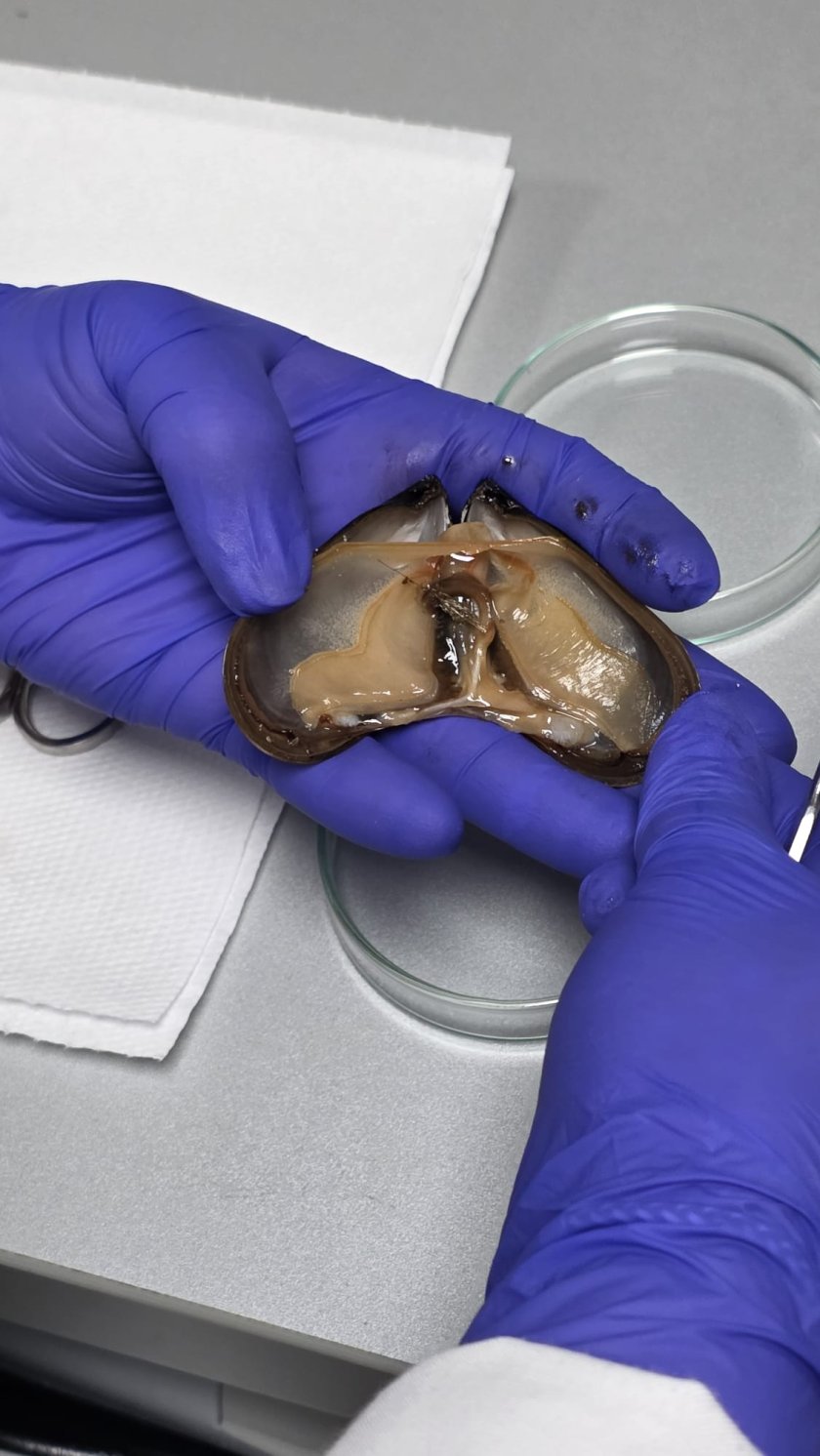
Photo: Most microplastics found in mussels and fish studied at the Grigore Antipa Institute are in the form of fibres.
Scientists from the Grigore Antipa Institute state that significant quantities of microplastics have already accumulated in the Black Sea, with surface pollution levels reportedly twice as high as those in the Mediterranean Sea.
They note that sediments constantly release particles back into the water, while the polymer structure of plastic prevents it from fully breaking down in the natural environment. Instead, it continues to fragment into ever smaller pieces.
This process can last between 100 and 500 years, the researchers say.
Plastic Safari on the Danube near Ruse
The BNT team decides to tackle the problem first-hand. The irony is that they do so wearing plastic gloves and carrying a plastic bag, in the name of an experimental hunt for both large and small plastic waste in the area around the “Prista” hut — just before the Danube enters the port zone of the city of Ruse.
Marine biologist Nikolay Bobchev is also involved in the brief “plastic safari”. Although still relatively young, he has extensive experience studying plastic pollution in various aquatic environments.
The sandy spit along the Danube appears relatively unpolluted at first glance, but within minutes the bag is filled with a wide range of plastic waste of different sizes and stages of degradation, increasingly blending into the river landscape.
Plastic bottles of water and beer are most common, but there are also fragments of polystyrene, remnants of polyamide fishing nets and ropes, and labels with faded Cyrillic and Latin lettering.
Among the remaining “trophies” are a punctured ball, a child’s sandal, and a rubber boot which, according to the researchers, is as much plastic as it is rubber reinforced with plastic fibres.
Bobchev patiently explains what happens to waste in the zone between the shallow waters and the vegetation along the wet riverbank, from which the river has recently receded.
Nikola Bobchev, marine biologist:
"When large plastic objects accumulate near the shore during dry periods, ultraviolet radiation — despite the common belief that plastic is highly durable — significantly degrades them.
A plastic cup, believe me, does not remain in its original form for longer than a single summer. It breaks down into small fragments.
But this is only part of the problem. Industry also produces plastic in small sizes. These small particles are used in cosmetics, as abrasive agents in toothpaste or in cleaning creams."
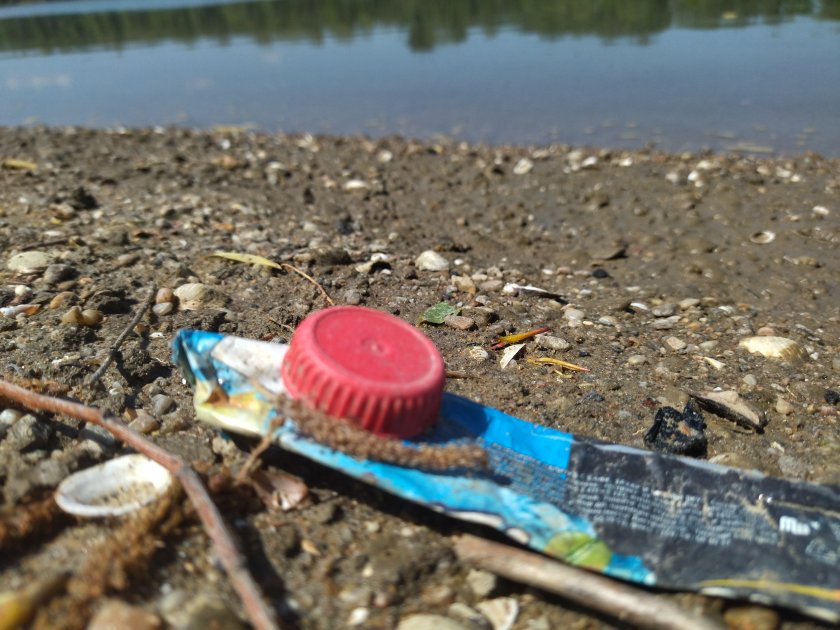
Photo: Plastic waste from packaging on the sandy spit near the “Prista” hut in the Ruse area, close to the city of Ruse.
It is not only cosmetics. Nikola presents air and roads as major generators of microplastics, which are released through the friction of car tyres against asphalt and mix with fine particulate matter. Wind and rain gradually transport them into water bodies.
Industrial polymer pellets produced for the manufacture of various plastic items are often released into the air during transport by ships and barges, eventually ending up in rivers.
Even after the death of crustaceans, mussels, fish or birds, the plastic in their bodies does not decompose but is instead carried back into the water or settles and accumulates on the riverbed.
Scientists are able to detect it in sand using specialised metal and glass equipment. This naturally raises the question: if microplastics can be identified and separated in laboratories, can they also be filtered and captured outside them?
Nikola provides an answer.
Nikola Bobchev, marine biologist:
"Older wastewater treatment plants do not capture microplastic particles very effectively, but modern treatment plants are able to retain over 90% of them, which is a significant achievement. Such facilities also exist in Bulgaria.
The problem in Bulgaria is that there are still places where wastewater treatment plants are missing."
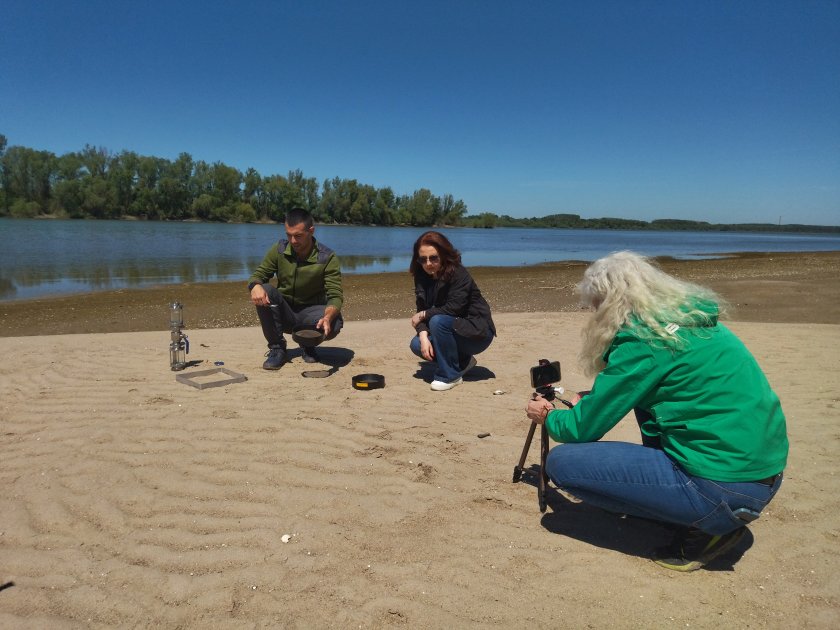
Photo: Using metal and glass instruments, scientists measure the concentration of plastic particles in river sediments.
The researchers’ conclusion is that, for now, there is no effective way to remove microplastics once they have entered rivers and seas. However, there are ways to limit their spread.
Among the proposed measures are the introduction of deposit return systems for packaging, the European target of collecting 90% of plastic bottles, bans on products containing intentionally added plastic particles, and the installation of microplastic filters in washing machines to capture fibres released from synthetic fabrics during laundering.
Yet the most important point appears to be acknowledging that there is no single or small group of major polluters to be singled out. The uncomfortable truth is that the biggest polluter… is all of us, humans, with habits that have become inseparably linked with plastic.
How much plastic we allow into our daily lives determines whether it ends up in the air, rivers, seas, food chains, and ultimately in our own bodies.
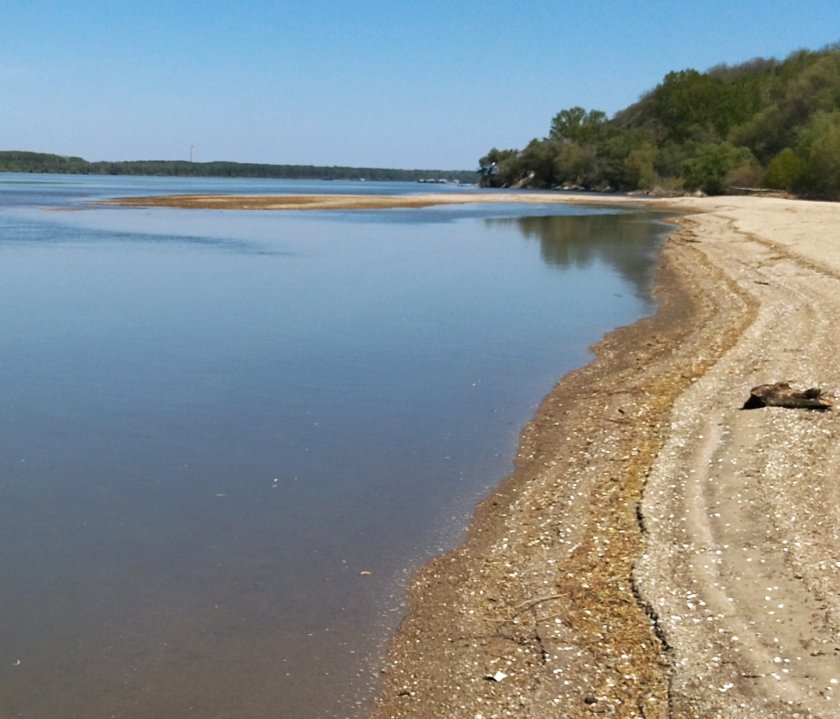
Photo: Subsurface studies of coastal river sediments reveal the presence of plastic dating back several decades.
After all the collected data, interviews and filmed material along the Romanian and Bulgarian banks of the Danube, we — the journalists from BNT and TVR — began to perceive plastic differently.
We realised that it is literally layered into all strata of modern life. The process began a century and a half ago, but today it has reached staggering proportions. And it is more than time to stop it, so that future generations do not refer to the era in which we live as the “plastic age”.
This investigation was carried out with the financial support of the Journalism Science Alliance.
The work on the project was carred out by Bulgarian journalists Bilyana Boneva, Milen Atanasov and Romanian journalists Alina Sălanți and Ana-Maria Stancu.


 Central Election Commission: With 7.37% of Polling Station Protocols Processed, Iotova and Gyurov Head to a Run-off in Presidential Election on 1 November
 Илияна Йотова: Илюзия е, че ако не се гласува, можем да извършим промяна в страната
 Историческа победа за студентите, Вучич призна загубата си на парламентарните избори в Сърбия










 Чуй новините
 Подкаст