“Compromises drafted by the Rapporteur for the Republic of North Macedonia, Thomas Waitz, once again create dangerous precedents, call into question fundamental principles of the European Parliament, and undermine a significant part of the policies set out in the EU–North Macedonia negotiating framework.”
This is stated in comments by Bulgarian MEPs Ivaylo Valchev (European Conservatives and Reformists) and Stanislav Stoyanov (Europe of Sovereign Nations), who are shadow rapporteurs for their respective political groups on the report concerning North Macedonia in the European Parliament.
The two MEPs sent their remarks to the rapporteur, Thomas Weitz. According to them, key issues and “red lines” outlined in more than 100 amendments to the report, submitted by Bulgarian representatives, have once again not been adequately reflected.
The position of Ivaylo Valchev and Stanislav Stoyanov is supported by all Bulgarian Members of the European Parliament in a special letter addressed to the rapporteur on North Macedonia, the shadow rapporteurs, foreign affairs coordinators of the political groups in the European Parliament, as well as the leadership of those groups.
In the letter from the Bulgarian Members of the European Parliament, it is stated:
“This is not simply a matter of national sensitivity or bilateral concern. It affects the integrity, predictability and institutional credibility of the EU enlargement process itself. If elements that have been unanimously agreed by the Council and formally accepted by a candidate country can subsequently be relativised, politically reinterpreted or indirectly reopened through the language of a European Parliament report, this risks undermining confidence in the European Union’s own decisions, commitments and accession framework.”
“If European compromises that have been unanimously agreed can subsequently be diluted, circumvented or politically reinterpreted through the language of parliamentary reports, this would pose a serious threat to the integrity, predictability and institutional credibility of the EU accession process itself. It would also send a deeply troubling signal to both Member States and candidate countries regarding the reliability of the Union’s own commitments.”
“In this regard, we believe that the aforementioned concerns and positions should be adequately reflected in the final compromise texts to be put to a vote in the Committee on Foreign Affairs, in order to prevent further institutional tension, avoid the reopening of politically sensitive issues, and preserve the broad political consensus necessary for confidence both in the report and in the enlargement process itself.”
The joint position of the Bulgarian Members of the European Parliament has also been sent to the Speaker of the National Assembly, the President of the Republic, the Prime Minister of Bulgaria, and the Minister of Foreign Affairs of the Republic of Bulgaria.


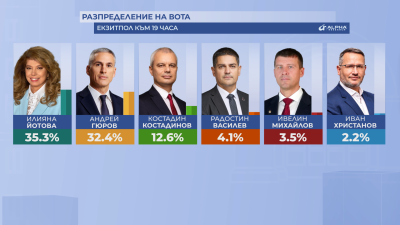
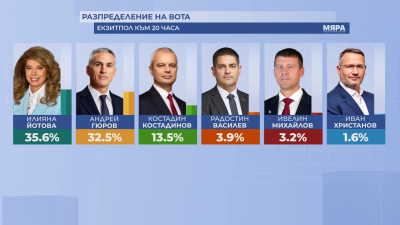
 Central Election Commission: With 7.37% of Polling Station Protocols Processed, Iotova and Gyurov Head to a Run-off in Presidential Election on 1 November
 Илияна Йотова: Илюзия е, че ако не се гласува, можем да извършим промяна в страната
 Историческа победа за студентите, Вучич призна загубата си на парламентарните избори в Сърбия









 Чуй новините
 Подкаст