Euro banknotes and coins remain a familiar part of everyday life, but innovation continues, and European institutions are seeking to expand the options available to citizens and businesses in payments through the creation of the digital euro.
The development of stablecoin legislation in the United States is another reason Europe in accelerating work on the digital euro. In 2025, the US Congress adopted a regulatory framework for dollar-denominated stablecoins—crypto assets whose value is pegged to the US dollar. A dollar-denominated stablecoin is a type of cryptocurrency the value of which is fixed at a 1:1 ratio with the US dollar to avoid the sharp price fluctuations typical of other digital assets.
There are concerns in Europe that if the dollar becomes further digitised through such instruments, it could strengthen its global role at the expense of the euro.
If European citizens were to increasingly hold funds in dollar-pegged stablecoins, this could make monetary policy conducted by the European Central Bank (ECB) more difficult. For example, decisions on interest rates could have a weaker impact on the economy.
Many people may ask: “But I can already transfer money online.” That is true, but it requires internet access. One of the objectives of the digital euro is to enable offline payments as well. By bringing two devices close together, a transaction could be completed even without an internet connection. This would provide additional resilience for the payment system in the event of technical failures or emergencies.
The digital euro could also enable so-called programmable payments.
For example, when purchasing an airline ticket, payment could be automatically refunded if the flight is cancelled or delayed beyond predefined conditions. This could automate and simplify a range of processes.
One of the main risks relates to the banking system. If a large number of people transfer funds from commercial banks into digital wallets at the ECB, this could reduce banks’ deposit base and create serious difficulties for them. For this reason, limits on the maximum amount that can be held in digital euro are being considered.
Privacy is one of the most important issues for Europeans. In today’s online payments, banks already have access to information such as the payer, the amount, and the time of the transaction.
Under current proposals, the ECB would not see what individuals are purchasing. Data would be separated in such a way that the institution would not have access to the full picture of individual transactions. Regular independent audits are also planned to ensure data protection.
The ECB states that new technologies to improve privacy protection could be integrated into the system as they emerge. Fraud prevention would remain the responsibility of commercial banks and payment providers, as it is today. There are also likely to be limits on the size of offline payments to reduce the risk of misuse.
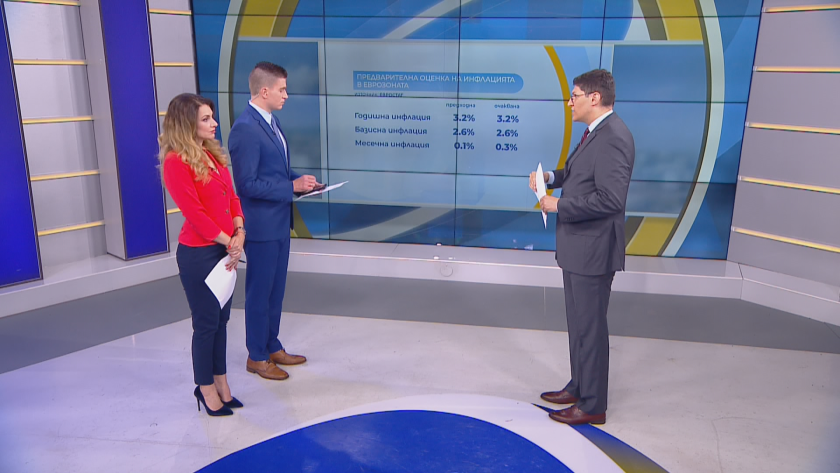
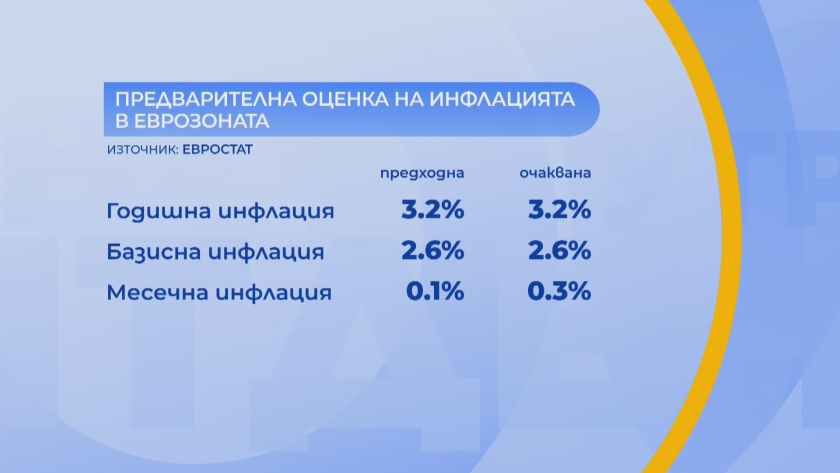
Consumer price inflation in the euro area remained at 3.2% in May 2026, the highest level since September 2023 and still significantly above the European Central Bank’s 2.0% target.
Energy costs were the main driver of price increases, rising by 10.8%—the sharpest increase since February 2023—due to supply constraints linked to the conflict in the Middle East.
Services inflation accelerated to 3.5% (from 3.0% in April), while non-energy industrial goods rose to 0.9% (from 0.8%). In contrast, inflation in food, alcohol and tobacco slowed to 1.9% (from 2.4%).
Core inflation, which excludes energy, food, alcohol and tobacco, rose to 2.6% from 2.2%, indicating that price pressures are broadening across more categories of goods and services. These volatile categories are excluded due to their sharp short-term fluctuations.
This indicator is designed to reflect more persistent inflationary pressures in the economy by removing the impact of short-term price shocks.
Euro area unemployment expectations remain unchanged at 6.3%.


 Price Speculation Over Accommodations for “Eurovision 2027”: 25,000 Euros Per Night for an Apartment in Burgas
 After Euro Adoption in Bulgaria: National Revenue Agency Reports 0.3% Inflation
 СПЕЦИАЛНО: Лидерът на опозиционната руска "Яблоко" Николай Рибаков пред БНТ










 Чуй новините
 Подкаст