Bulgaria and Croatia still have work to stabilize their economies and improve their institutions before joining the euro, European Central Bank board member Fabio Panetta said on July 13.
Reforms undertaken by the two countries will not correct all the imbalances and vulnerabilities they face, and more progress is needed to improve governance, their legal framework and the overall quality of institutions, Panetta was quoted as saying by Reuters.
European Commission Vice-President Valdis Dombrovskis said: "What is important now is that while in ERM II Bulgaria must meet the Maastricht criteria related to the budget deficit and debt. In terms of fiscal criteria, the country has already achieved progress, but the inflation criteria and, in the long term, the interest rate criteria must be met.
Bulgaria must also meet the legislative criteria and in particular the independence of the central bank must be fully in line with the requirements of the eurozone. In any case, the country must be in the eurozone's waiting room for at least two years before the assessment of the fulfillment of the Maastricht criteria begins, Dombrovskis stressed.
The two countries were admitted on Friday to the ERM-2 mechanism, the waiting room for entry into the Eurozone, and can join the monetary union in 2023.


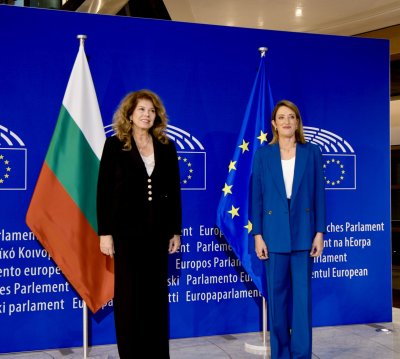
 Foreign Minister Velislava Petrova in Strasbourg: Bulgaria Can Play a Key Role in Europe's Geostrategic Positioning
 Bulgaria Holds a Special Place Among the European Commission’s Priorities for Next Year
 Bulgarian Parliament Speaker, Mihaela Dotsova and Czech Prime Minister Andrej Babiš Discussed Expanding Bilateral Parliamentary and Economic Cooperation
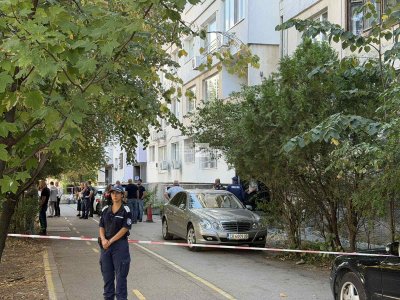
 Six-Year-Old Child Found Dead with Stab Wounds in Sofia Flat; the Father Also Found Dead
 Президентът Илияна Йотова: Ние ще се борим докрай Ива Михайлова да получи лечение
 За цените на горивата: Опозицията критикува управляващите - те отговориха (ОБЗОР)








 Чуй новините
 Подкаст