Once flowering is over, the population will decline naturally
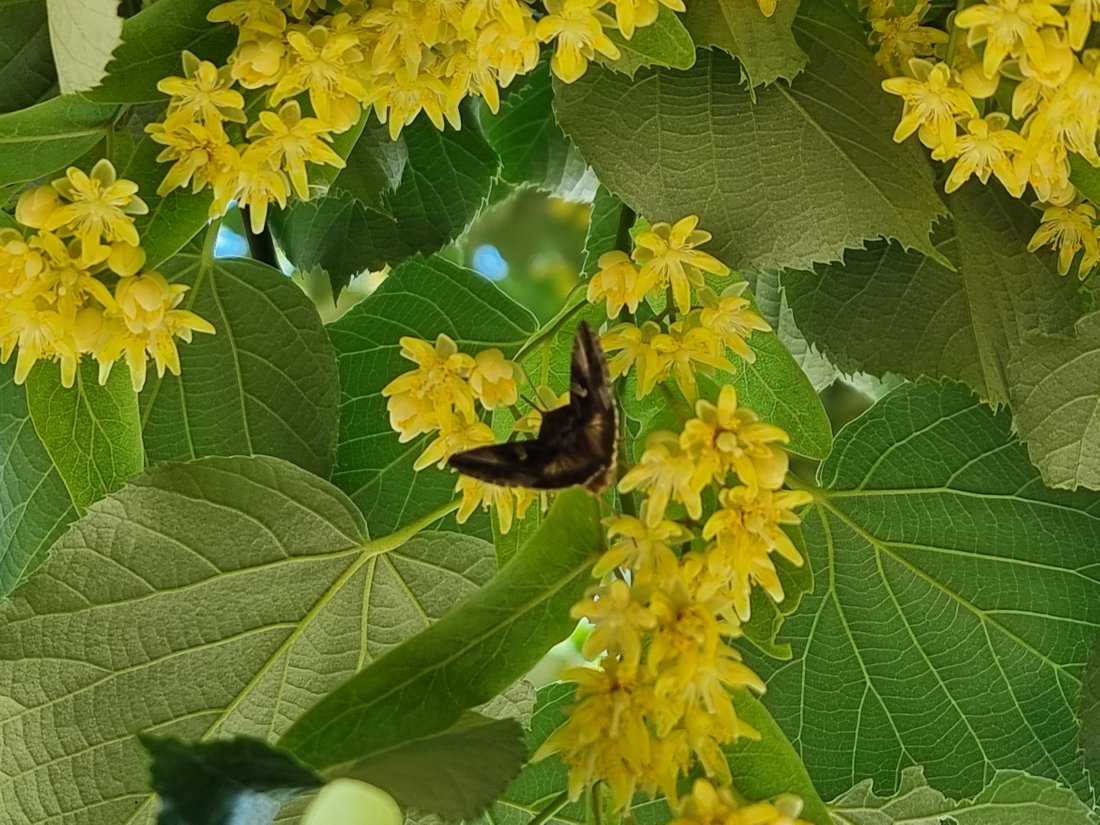
Night moths, which have been observed in large numbers in recent days around blooming linden trees in Sliven, do not pose a health risk to humans. This was stated by Daniela Kaleva, Director of the “Infectious Disease Surveillance” Directorate at the Regional Health Inspectorate (RHI) – Sliven on June 18.
“These moths are not dangerous to humans and do not carry diseases. They may cause some discomfort, but they do not represent a health risk. There are no species of moths that transmit diseases to humans,” said Dr Kaleva.
According to her, the insects gather in areas with flowering linden trees because they find food there. After the blooming period ends, their population will naturally decrease.
“Moths, like bees, participate in plant pollination. They develop under microclimatic conditions of high humidity and high temperatures. At present, suitable conditions for their reproduction exist throughout the country, which has led to the observed population surge,” she added.
The Municipality of Sliven also reported that in recent days residents have witnessed an unusual phenomenon — a large number of night moths around blooming linden trees. According to citizen reports, a similar increase in the population has been observed in other locations across the country.
Source: BTA


 ЦИК при обработени 17,86% СИК протоколи: Йотова и Гюров отиват на балотаж на 1 ноември (ОБНОВЯВА СЕ)
 Историческа победа за студентите, Вучич призна загубата си на парламентарните избори в Сърбия










 Чуй новините
 Подкаст