President Rumen Radev Launches the 23rd Edition of the “Bulgarian Christmas” Charity Initiative
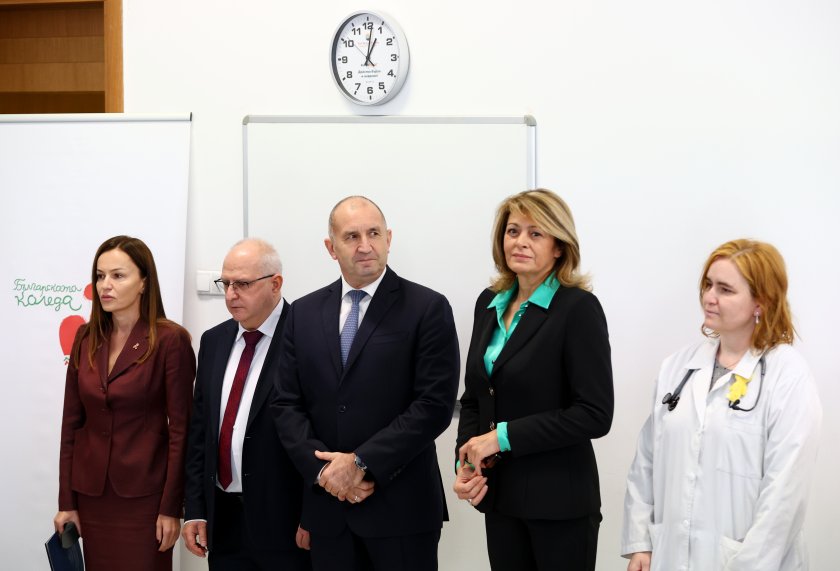
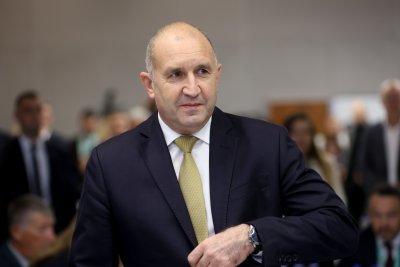
President Rumen Radev on December 1 announced the start of the 23rd edition of the charitable initiative Bulgarian Christmas. This year, the official ceremony took place at the Paediatric Clinic of Aleksandrovska Hospital in Sofia.
For six years now, Nikola has supported Bulgarian Christmas with his music and talent. He believes that music brings hope and helps in difficult moments — just as every donation can.
Nikola Todorov:
“I think people should donate to Bulgarian Christmas in order to help children in need or in distress, so they can live well, live peacefully, and enjoy life.”
A significant part of the medical equipment in the paediatric clinic at Aleksandrovska Hospital is available thanks to the initiative, helping doctors in their care for young patients.
Prof. Gergana Petrova, Head of the Paediatric Clinic at Aleksandrovska Hospital:
“Thanks to Bulgarian Christmas, we paediatricians feel that children’s healthcare is regarded as a priority in some circles. But we have many underfunded children who need treatments not covered by the National Health Insurance Fund — costs that are impossible for families to bear. ‘Bulgarian Christmas’ steps in and, in fact, gives these children life by securing their treatment.”
Photos
The President pointed out that Bulgarian Christmas has become a symbol of compassion and responsibility towards our children. According to him, the initiative brings society together, strengthens faith in humanity, and nurtures hope for a better future.
Rumen Radev, President of the Republic of Bulgaria:
“This national cause does not replace the responsibilities of the healthcare system — it supports and reinforces it where the needs of sick children exceed its capabilities. Why, with a healthcare budget now exceeding 10 billion leva, should 550 children depend on ‘Bulgarian Christmas’ for life-saving medicines and care?”
This year, the initiative operated with 3.75 million leva. A total of 550 children received support for diagnosis, treatment, rehabilitation and expensive medication, while 26 medical facilities across the country were supplied with high-tech equipment.


 Minister of Energy Iva Petrova: The Danube's Water Level Remains Critically Low
 The Election of Bulgaria's Seventh President Will Be Decided in a Run-off on November 1
 "Това е победа на смелостта над страха": Студентите в Сърбия ликуват след триумфа на изборите









 Чуй новините
 Подкаст