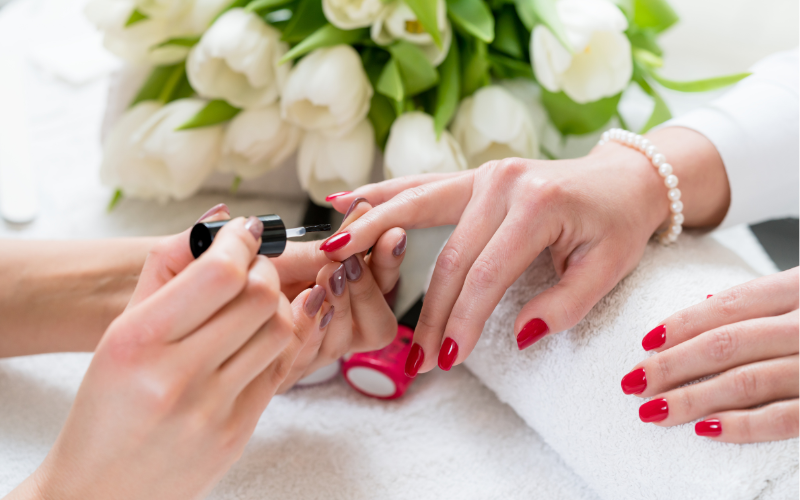
As of 1 September, the European Union will introduce a ban on the chemical Trimethylbenzoyl diphenylphosphine oxide (TPO), a substance found in the majority of gel nail polishes – one of the most popular cosmetic products among thousands of girls and women. According to recent studies, TPO may pose a serious health threat, including an increased risk of cancer.
However, risk and danger are two different concepts, emphasised Professor Georgi Momekov, Dean of the Faculty of Pharmacy at the Medical University of Sofia, speaking on the programme “The Day Begins” on August 7.
“In English, there are two different words that we, as Bulgarians, often fail to distinguish – hazard and risk. Yes, a great white shark or a tiger shark is indeed dangerous – it can attack and kill a surfer. However, the risk of that happening is about 1 in 10,000 surfers in Australia, for example. In other words, risk involves probability and measurable likelihood, whereas hazard is simply the potential for harm.
We should not be alarmed by such developments, but rather appreciate the fact that we live in a country that is part of the European Union, where there is a commitment to constantly minimise risks.
In fact, the reason this ingredient is being removed from gel nail polish is due to a change in its classification. There is a classification system known as CMR – referring to substances that are carcinogenic, mutagenic, or toxic to reproduction. Generally, substances with such classifications are avoided in cosmetic products.
The system includes three categories:
Category 1A – confirmed human carcinogens, mutagens, or reproductive toxins
Category 1B – based on animal studies only
Category 2 – where the risks are purely theoretical
What’s happening here is a reclassification of the substance from Category 2 to Category 1B. So, this is not a conflict in European legislation – it's simply a case of regulatory compliance.And because ECHA – the European Chemicals Agency, which oversees chemical regulation – has reclassified the substance, it now has to be removed from use,” explained the Dean of the Faculty of Pharmacy.

Professor Momekov further clarified that not all gel nail polishes contain TPO, and there are many available alternatives.
“The cosmetics industry is well aware of such regulatory developments. But for the industry, this poses a huge challenge. Imagine a global gel nail polish brand that operates not only in the EU, but also in Australia and across the globe. They can keep the same product formula almost everywhere – except in the EU, where they will have to change it.”


 Sheep and Goat Pox Outbreak Confirmed by the Food Safety Agency at a Farm near Shabla
 Bulgarian Scientists Contribute to Uncovering the Molecular Mechanisms Behind DNA Organisation in the Cell Nucleus
 'Pirogov' Emergency Hospital: We Took All Necessary Measures to Save the 10-Year-Old Child from Etropole
 10-Year-Old Child Dies at 'Pirogov' Hospital: Prosecutors Investigate Possible Negligence
 ГДБОП задържа 19-годишен за кибератаки срещу БНТ, БНР и държавни институции (СНИМКИ)
 Властите в Италия на крак срещу скъпия живот, риск от насилие във Франция на протестите утре










 Чуй новините
 Подкаст