Can people overcome the effects of surgeries and illnesses with the help of skilled rehabilitators and modern technology? The answer can be found in the village of Tuchenitsa near Pleven.
Some may call it a miracle. Others – pure science. Both are correct. Both happen behind the walls of a rehabilitation centre in Tuchenitsa.
We don’t just learn to walk as babies; we continue learning throughout life. Injuries, surgeries, stress, prolonged sitting, and other factors can distort posture and movement. Here, in addition to doctors, physiotherapists, and rehabilitators, robots now play a crucial role.
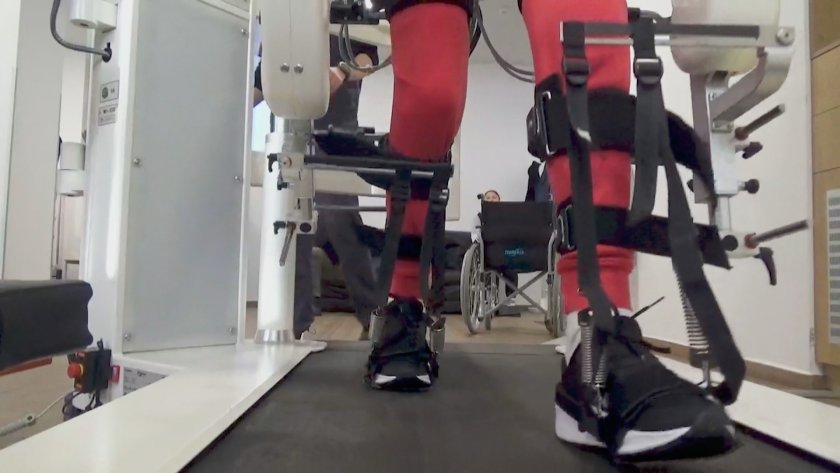
Dr Elena Zlatanova, specialist in physical therapy and rehabilitation, explains: "This is a robot designed for patients with multiple sclerosis, Parkinson’s disease, spinal cord injuries, traumatic brain injuries, children with cerebral palsy, and stroke survivors. The principle of operation is as follows: once the patient is placed in the Lokomat, a walking pattern is initiated. Impulses are sent to the brain, which processes them and sends corresponding signals to the lower limbs. In this way, we retrain the brain and re-educate the lower limbs to begin moving independently."
Once the patient regains the sensation of walking, the next step is to improve range of motion and leg muscle strength, again using a specialized robotic device.
Dr Elena Zlatanova, Specialist in Physical Therapy and Rehabilitation:
"This device is for training the lower limbs – all joints: hip, knee, and ankle. The requirement is that there is no ankylosis in the ankle joint and that the patient can complete a full rotation of the joint so that the foot can be properly fixed on the corresponding pedal."
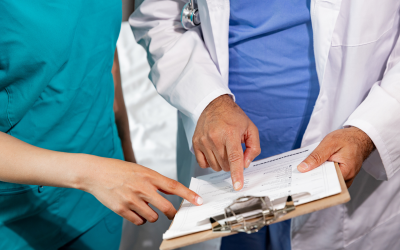
What non-specialists see at first glance is essentially hardware. However, it would remain just an impressive shell without its precise software. Following initial diagnostics and measurements, patient-specific data are entered, creating a tailored programme for each individual. This allows progress to be monitored and guided. The same approach is applied when rehabilitating the hands.
Dr Elena Zlatanova, Specialist in Physical Therapy and Rehabilitation:
"We attach small patches with tiny magnets to each finger and connect them to the corresponding electrodes. The device sends impulses, moving the fingers for the patient."
At the same time, the patient watches a screen showing a task. One example involves moving the fingers to collect apples falling from a tree into a basket. This exercise improves range of motion, strength, and dexterity.
This demonstrates that criticisms of video games and screen time are not entirely justified. Of course, moderation is important, but when the goal is to engage the shoulder, restore sensation, and regain control—such interactive exercises are highly beneficial.
Balance-training programmes are also effective. Patients perform tasks that shift their weight forward or sideways, guided visually by software. Another specialized programme enhances both cognitive and motor skills in young patients with cerebral palsy.
Dr Elena Zlatanova, Specialist in Physical Therapy and Rehabilitation: "We have another excellent device called the Andago. It serves as a transition for patients who have made significant progress with the Lokomat. The legs start to respond slowly and lightly. We place the patient in the Andago. First, they walk normally. Then we introduce obstacles, have them navigate through them, practice weaving, make turns, and even walk backward. All staff here—doctors, rehabilitators, physiotherapists, nurses, and assistants—are deeply committed to every patient. First, we show empathy; second, we aim to inspire faith and strength so that patients actively engage in the rehabilitation process."
"This is my message: faith. Let faith never leave them."
We often wish each other good health during the holidays, but true wellness requires daily care. Do we give anything back to our health? Do we ask it what it needs most? Each of us eventually arrives at the same answer in one way or another: the secret lies in movement—in all its forms and varieties.


 Scientists in Plovdiv Develop Plant-Based Combination to Support Metabolic Health
 Three Doctors Charged Over Death of a 6-Year-Old Child in Plovdiv To Stand Trial
 Ново заседание за смъртта на 14-годишния Филип, който загина на пешеходна пътека
 Как ще се гласува в чужбина? МВнР с подробности за организацията на вота
 Кабинетът решава при какви условия ще се отпускат безлихвени заеми на общините








 Чуй новините
 Подкаст