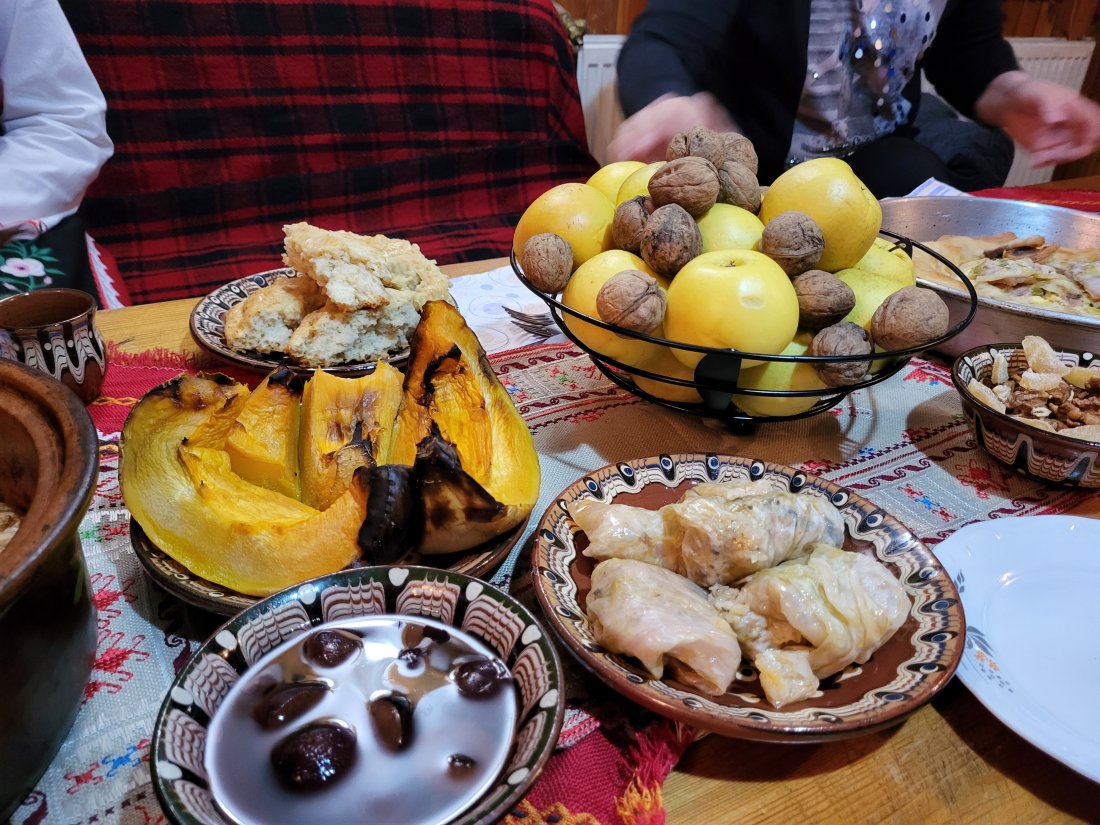

As part of the tradition, the whole family gathers at the table
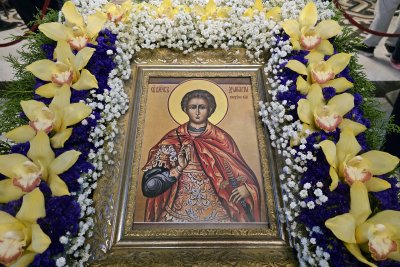
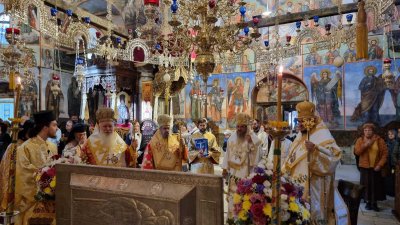
On 24 December, the Christian world marks Christmas Eve. In Orthodox churches, the day is observed with the celebration of Matins, the so-called Royal Hours, and Vespers combined with the Liturgy of St Basil the Great.
The night before the birth of Our Lord Jesus Christ is regarded as sacred and mysterious. By tradition, families gather together and sit down to a festive table laid with modest, meat-free dishes. Folk custom dictates that the number of dishes should be odd. Most commonly, there are seven dishes, symbolising the days of the week, or nine, representing the months of pregnancy. In some regions of Bulgaria, the table is set with twelve dishes, corresponding to the months of the year. Typically, the hostess prepares a round loaf of bread, vine-leaf rolls, beans, boiled wheat, peppers, pumpkin banitsa, oshav (a traditional dried fruit compote), and other fasting foods.
A coin is baked into the ritual loaf. When it is broken by the eldest member of the family, it is believed that the person who finds the coin in their piece will bring prosperity, happiness and good fortune to the household in the year ahead. The first piece of bread is set aside for the Holy Mother of God and placed before the home icon.
In some parts of the country, straw is spread on the floor and the low dining table is placed on top of it, in remembrance of the manger in Bethlehem where the Christ Child was born. Elsewhere, children are given a lit candle, a hand censer with incense, wine and bread, and are sent to the outer doors of the house. There, with pure hearts, they say three times in prayer: “Come, Lord God, let us dine together.” When they return, everyone stands as if welcoming the Lord. The children then turn to the elders of the household and say in unison: “Blessed be the Nativity of Christ!” The reply comes: “Amen! Many happy years!”
Before the family sits down to the table, the head of the household or the youngest member recites the Lord’s Prayer, “Our Father…”, and incense is burned not only in the house but also in the yard.
Christmas Eve also marks the end of the 40-day Nativity Fast.
According to an old tradition observed at Christmas, groups of pious young men, dressed in traditional folk costumes or shepherds’ attire, go carol-singing from house to house to greet Christian families on the Nativity of Christ. They are known as koledari. Moving in groups, they sing the troparion — the hymn of the feast — and traditional Christmas carols. Through these songs, they wish the household abundance of earthly fruits, joy and prosperous days. In return, the host rewards them with money, fruit, ritual breads and other gifts.
“Splendour of Perperikon” Exhibition Presents over 200 Artifacts, Including Cross with Relics of Unknown Saint
Bulgaria’s Bagpipe Tradition Added to UNESCO Intangible Cultural Heritage List