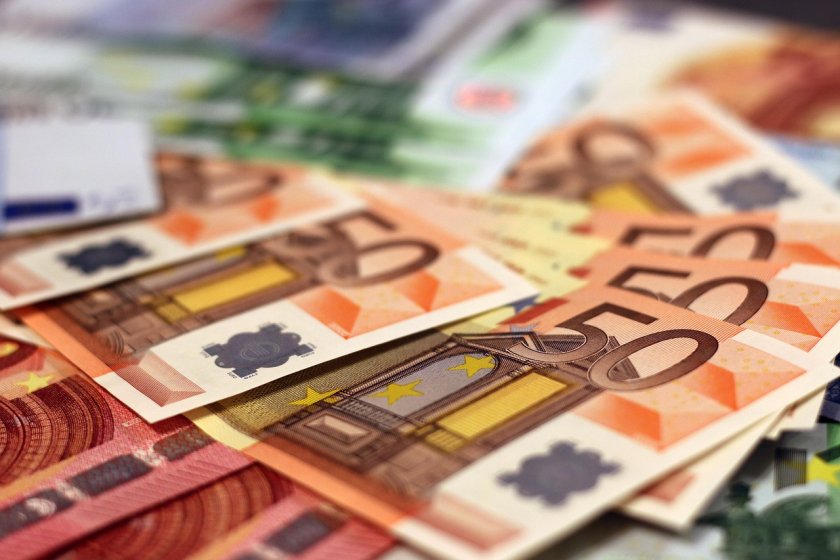
Bulgaria’s monthly inflation rate in April, measured by the Consumer Price Index (CPI), is expected to be 2%, while annual inflation is forecast to reach 7.1%, according to the flash estimate published by the National Statistical Institute.
At the end of last month, the NSI estimated March monthly inflation at 0.7% and annual inflation at 3.9%. Final data published in mid-April later showed monthly inflation of 0.9% and annual inflation of 4.1%.
The NSI first began publishing so-called “flash inflation” data on 3 February. The indicator provides early information on inflation trends before the release of final and more detailed statistics, allowing Bulgaria to be compared on this measure with the other 20 eurozone countries after joining the single currency area on 1 January this year.
According to NSI data, flash inflation in February was 0.3% month-on-month and 3.3% year-on-year, while January figures stood at 0.7% and 3.6% respectively. The difference between the flash and final figures has so far been minimal.
Final NSI data showed monthly inflation in February at 0.4% and annual inflation at 3.3%, while in January the rates were 0.6% and 3.5% respectively.
In April 2026, compared with the previous month, price increases are expected in the categories of Transport (10.6%), Clothing and Footwear (7.9%), Food and Non-Alcoholic Beverages (2.1%), and Alcoholic Beverages and Tobacco (0.8%).
A decrease is expected in the Recreation, Sport and Culture category, where prices are forecast to fall by 1.5%.
According to another flash estimate by the NSI, monthly inflation under the “small basket” index for the lowest-income 20% of households is expected to rise by 1.7% in April, with annual inflation reaching 4.7%.
Within that basket, food prices are expected to increase by 2.4%, non-food goods by 1.8%, and services by 0.1%.








 Чуй новините
 Подкаст