
ИЗВЕСТИЯ

Моите новини

ЗАПАЗЕНИ

Since 1944, Anti-Bulgarian Propaganda in North Macedonia Has Not Had a Day Off, Says Prof Angel Dimitrov

bnt avatar logo от БНТ
A+ A-
Чете се за: 07:27 мин.

EN
ангел димитров

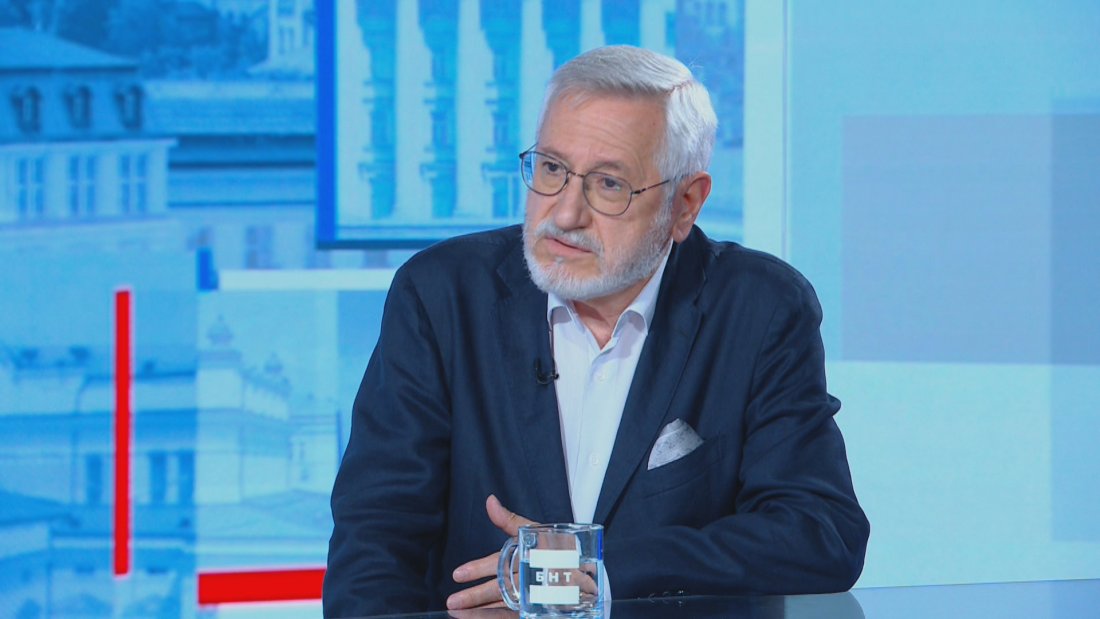
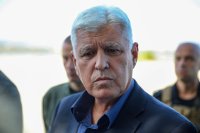
“Anti-Bulgarian propaganda [in North Macedonia] has not had a day off since 1944,” Prof. Angel Dimitrov, Co-Chair of the Joint Multidisciplinary Expert Commission on Historical and Educational Issues between Bulgaria and North Macedonia, said on the BNT's 'More from the Day' programme on June 17. He described the European Parliament’s rapporteur for North Macedonia, Austrian MEP Thomas Waitz, as “far too close to the positions of the leadership of the young state”.

According to Prof. Dimitrov, this explains why a last-minute attempt was made to remove from the progress report on North Macedonia the section referring to the work of the Joint Commission.

Prof. Angel Dimitrov, Co-Chair of the Joint Multidisciplinary Expert Commission on Historical and Educational Issues between Bulgaria and North Macedonia: “When political leaders, including those at the very highest level of government, equate identity with interpretations of the past—which is entirely untrue—it becomes obvious that the past is a thorn in their side.”

Foreign Minister Velislava Petrova: Bulgaria Presented Its Position on the Skopje Arson Attack

Prof. Dimitrov added that the report highlights a number of other concerns and is not focused solely on the Commission.

Prof. Angel Dimitrov: “The report addresses issues related to the rule of law and the lack of self-critical examination of the country’s own past. This is why the archives of the security services—the former Yugoslav services and their local branches, as you know—have not been opened.”

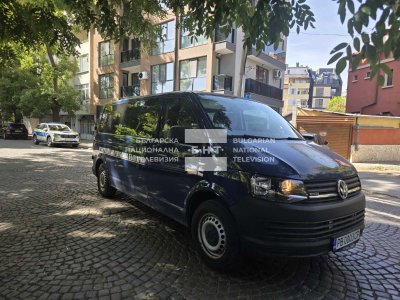
Prof. Dimitrov also urged people not to underestimate the significance of the arson attack on the diplomatic vehicles simply because there were no casualties and the material damage was limited.

Prof. Angel Dimitrov: “Many people are downplaying the incident because they believe the damage was not particularly severe. But that was solely due to the swift reaction of the Bulgarian diplomats. Had they not extinguished the fire in time, the vehicles could have exploded, causing extremely serious consequences not only for the embassy building itself but also for passers-by. This is a busy central street in the city. It was therefore an exceptionally serious attack, not only against the embassy but also against Bulgarian statehood.”

The Commission itself continues to meet regularly, but is effectively “running on empty”, explained Dimitrov, who previously served as Bulgaria’s ambassador to Skopje.

Prof. Angel Dimitrov: “We are still examining seventh-grade history textbooks in North Macedonia. We are still dealing with the eleventh century and, more specifically, the same issue.”

Interviewer: “But you were discussing that several years ago.”

Prof. Dimitrov: “The agenda of our meetings has not changed in three years. What is holding us back is the absolute unwillingness of our colleagues first to accept the concept of a shared history. From that stems the specific obstacle: their refusal to acknowledge that the Archbishopric of Ohrid was an institution created by the Byzantine Emperor Basil II as a political effort to preserve stability within the empire by granting broad rights to the population that had previously been under the religious authority of the Bulgarian Patriarchate during the First Bulgarian Empire before its fall.

“This is what our colleagues are reluctant to accept because, as you can understand, for them it is also a contemporary political issue. Their Church currently presents itself as the direct successor to the Archbishopric of Ohrid and has even incorporated that name into its official title.”

He described the stance of North Macedonia’s leadership as aggressive.

Prof. Angel Dimitrov: “Bulgaria should pursue not only a clear, consistent and firm policy, but also an uncompromising one. We do not live in an age of political emotions or sentimentality. When we are faced with a consistent, unfriendly and unfair policy towards Bulgaria at the political level, it must receive a sufficiently serious and uncompromising response. That is how one conducts policy with people who speak of good neighbourly relations but respect them only in words.”

The former diplomat also commented on the government’s decision not to support parts of the proposed 21st package of sanctions against Russia.

Prof. Angel Dimitrov: “I can understand the arguments as to why the Russian Patriarch should not be included in a sanctions package whose primary focus is economic measures. However, the conduct of the Patriarch and of the Russian Church deserves a moral judgement, because what they are preaching, in my view, is in serious conflict with Christian principles.”

Последвайте ни

ТОП 24

Най-четени

Водещи новини

Product image
Новини Чуй новините Спорт На живо
Абонирай ме за най-важните новини?