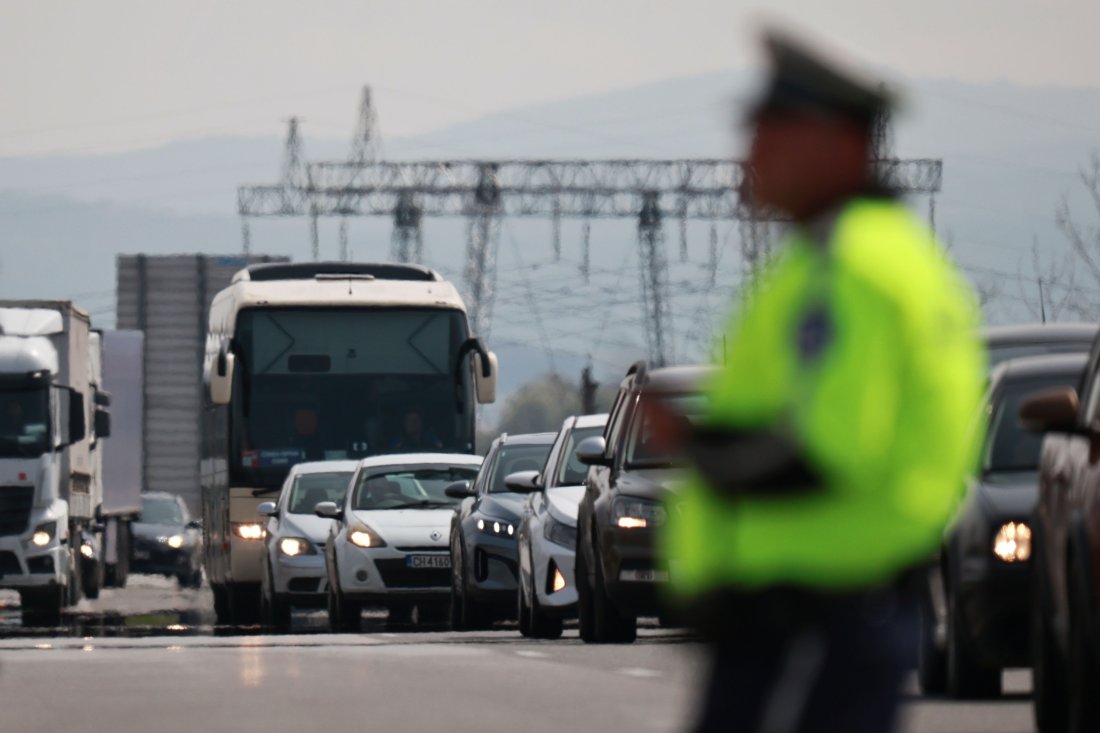
Heavy traffic is expected on the main exit routes from Sofia on the day before St George’s Day. Around 75,000 vehicles are forecast to leave the capital, with the heaviest flow in the afternoon. The main traffic will be towards Trakia motorway (around 33,000 vehicles), Hemus motorway (around 17,000), Struma motorway (around 19,000), with the remainder using other sections of the road network.
On 6 May, increased traffic towards Sofia is also expected, with around 120,000 vehicles travelling to the capital, including some that left ahead of the early May holidays. The busiest period is forecast to be between 14:00 and 21:00.
Drivers can also use the updated interactive traffic map available on the websites of the Road Infrastructure Agency and the National Toll Administration. It provides real-time data on the number of vehicles passing over the past 15 minutes and the last hour, as well as a detailed overview of traffic intensity across the national road network. In addition to individual points, users can now monitor traffic along entire road sections by selecting a specific route, allowing drivers to assess congestion levels more effectively.
In view of the expected heavy traffic, temporary restrictions will be imposed on heavy goods vehicles over 12 tonnes on the busiest routes – the Trakia, Hemus and Struma motorways, as well as on Road I-1 in the section between the Simitli junction (km 376) and the Kresna junction (km 402) of the Struma motorway. The aim is to ease travel during peak periods, improve road safety, and reduce the risk of accidents caused by improper overtaking and the formation of queues of heavy vehicles.
On 5 May, between 15:00 and 20:00, traffic for vehicles over 12 tonnes leaving Sofia will be restricted. Heavy goods vehicles travelling towards the capital will not be subject to restrictions.
On 6 May, from 12:00 to 20:00, restrictions will apply to heavy goods vehicles over 12 tonnes travelling towards Sofia, while those leaving the capital will be allowed to move freely.
The restrictions do not apply to vehicles over 12 tonnes engaged in public passenger transport, nor to those carrying hazardous materials, live animals, perishable foodstuffs, temperature-controlled goods, or specialised carcass-disposal vehicles travelling along the Trakia, Hemus and Struma motorways, as well as the section of Road I-1 in the Blagoevgrad region. On the Trakia motorway, the restriction does not apply to vehicles carrying hazardous materials in the section between the Ihtiman junction (km 34) and the Vakarel junction (km 23).
On another busy route – Road I-1 in the Simitli area – a reversible traffic system will be introduced to ease travel. This measure aims to improve road safety for those travelling to Bansko and other tourist resorts in the region. On 5 May, traffic towards Kulata will be in two lanes, while traffic towards Sofia will use one lane. On 6 May, two lanes will be available for vehicles travelling towards Sofia and one lane towards Kulata. Traffic levels in the area will be continuously monitored, and reversible traffic arrangements may also be introduced on other public holidays if necessary.
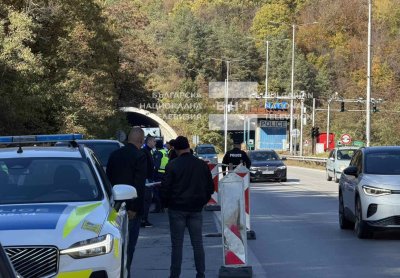
In the coming days, traffic on the roadway towards Sofia will remain restricted on the Struma motorway between kilometres 97 and 104. Vehicles travelling from Sandanski to Blagoevgrad will be diverted at km 104 onto Road I-1 (Sofia–Kulata) and continue to the Blagoevgrad South junction.
The restriction is due to a landslide at km 103 on the Struma motorway, caused by soil saturation on the slope. Immediately after the incident, experts from the Blagoevgrad Regional Road Administration and geologists carried out an inspection. Traffic in the carriageway towards Sofia will remain restricted until the necessary works are completed and road safety is ensured.
Traffic towards Sandanski and Kulata on the Struma motorway is unaffected.
During peak days and hours, drivers of heavy goods vehicles over 12 tonnes may use alternative routes on the national road network, in line with the existing permanent traffic regulations.
The Road Infrastructure Agency is urging drivers to exercise caution, comply with traffic rules and speed limits, and avoid risky overtaking manoeuvres that could endanger other road users. Drivers are also reminded not to use emergency lanes on motorways to bypass congestion.








 Чуй новините
 Подкаст