

Strengthening the administrative capacity of local authorities is absolutely essential, particularly in small municipalities, so that municipal administrations can better serve their citizens and reduce the errors and irregularities identified by the National Audit Office during its audits.
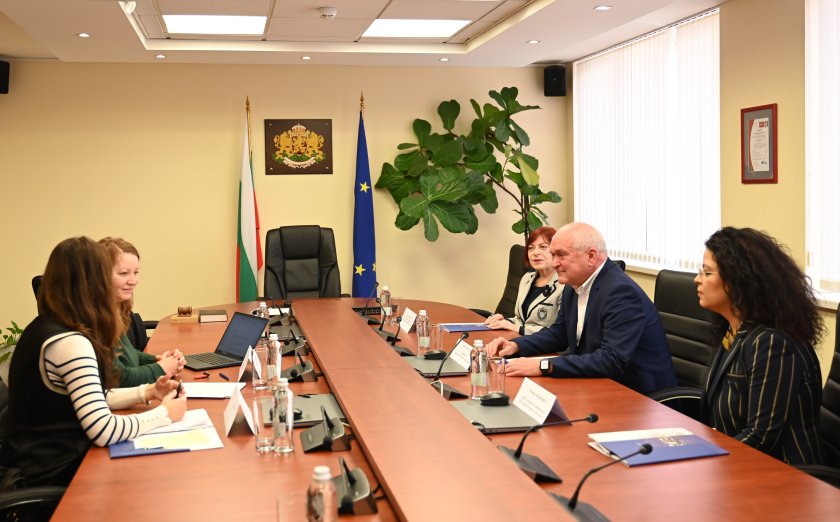
This was stated by the President of the National Audit Office, Dimitar Glavchev, during a meeting with Izabela Barati, Head of the World Bank mission focused on assessing the administrative performance and capacity of municipalities (the MAPCAF project) and examining the credit climate for local authorities.
According to Glavchev, improving administrative capacity would also enable municipalities to manage their debt more effectively.
“Auditors from the National Audit Office are making every effort, within the scope of their powers, to support municipal administrations through their audit work,” he said.
Last year, 249 financial audits were carried out on municipalities’ annual financial statements for the previous year. A total of 251 such audits are planned for 2026, out of a total of 265 municipalities in Bulgaria. In addition, compliance audits were conducted, examining the legality of decisions taken by municipal administrations. Audits also covered the processes of incurring, managing and reporting municipal debt, as well as the implementation of investment projects.
The President of the National Audit Office highlighted two particularly significant weaknesses identified in the work of municipalities. The first concerns breaches of statutory debt limits under the Public Finance Act, which stipulates that annual debt repayments for each municipality must not exceed 15% of the average annual amount of own revenues and equalisation subsidies over the previous three years. In some municipalities, however, these payments reach as much as 70%, with old debts being refinanced by new borrowing, creating a spiral of indebtedness.
Another serious problem, according to Glavchev, is the very low level of tax collection in many municipalities. This is a key factor in achieving higher revenues and in complying with the statutory debt threshold.
The meeting was also attended by Teodora Bakardzhieva-Lyutskanova and Pavlina Mihaylova, chief auditor-methodologists in the Office of the President of the National Audit Office. They outlined additional irregularities and problems identified during audits related to the incurrence, management and reporting of municipal debt. These include poor management of municipal property, a lack of communication with local communities regarding the rationale for loan-financed projects, insufficient publicity and transparency in all activities related to debt, the assumption of debt more than 39 months after the start of a municipal council’s term, breaches in the provision of municipal guarantees, and a formalistic approach to investment projects that prioritises the absorption of funds over tangible results.
Случаят "Петрохан": Продължава издирването на собственика Ивайло Калушев
Секциите в държавите извън ЕС и извън дипломатическите ни мисии се ограничават до 20, гласува НС