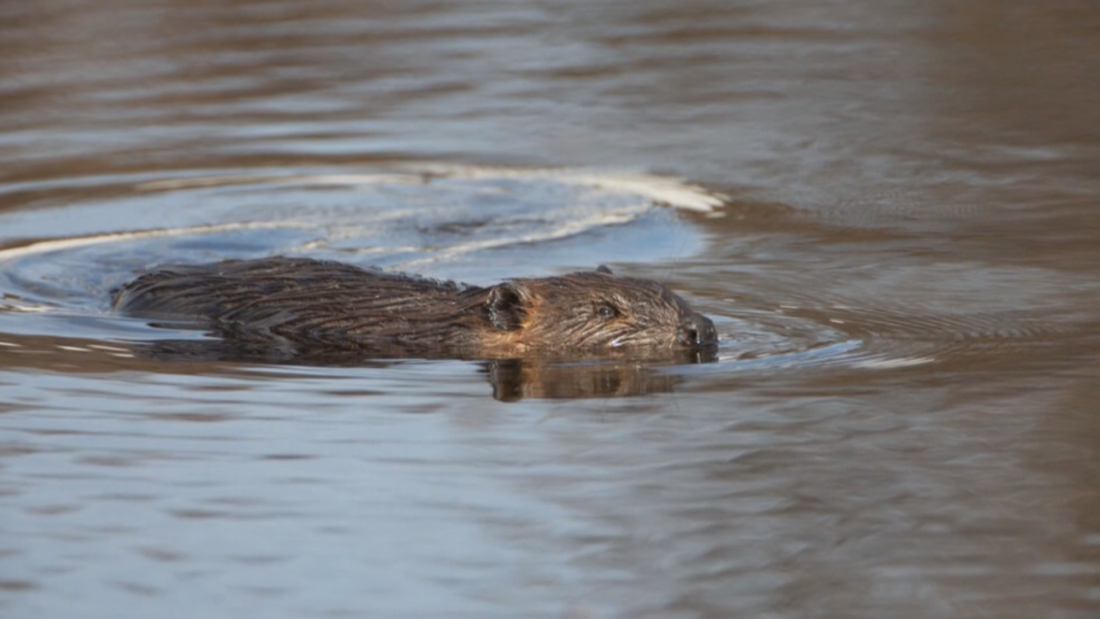
The European beaver, considered extinct in Bulgaria for more than a century and a half, is expanding its territory in the Ruse region (Northern Bulgaria). Its first confirmed appearance in the country was documented about five years ago, and its newest known habitat is along the Cherni Lom River near the village of Tabachka. Local residents have managed to take a picture of the rodent.
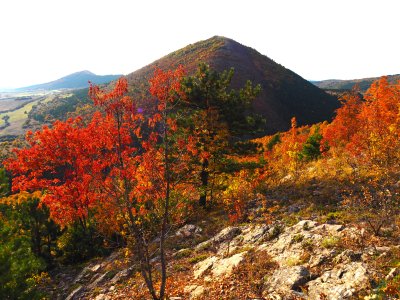
Tabachka lies about 35 kilometres from Ruse, in the scenic Polomie area. As early as last year, locals noticed that they had new “guests” in the Cherni Lom, which have since become increasingly active. Ivelin Mikov managed to capture them on his mobile phone.
“I didn’t know it was a beaver. I was seeing one for the first time. I noticed that two or three trees had been gnawed and I told Dido,” he said.
Daniel Tsolov added:
“So many trees have been chewed through. I doubt it’s just one beaver. I assume it’s a family. Most likely they are active at night, because during the day there are people around, moving back and forth. So it’s unlikely to be during daylight. It’s probably at night.”
The two friends filmed the gnawed trees in Daniel’s garden, which borders the river. They also noticed a path made by the animals. On the opposite bank, dozens of trees have been felled, suggesting that the beavers’ habitat is nearby.
Boyana Kuyumdzhiyeva, whose yard is close to the river, described her experience:
“In November, two or three months ago, I was sitting at home and heard trees falling, even though there were no chainsaws, no wind, no snow, nothing. It was strange. My husband said, ‘You’re imagining things.’ Then we came down here and saw the trees piled up, one after another, freshly gnawed. It wasn’t a natural disaster. I was personally very happy, because I love all animals. I want to see it, but I still haven’t.”
Daniel Tsolov said that only in the past month or two had people started paying serious attention to the fallen trees and asking what was causing it. “Until we explained that it’s a beaver and that this is how it lives. It’s a rodent,” he added.
For local resident Mincho Minchev, the beaver’s return carries a deeper meaning:
“The appearance of this beaver means only one thing: nature is wise. Despite all human attempts to destroy it, in the end it will prevail. That’s why I’m personally happy they are here.”
In recent years, the river has suffered from serious pollution, so the presence of beavers also indicates something else: a cleaner natural environment. However, their reputation as builders can present challenges.
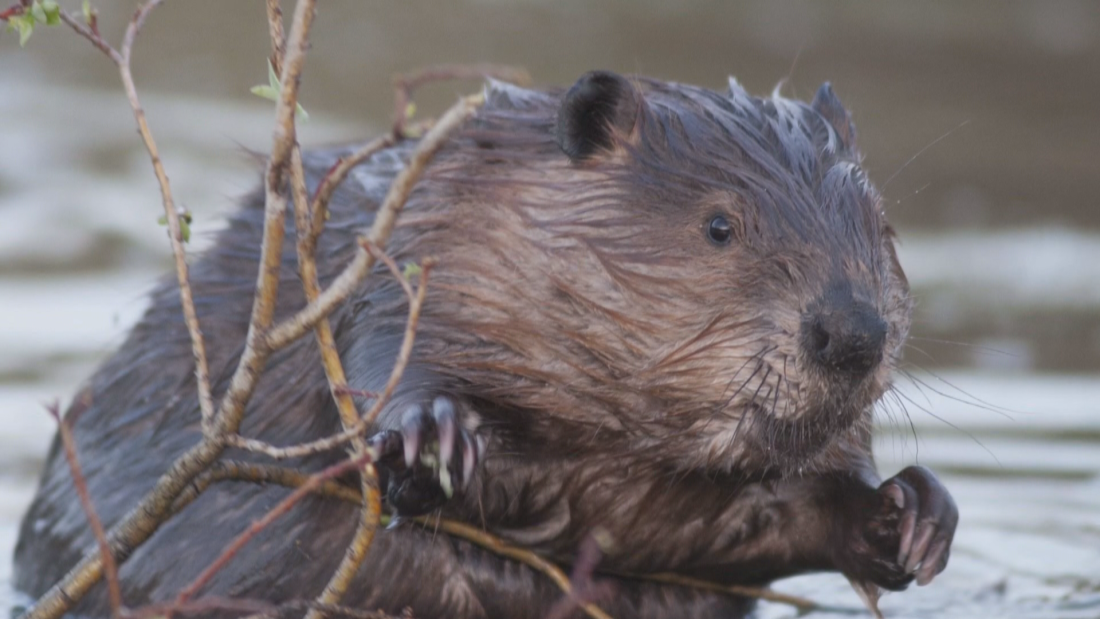
According to Krasimir Kirov from the Eco Museum with Aquarium in Ruse, the beaver is widely known among scientists as “nature’s engineer”.
“It usually builds dams. But there is a specific feature here. Since the Eurasian beaver began to re-establish itself in our region, it has not been building dams. Instead, it adapts to the conditions it finds. Yes, it gnaws trees and uses them for food, mainly the branches, but it definitely does not build dams because it has enough natural shelters. The Cherni Lom River is very deep, which suits it. That’s why dams are not necessary,” he explained.
Nevertheless, trees felled into the river can cause practical problems. This is why local authorities are considering a sensible solution.
Penkа Yotova, the mayoral representative of Tabachka, said:
“In principle, when the weather allows, we will clear the trees that have fallen into the river as a result of the beaver’s activity.”
Asked what the new “friend” should be called, she smiled:
“Since it’s ours, we’ll call it Tabachko.”
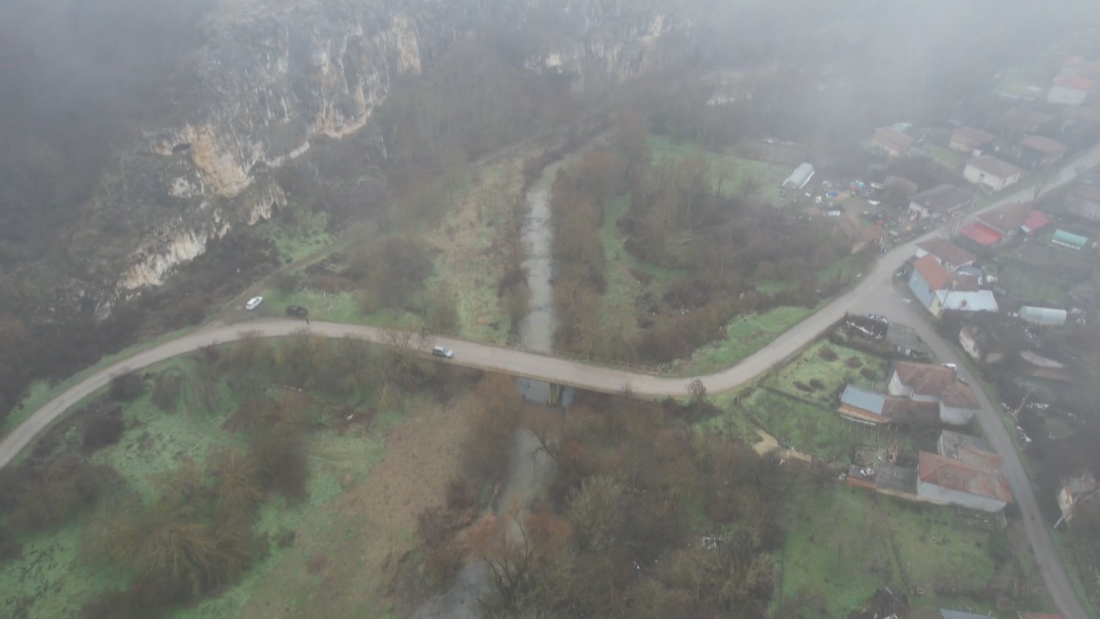
So the family of “Tabachko” and “Tabachka” is warmly welcomed to this beautiful part of the Ruse Polomie. Their lives will now be observed and studied more closely. Scientists are clear that their presence poses no direct threat.
“Absolutely not,” said Krasimir Kirov. “This is a mammal species that is not known to transmit diseases dangerous to humans or other species. It can, however, cause damage to forestry, as you have seen, but that is part of its natural behaviour.”
Beavers are social animals. Their families usually include several young, which can live with their parents for up to two or three years. According to studies by the Bulgarian Academy of Sciences, between 150 and 170 beaver families have been living in recent years along the Bulgarian stretch of the Danube River and its tributaries.








 Чуй новините
 Подкаст