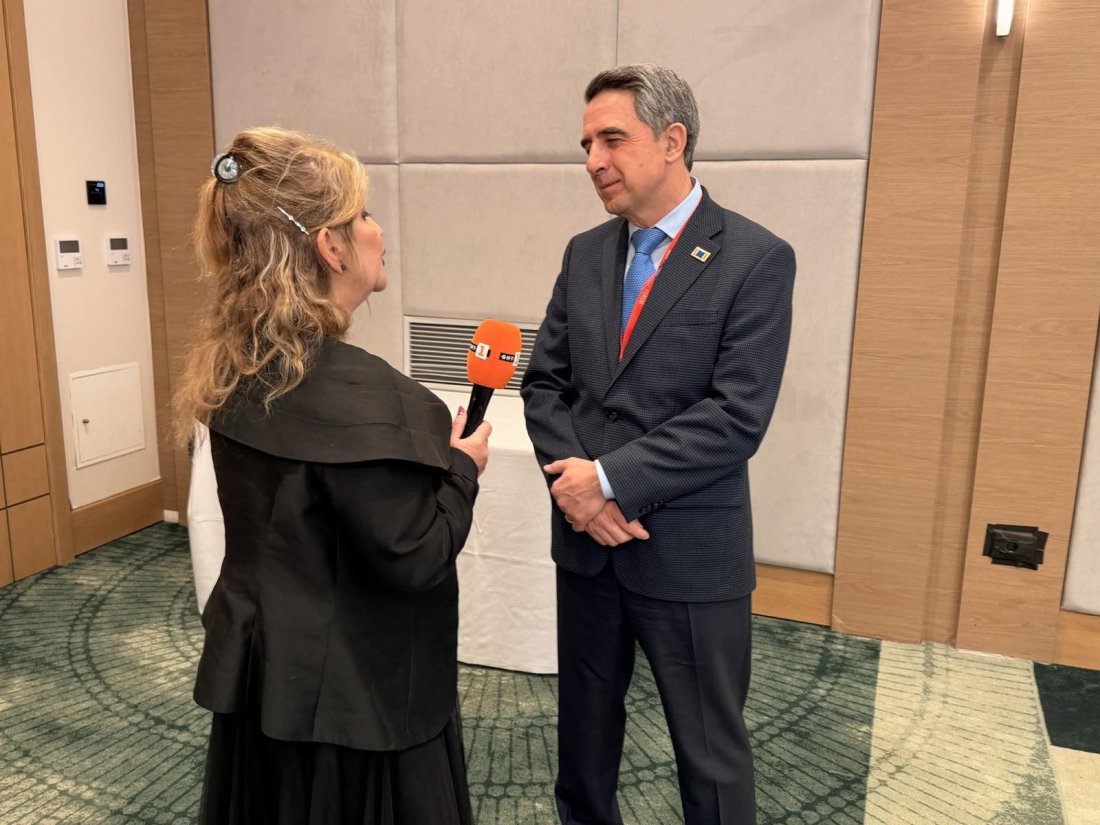
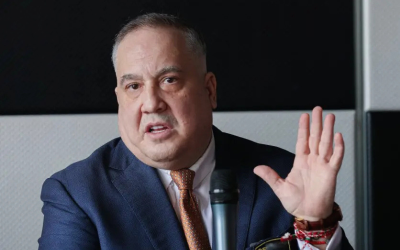
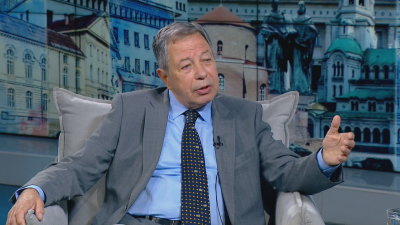
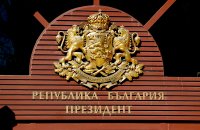
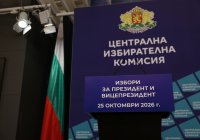
Former President Rosen Plevneliev (2012–2017) told BNT on January 27 that peace can only be achieved through established rules and international institutions, rather than through informal councils with unclear functions. He commented on Bulgaria’s signing of Donald Trump’s Board of Peace Charter, the future of strategic relations with the United States, and President Rumen Radev’s move into party politics.
According to Plevneliev, a potential “voluntary abdication” by Radev would be unprecedented in Bulgarian democracy and could trigger a significant reshaping of the political landscape.
BNT: Mr. Plevneliev, how do you assess Bulgaria’s participation in Donald Trump’s so-called Board of Peace and the signing of the charter by outgoing Prime Minister Rosen Zhelyazkov? Was it a good move?
Rosen Plevneliev: “My personal view is clear – if it were up to me, I would not have signed such a document. The reason is simple: neither President Trump, nor President Putin, nor many of the other heads of state involved in this Board represent a systematic effort for peace. True peace is only possible where there are rules and functioning institutions. Today we see how these very leaders are undermining the rules of the international order rather than upholding them.
The real path to peace passes through the UN and the Security Council – through debate, consensus-building, and legitimate decisions. Peace cannot be achieved through the creation of parallel bodies with unclear functions and rules.
Nevertheless, I understand why the Bulgarian government signed, and I see three main reasons for doing so.”
BNT: What are these reasons?
Rosen Plevneliev: “The first reason is the personality of Nikolay Mladenov. He is an exceptional diplomat – one of Bulgaria’s finest – and deserves full support in his mission for peace in Gaza. I hope he succeeds, but this is only possible if the rights of both Palestinians and Israelis are respected, and if the two-state principle is upheld.
The second reason is Prime Minister Zhelyazkov’s argument, with which I agree: it is better for Bulgaria to be at the table than on the menu. This is a pragmatic and reasonable stance. There is also a worst-case scenario: in a few months, Bulgaria could have a left-wing President, a left-populist prime minister, and a populist parliamentary majority, while Presidents Trump and Putin divide the world and spheres of influence. In such a context, it is better to be a participant rather than a subject.
The third reason is Bulgaria’s strategic partnership with the United States, which is set to deepen further. Plans for the construction of a nuclear power plant are underway, and decisions regarding Lukoil – the largest refinery in the Balkans – may lead to American investment. I therefore understand the government’s pragmatic arguments. My own arguments, however, as a former President, are primarily moral.”
BNT: You mentioned a possible future with a left-wing president and prime minister. How do you view Rumen Radev entering party politics?
Rosen Plevneliev: “Every President is remembered in history by no more than one sentence. The sentence for President Radev will be: ‘abdicated from office.’ He is leaving the presidency to fight for power and become Prime Minister.
To me, this represents a serious setback for Bulgarian democracy – something no previous head of state has attempted. This would be the third abdication in the history of the Third Bulgarian State, but the abdications of Battenberg and Ferdinand were for completely different, involuntary reasons. Here, we are talking about the first voluntary abdication of a Bulgarian President – an act that does not serve our democracy in any way.
From the very beginning, it was clear that Radev’s intention was not to unite the nation, but to pursue power.”
BNT: Will this lead to a reshuffling of voters?
Rosen Plevneliev: “Absolutely. I hope Bulgarian citizens will vote wisely and recognise who is who. What kind of alternative is President Radev, after nine years in power, appointing seven caretaker governments, and signing the ‘Botash’ agreement the way he did – at the very last moment?
I expect a reshuffling of the political landscape and, God willing, more democracy, less populism, greater coalition culture, and clear long-term priorities for Bulgaria.”
BNT: Is a future collaboration between GERB and Rumen Radev’s party possible?
Rosen Plevneliev: “Absolutely not. I believe GERB will be in the comfortable position of being the only genuine political opponent to Radev. My greater concern, however, is that in 2026 we could witness one of the biggest betrayals in Bulgarian politics.
This would be a decision by the 'We Continue the Change - Democratic Bulgaria' bloc, which identifies itself as a pro-European and pro-democracy force, to cooperate with President Radev – the same person who called them ‘charlatans.’ If this is not the case, I expect a clear and unequivocal denial from their leaders. They should publicly state: ‘We will never, under any circumstances, cooperate with President Radev.’ DB has stated this clearly, but WCC remains silent – the very people who were born under Radev’s wing, supported his re-election, and were later labelled ‘charlatans.’
We all remember the posters: ‘President Radev is the President of the Honest.’ History, however, has unfolded in a very different way.”
BNT: You talked about a possible future with a leftist president and a leftist prime minister. How do you see Rumen Radev's emergence on the party scene?
Rosen Plevneliev: "Every president remains in history with no more than one sentence. The sentence for President Radev will be: 'abdicates from office'. He is leaving the presidential institution to fight for power and become prime minister. For me, this is a serious downfall of Bulgarian democracy - something that no head of state has ever dared to do. This is the third abdication in the history of the Third Bulgarian Kingdom, but the abdications of Battenberg and Ferdinand were for quite different, involuntary reasons. We are talking here about the first voluntary abdication of a Bulgarian president - an act that does not help our democracy in any way. It was obvious from the very beginning that Rumen Radev's understanding was not to be a unifier of the nation, but to fight for power."
BNT: Will this lead to a realignment of voters?
Rosen Plevneliev: "Absolutely yes. I hope the Bulgarian citizens will vote wisely and realise who is who. I expect a reshuffle in the political space and, God forbid, more democracy, less populism, more coalition culture and clear long-term priorities for Bulgaria."
BNT
Rosen Plevneliev: "Absolutely not. I think that GERB will be in the comfortable position of being the only real political opponent of Rumen Radev. My biggest fear is another - that in 2026 we may witness one of the biggest betrayals in Bulgarian politics. This would be a decision by the PP-DB, who describe themselves as a pro-European and pro-democracy bloc, to collaborate with President Radev - the same man who called them "charlatans". If this is not the case, I expect a clear and firm rebuttal from their leaders. They should come out and say: 'We will never and in no way cooperate with President Radev. The DB state it clearly, the PP, however, are silent - the same who were born under President Radev's wing, who supported him when he was re-elected, and then were called "charlatans". We all remember the posters "President Radev is the president of the honest". History has unfolded very differently."







 Чуй новините
 Подкаст