With a Divine Liturgy in the historically symbolic location of San Stefano, once a suburb of Constantinople, Bulgarian Patriarch Daniil on December 28 concluded his four-day peace visit to the Ecumenical Patriarchate.
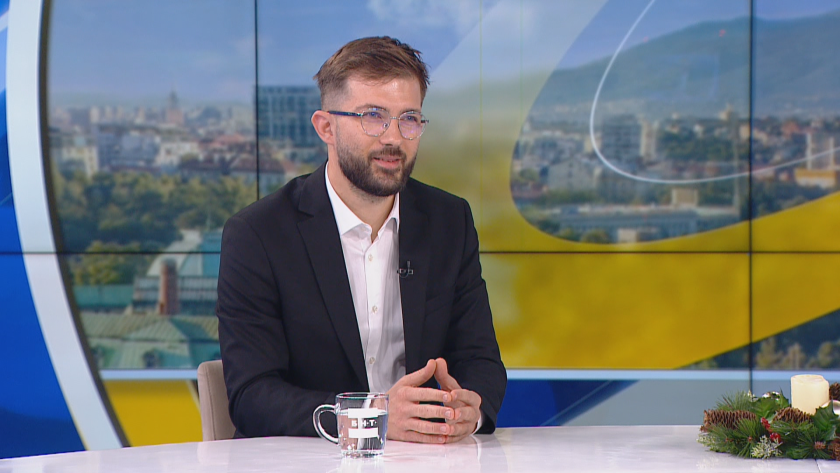
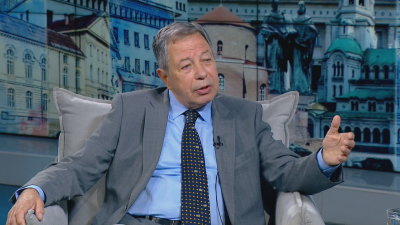
Alexander Smochevski, Advisor to the Bulgarian Patriarch on Canonical Matters:
“I served as interpreter during these four days of the visit. As we understand it, this was a peace visit. But what exactly does a peace visit mean? When a primate of an Orthodox Church—a patriarch or archbishop—is elected, one of the first actions they take after their election is to send messages of peace to the other primates of autocephalous and patriarchal churches, informing them of their election and enthronement.
The next step, following these messages of peace, is the undertaking of peace visits. These have become particularly common over the last 100 years, thanks to developments in transportation and the increased ease of travel. The Bulgarian Orthodox Church has conducted such peace visits since 1945. All of its primates to date—Exarch Stefan, Patriarch Kiril, Patriarch Maxim, Patriarch Neofit, and now Patriarch Daniel—have upheld this tradition.
As the name suggests, a peace visit is an expression of peace. The highest expression of this peace between churches, and of love among us, is the celebration of the Divine Liturgy, which embodies this unity. The culmination, the peak, of any peace visit undertaken by a primate of a local church to another church is the joint celebration of the Divine Liturgy.”
The Bulgarian Patriarch’s adviser did not deny that divisions exist.
“We live in a world – this is no secret, it is obvious – where divisions are profound. They are deep at a geopolitical level, at an ecclesiastical level, even at an interpersonal level, including within our own society in Bulgaria. These divisions take the form of political rifts and military conflicts.
The Church is a herald of peace, a preacher of the peace that our Lord Jesus Christ entrusted to us and continues to bestow upon us. This is peace from above – a peace that is not of this world – and the Church seeks to embody precisely this idea, this peace, in its mission.
The message of Patriarch Daniel and Ecumenical Patriarch Bartholomew during this joint meeting, held as part of the peaceful visit, was exactly that: what unites us is far greater than what divides us, and where differences do exist, they must be resolved through dialogue.”
Asked whether there are now greater grounds than ever to be concerned about the unity of the Orthodox world, Smochevski replied:
“Our Lord Jesus Christ told us that even the gates of hell shall not prevail against the Church – that is, the Church will endure and remain forever, until the end of time. However, the fact that divisions exist at present, and that they are serious, is undeniable. Yet if we were to withdraw into ourselves, if we were to stop communicating with one another, would we be able to resolve these divisions? Could we overcome them and restore ecclesiastical – and, if you will, even political – peace and unity? That would not be possible. When people communicate face to face, at close quarters, a different kind of contact and relationship is created, and this is why such encounters are so important. Beyond the ecclesiastical aspect – the celebration of the Divine Liturgy, which is the most essential element and the very core of the visit, the Holy Eucharist where our primates partake from one Chalice and serve together – the visit also has a diplomatic dimension. It is an attempt to engage in dialogue, to raise specific issues and to seek ways to resolve them. In this respect, I believe that the visit of Bulgarian Patriarch Daniil to Constantinople, to the Ecumenical Patriarchate, accompanied by hierarchs of the Holy Synod of the Bulgarian Orthodox Church, was more than successful.”
***
Bulgarian Patriarch and Metropolitan of Sofia Daniil arrived on his first peace visit to the Ecumenical Patriarchate in Istanbul on the feast of the Nativity of Christ, December 25.
This is his first peace visit since his election and enthronement as Bulgarian Patriarch in 2024. Prior to his departure for Constantinople, Turkey, the Patriarch served a service of holy water, during which he prayed for a safe journey and God’s blessing.
Accompanying Patriarch Daniil in the Church delegation were the Metropolitans: Antonios of Western and Central Europe, Ioannis of Varna and Veliki Preslav, Naum of Ruse, Kiprian of Stara Zagora, Grigoriy of Vratsa, Pakhomiy of Vidin, as well as Bishop Gerasimos of Melnik, Chief Secretary of the Holy Synod.
On the second day of his visit, Patriarch Daniil emphasised the Church’s role in contemporary times:
“In times such as these, when lawlessness multiplies beyond recognition, when the nations again ‘rage and devise vain things’ (Psalm 2:1) against God’s will, when we witness the increasing devaluation of human life and the dignity of the human person, and when our entire world is shaken by the destructive forces of darkness, the Orthodox Church is called to raise its voice even higher in a collective testimony to the light and peace that Christ brought us through His birth," said Bulgarian Patriarch and Metropolitan of Sofia Daniil on December 26, who celebrated a solemn Divine Liturgy alongside Ecumenical Patriarch Bartholomew at the Church of St. George the Victorious, located in the Fener district of Istanbul.
In his First Epistle to the Thessalonians, the holy and all-praised Apostle of the Nations, St Paul, exhorts the faithful: “Give thanks in all circumstances; for this is the will of God in Christ Jesus for you” (1 Thessalonians 5:16–18). “We, too, wish above all to give thanks – to God and to Your All-Holiness – for the exceptional spiritual joy of serving together today the mystery of the holy and divine Eucharist in the Patriarchal Church of the Holy Great Church of Christ,” Patriarch Daniil said.
“The holy and bloodless Eucharistic sacrifice that we offer to God – in accordance with the command given to us personally by His Only-Begotten Son (cf. Luke 22:19) – is both the heart and centre of the life of the Church and a confirmation of our participation in His Body, which is precisely the Holy Church itself. At the same time, it is the most visible testimony and sign of our unity, shared faith and common action,” the Bulgarian Patriarch added.
He quoted “the great Father of the Church and predecessor on Your All-Holiness’s see – Archbishop of Constantinople, St John Chrysostom”, who said that “the name of the Church is not a name of division, but of unity and concord.”
“These words of his, which echo through the centuries to this day, expressing at the same time the consensus of all the Fathers and teachers of the Church on this matter, remain just as relevant today, when ecclesiastical unity is facing new challenges and is once again being put to the test. We sincerely hope that this visit of ours here, to the Mother Church and First Throne of Orthodoxy, will contribute to the strengthening and consolidation of this God-given unity, which is both our aspiration and our most heartfelt desire,” Patriarch Daniil noted.
“We always remember and draw inspiration from the words of St John Chrysostom, according to whom: ‘Worldly honours appear greater and higher when they are gathered in a single person; whereas in spiritual matters, in ecclesiastical affairs, the opposite is true: the privilege of honour shines most brightly when many take part in the presidency, when it is not one person alone, but many who share in it…’ In other words, when we live among ourselves in the unity of conciliar love, which is mutual dialogue, dialogical communion and reciprocity, then we truly live within the Church,” Patriarch Daniil added.
He noted that on this day, the second after the Nativity of Christ, “we celebrate the Feast of the Synaxis of the Most Holy Theotokos – with hymns and doxologies we praise and glorify today the one whom we know as the most precious fruit of the human race, she who made her decisive contribution to the great work of the Incarnation of God and thus to our redemption and salvation. Today the liturgical order calls out to us and invites us: ‘Come, let us praise the Mother of the Saviour!’ We are grateful for the opportunity to do this together with all of you here, in this city so dearly loved by her.”
In his address to Ecumenical Patriarch Bartholomew, the Bulgarian Patriarch said:
“Allow us, in conclusion, once again to bear witness – personally on our own behalf and on behalf of the Holy Synod, the sanctified clergy and the people of God of the Holy Bulgarian Patriarchate – to our brotherly love and deep respect for you and for the Holy Ecumenical Patriarchate of Constantinople over which you preside, together with our most heartfelt wishes for robust health, grace-filled strength and many more years of apostolic zeal on your part in the work of ministry.”
He added that the Ecumenical Patriarch “remembers well our ever-memorable predecessors, Patriarchs Maxim and Neophyte, with whom you shared mutual brotherly love and common views on the mission and ministry of our Orthodox Church in the contemporary world. Please accept also our love in Christ, as well as our assurance of our sincere desire that this good tradition be continued during the days of the ministry entrusted to us by God and by His people.”
Visit of Patriarch of Bulgaria to the Ecumenical Patriarchate Concluded with the Divine Liturgy at the Church of St. Stephen







 Чуй новините
 Подкаст