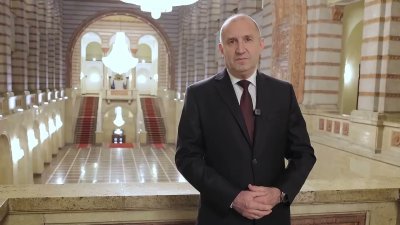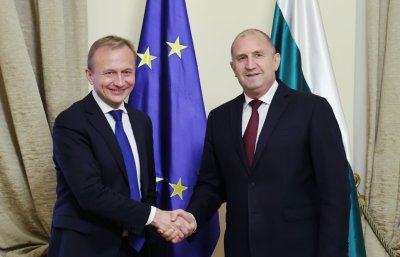
Bulgaria has been removed from the “grey list” for money laundering – a decision that restores the country’s international standing and opens up new opportunities for the Bulgarian economy, businesses and citizens. This was announced by Prime Minister Rumen Radev in a statement to the Bulgarian public, after he was informed by Justice Minister Nayden Nikolov of the decision taken today, October 30, at a plenary meeting of the Financial Action Task Force (FATF) in Paris.
Removing Bulgaria from the “grey list” had been set as a key priority in the government’s programme.
“For the first time, the Bulgarian government has included a dedicated section in its programme on dismantling the oligarchic model and fighting corruption, and it is the very first section,” the Prime Minister stressed.
He said that this commitment had received high praise during his personal meeting with the leadership of the Financial Action Task Force in September. The government’s specific actions and the legislative measures adopted by the current National Assembly had contributed to this achievement, according to the government press service.
Bulgaria was officially warned in 2021 and added to the list in 2023 due to identified strategic shortcomings in the fight against money laundering and corruption over a ten-year period. Rumen Radev recalled that previous attempts to secure the country’s removal from the list had failed because of a lack of sufficient political will or expertise. Bulgaria’s presence on the list had caused serious reputational damage and created difficulties for both the economy and Bulgarian citizens.
“Removal from the ‘grey list’ means greater confidence in our country, more investment and more jobs. Stronger protection against online and telephone scams for members of the public and businesses. Less pressure on prices. Stronger competition and a smaller shadow economy. Faster and easier payments to and from abroad,” the Prime Minister said, highlighting the tangible benefits of the decision for the Bulgarian economy and businesses.
Removal from the “grey list” brings an end to the serious difficulties associated with carrying out financial transactions with other countries. “Bulgarian citizens will no longer be humiliated, subjected to checks and, all too often, refused payments by foreign banks,” the Prime Minister stressed. He highlighted the importance of this change for Bulgarians working abroad and sending money to their families, students paying tuition fees overseas, and everyone receiving income from foreign individuals and organisations.
The Prime Minister thanked everyone who had contributed to this achievement and described the decision as a clear sign of the stability of Bulgarian institutions and an important step towards the country’s membership of the Organisation for Economic Co-operation and Development (OECD).
Prime Minister Rumen Radev stressed that the government would continue working to strengthen the system for combating corruption and money laundering, ensuring that the results achieved would be lasting.
“Our efforts will not stop here,” the Prime Minister said.
Commission for Consumer Protection Fines Two Retail Chains €75,000 for Unfair Commercial Practices
Bulgarian Hauliers Support Turkish Drivers’ Protest Against Schengen Restrictions
Deputy PM Atanas Pekanov: The Deficit Cannot Be Brought Below 3% in the First Year
Orchards Full of Unpicked Fruit: Growers in North-Western Bulgaria Complain of Low Purchase Prices and Lack of Reliable Market
Head of Utilities Watchdog: Electricity and Heating Prices in Bulgaria Will Remain Unchanged
Мая Манолова: Надценките на храните достигат 141%, веригите са заплашени от глоби до 10% от оборота
Заради повишения хром във водата: Обявиха бедствено положение в Козлодуй
ГДБОП задържа 19-годишен за кибератаки срещу БНТ, БНР и държавни институции (СНИМКИ)