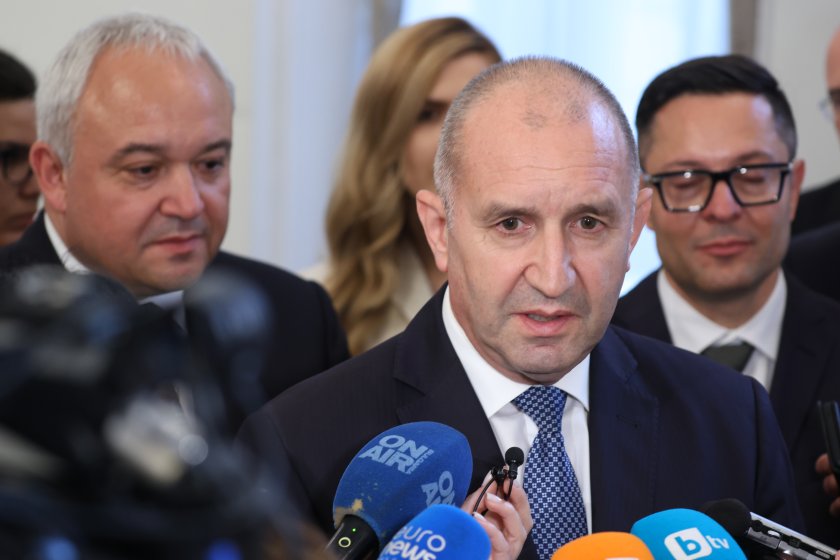
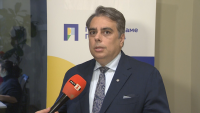
Newly elected Prime Minister Rumen Radev has told journalists at the Council of Ministers on May 8 that his government will not introduce price caps in response to rising inflation.
Asked what measures would be taken to address sharply increasing prices, the Prime Minister said the government’s objective would be to “reverse the upward trend”, rather than directly reducing prices.
“We are talking about controlling the situation, about breaking the upward trend. I have not said anything about reducing prices,” he said.
He indicated that forthcoming legislative changes would strengthen regulatory oversight, including amendments to the Competition Protection Commission framework, as well as enhanced roles for the National Revenue Agency and the Consumer Protection Commission.
Although the Competition Protection Commission is formally an independent regulator, he said the government would coordinate efforts across institutions to increase transparency in pricing and improve scrutiny of market practices.
The Prime Minister added that authorities would target what he described as violations of fair competition, with stricter sanctions and broader enforcement tools expected to be introduced.
“We will expose such cases. We will propose significantly higher penalties and more comprehensive control mechanisms,” he said.
He also stressed that the government’s focus would be on protecting Bulgarian producers from what he called unfair practices by large retail chains, arguing that some domestic suppliers were being forced to sell at near-cost levels.
Radev reiterated that no price ceilings would be introduced, but insisted that penalties would apply to all actors engaged in anti-competitive behaviour.
Prime Minister Rumen Radev has said that the position of Chief Secretary of the Ministry of Interior will continue to be filled in line with the principle of institutional continuity, adding that the current officeholder is fully performing their duties.
He also indicated a shift in priorities for the Ministry of Interior, saying its efforts should move from ensuring fair elections and tackling vote-buying towards combating corruption and wider criminal offences.
The Prime Minister confirmed that a new head of the State Agency for National Security (SANS) will be proposed soon.
“There will be a new name. At the moment Mr Denyo Denev is acting in the role; he is the deputy chairman of SANS,” he said.
Radev said the Council of Ministers would hold its first meeting the same day, stressing urgency in launching the government’s work.
“I will gather the ministers today. There is no time,” he said.
Commenting on the emotions at the job change from President to Prime Minister, he said:
“There is no time for emotions. We are facing a huge amount of work, so emotions come second,” he said.
Asked about the newly appointed Justice Minister, Radev expressed confidence in his performance.
“I am convinced that Mr Naydenov will very soon demonstrate his qualities and abilities,” he said.
Prime Minister Rumen Radev has commented on the parliamentary rejection of a proposal by Democratic Bulgaria to establish an ad-hoc inquiry committee.
The proposed commission would have examined potential discrepancies between the asset declaration of the leader of the Movement for Rights and Freedoms, Delyan Peevski, and his actual financial and material wealth.
Radev said there was a need to clearly distinguish between the roles of the executive and the legislature, stressing that parliamentary temporary commissions are intended for studies and inquiries rather than formal investigations.
“If you open the rules of procedure of the National Assembly, temporary commissions are set up to conduct studies and inquiries. They do not have investigative functions,” he said.
He argued that extended parliamentary debates on such commissions risk wasting valuable legislative time.
“We could lose two months of parliamentary time… and during those two months there would be a political battle between the lobbying interests of Prokopiev and Peevski,” he added.
The Prime Minister called instead for Parliament to prioritise urgent legislative work, including laws on prices, the state budget, judicial reform, the Supreme Judicial Council, and the Recovery and Resilience Plan.
“From Monday, parliament should urgently begin work on the bills already submitted… This time is critically important,” he said.
He concluded that government action would be based on “clear, verified and proven information.”








 Чуй новините
 Подкаст