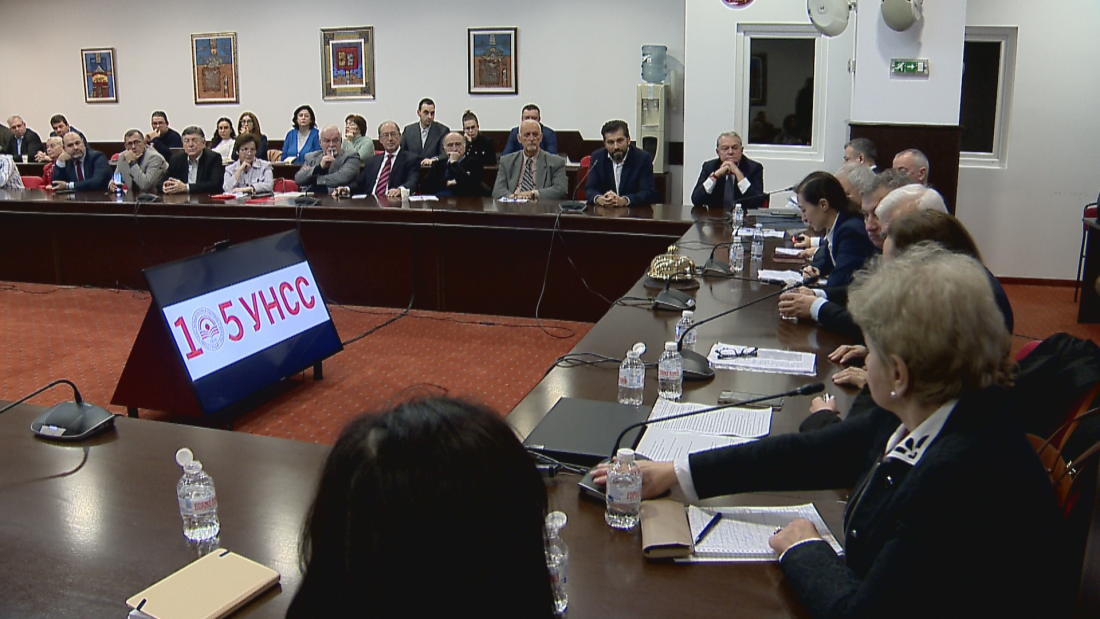
Bulgaria should aim to be among the countries moving at the “first speed” in Europe, but must also play a more active role in shaping the development of the European Union, diplomats and experts said during a discussion on the future of European integration.
They identified political instability as a major obstacle, alongside the lack of equal criteria for countries that might become part of the EU’s core group.
Six leading countries driving deeper and faster integration in the EU are Germany, France, Italy, Spain, Poland and Netherlands. They are seeking closer cooperation in defence, the economy and competitiveness. The key question, experts said, is whether other countries will be able to join them based on clear criteria or primarily on economic strength and political influence.
Lyubomir Kyuchukov, director of the Institute for Economics and International Relations, said Bulgaria could position itself among either the leading countries or those joining later, depending on the issue.
“Bulgaria, by its nature, can be among the leading countries on certain issues or among those joining later, as long as the concept itself allows for accession,” he said.
Experts say cohesion policy, regional stability, investment and agriculture are particularly important for Bulgaria. The country should also avoid falling behind in its European integration in areas such as the capital markets union and the digital euro. For that reason, they stress that not only the “speed” of integration matters, but also the direction of development.
Svetla Boneva, dean of the Faculty of International Economics and Politics at University of National and World Economy, said the country must first clarify its strategic direction.
“Bulgaria must define its direction before discussing speeds. The country should follow its interests, which lie in Europe, and participate in all integration processes,” she said.
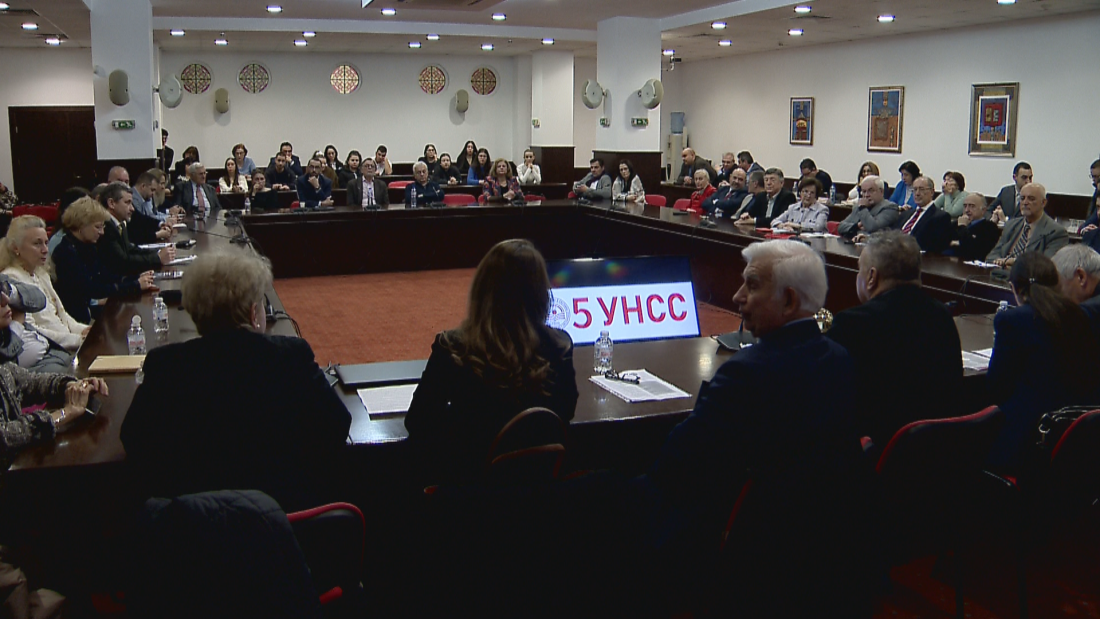
Political stability will also be crucial if Bulgaria is to defend its interests effectively alongside other European states.
Meglena Plugchieva, a former deputy prime minister of Bulgaria, warned that frequent elections and changes of government were weakening the country’s standing.
“With constant elections and government changes, Bulgaria is losing weight and profile — we are not seen as a serious partner,” she said.
Dimitar Gardev, chair of the parliamentary committee on European affairs and oversight of EU funds, added that in an increasingly competitive global environment — particularly in fields such as artificial intelligence and emerging technologies — no single country can achieve leadership alone.
Experts also pointed to the upcoming summit of EU leaders on 19 March, where strategic issues about Europe’s challenges and policy responses are expected to be discussed.






 Чуй новините
 Подкаст