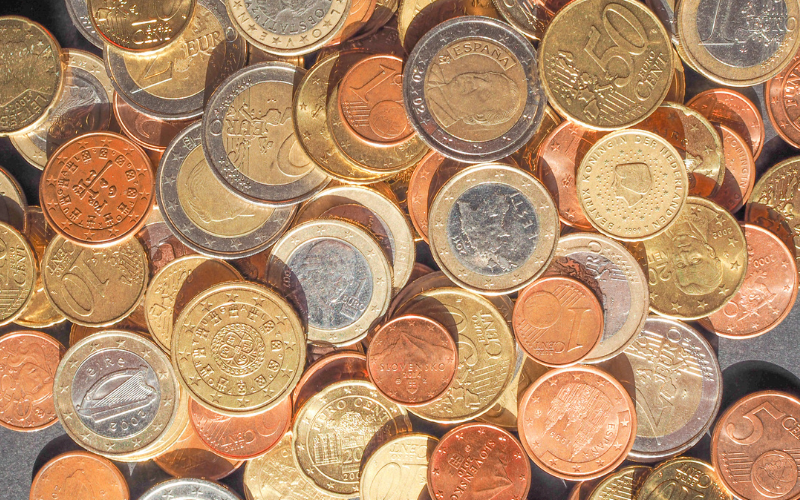
Increasingly, alongside Bulgarian euros, wallets across the country are beginning to carry coins from other EU nations. There are over 150 billion euro coins in circulation, and each one is legal tender in all countries that use the single European currency, according to the European Commission in Bulgaria’s Facebook page.
Unlike euro banknotes, which are identical across all member states, euro coins feature two sides: a common side and a national side.
The design of the common side was created by Luc Luycx of the Royal Belgian Mint. The national side, however, is unique to each country, displaying an image chosen by the issuing nation.
Which national symbols have eurozone countries selected for their coins? Explore the designs of the different euro coins and learn more about the imagery on the €1 coins.
Photos by European Commision in Bulgaria
Bulgaria’s Euro Coins
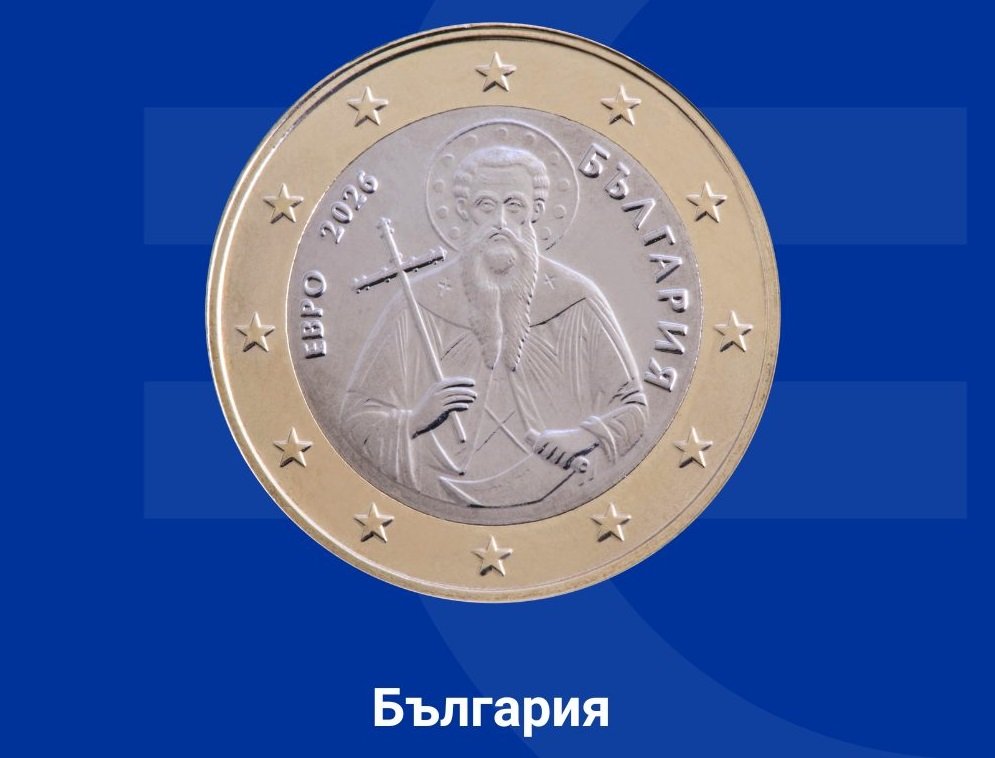
Bulgaria’s euro coins feature three different designs for the national side, each reflecting symbols from the country’s former currency. All coins also display the 12 stars of the European flag.
The €1 coin depicts St. Ivan of Rila - patron saint of Bulgaria and founder of the Rila Monastery. In his hands he holds a cross and a scroll. The image includes the year of issue, the inscription "BULGARIA" (the name of the country in Bulgarian) and the word "EURO" in Cyrillic.
Austria’s Euro Coins
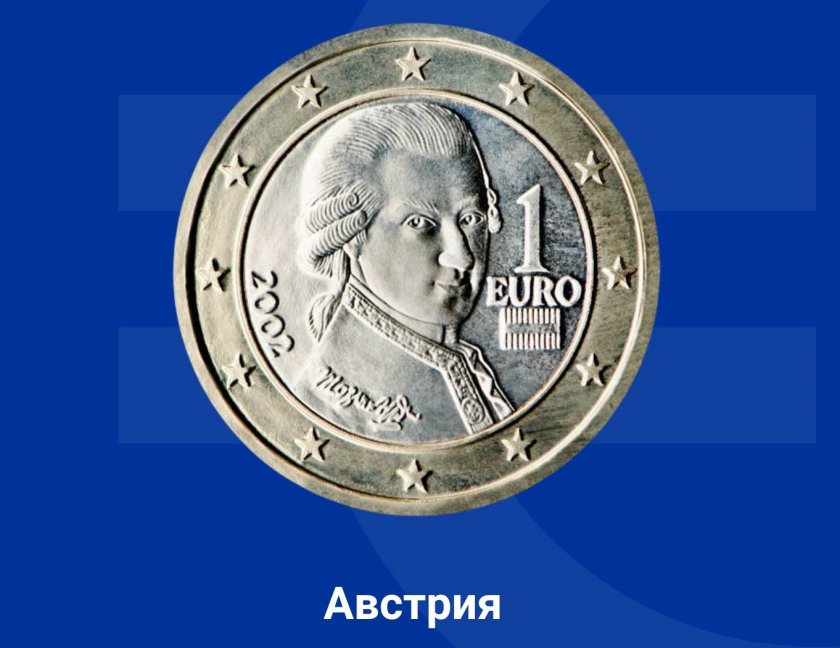
The design of Austria’s euro coins was selected by a national commission and approved following a public opinion survey. The artwork is by Austrian artist Josef Kaiser.
On the €1 coin, the composer Wolfgang Amadeus Mozart is depicted, symbolising Austria’s rich musical heritage.
T
Belgium’s Euro Coins
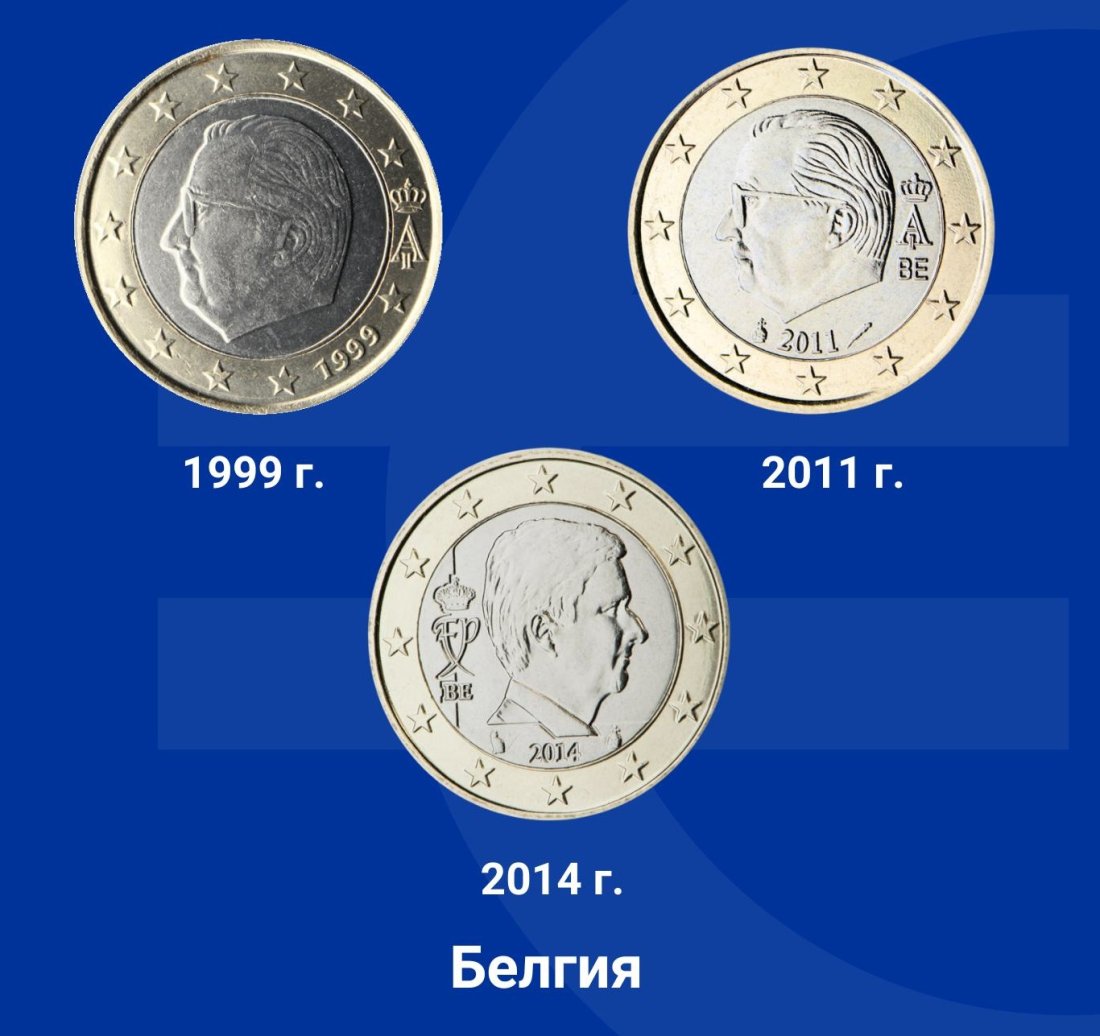
The design of Belgium’s euro coins was created by Jan Alfons Koestermans, director of the Municipal Academy of Fine Arts in Turnhout. There are three series of coins in circulation.
In the first series, the inner part of all Belgian euro coins features King Albert II. The outer part displays the royal monogram—a capital letter “A” topped with a crown—surrounded by the 12 stars symbolising Europe, along with the year of issue.
To comply with European Commission guidelines, Belgium made minor design changes in 2008. In the second series, King Albert II remains on the coin, but the royal monogram and year of issue are relocated to the inner part of the coin, alongside the mint mark and the country code “BE.”
In 2014, Belgium introduced the third series of euro coins, depicting King Philippe, his royal monogram “FP,” and the country code “BE.” The mint mark is positioned on either side of the year of issue.
Germany’s Euro Coins
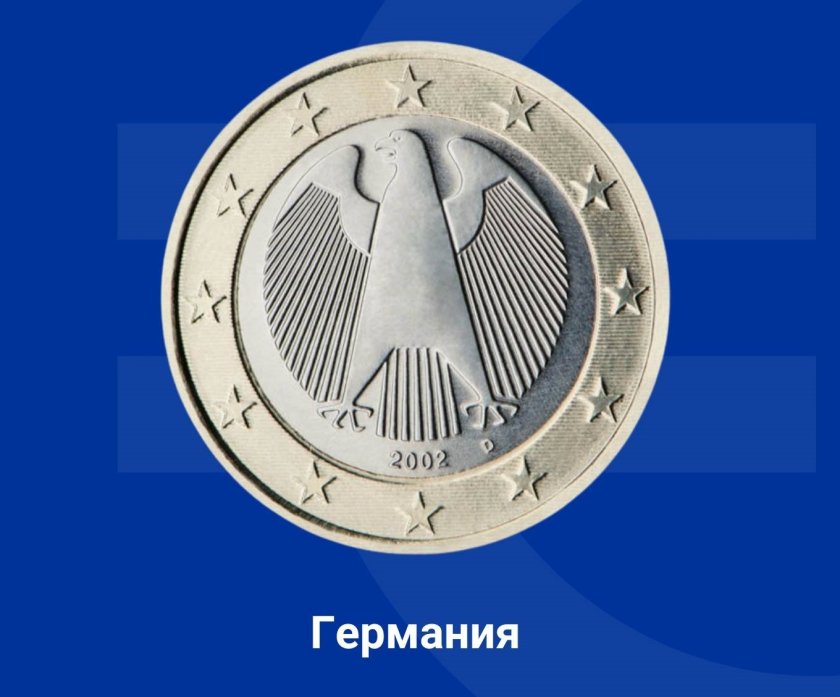
In Germany, government representatives and numismatic experts selected three different designs for the country’s euro coins.
On the €1 coin, an eagle is depicted—a traditional symbol of German sovereignty—surrounded by the stars of Europe. The design was created by Heinz and Snežana Ruseva-Hoyer. Snežana is Bulgarian, originally from the village of Krushari in the Dobrich region.
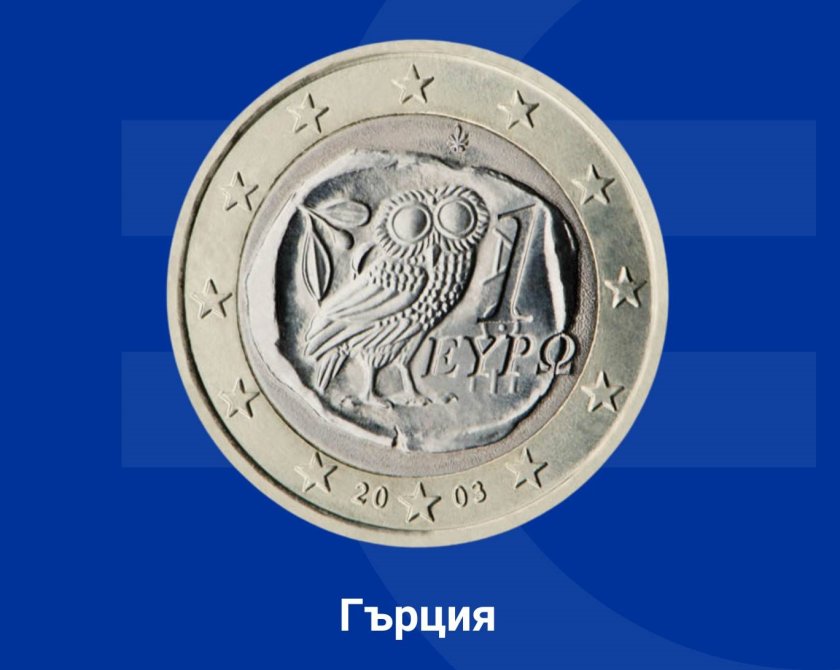
In Greece, the designs for the various euro coins were proposed by a national technical and artistic committee and approved by the Minister of National Economy and the Governor of the Bank of Greece. The designs were created by sculptor Georgios Stamatopoulos.
On the €1 coin, an owl is depicted—a motif taken from an ancient Athenian 4-drachma coin from the 5th century BCE.
Estonia’s Euro Coins
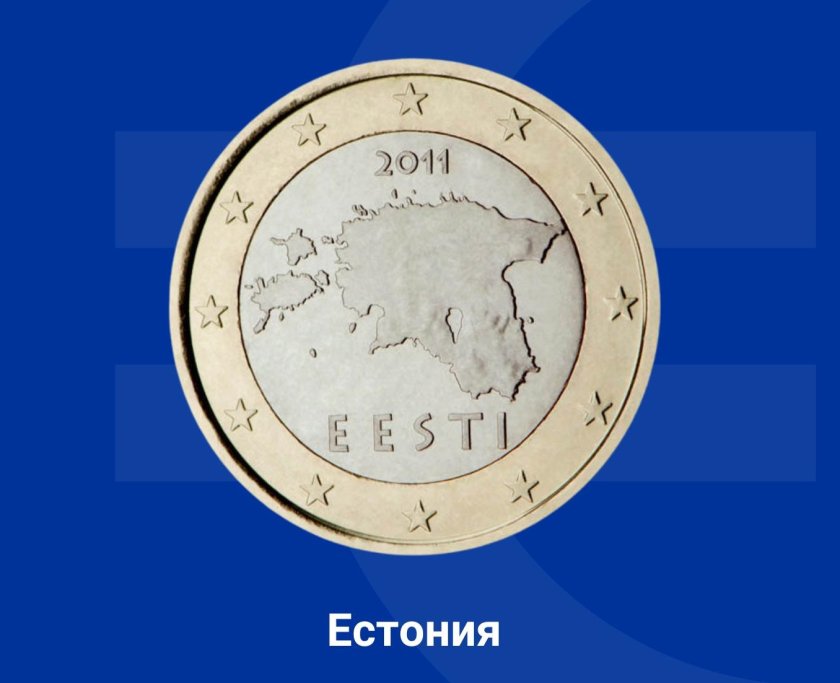
All Estonian euro coins feature the same design on the national side.
The coins depict the outline of the map of Estonia along with the inscription “Eesti” (which translates to “Estonia” in Bulgarian).
Ireland’s Euro Coins
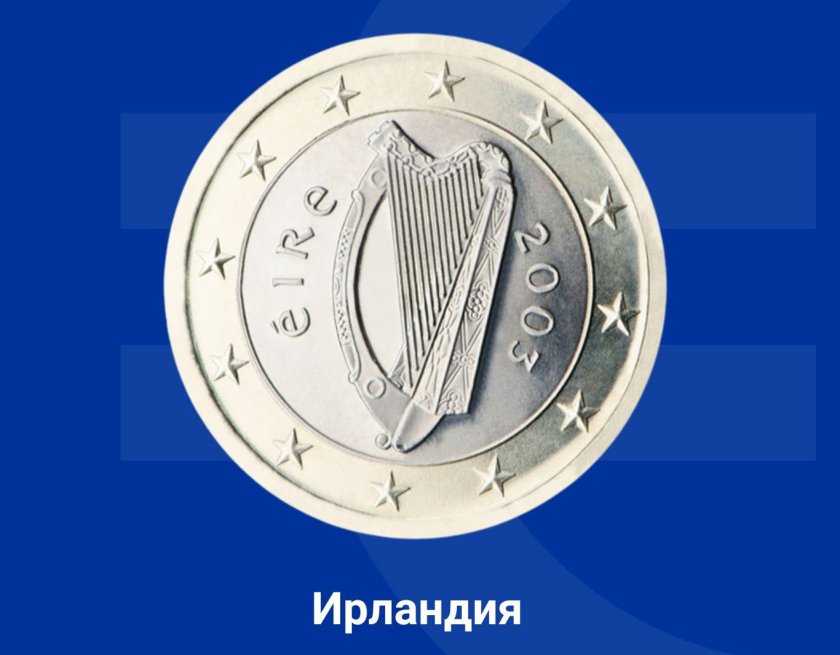
The Government of Ireland selected a unified national design for all Irish euro coins.
The coins feature the Celtic harp—a traditional symbol of Ireland—accompanied by the year of issue and the inscription “Éire” (“Ireland” in Irish).
The harp design was created by Irish typographer and graphic designer Jarlath Hayes.
Spain’s Euro Coins
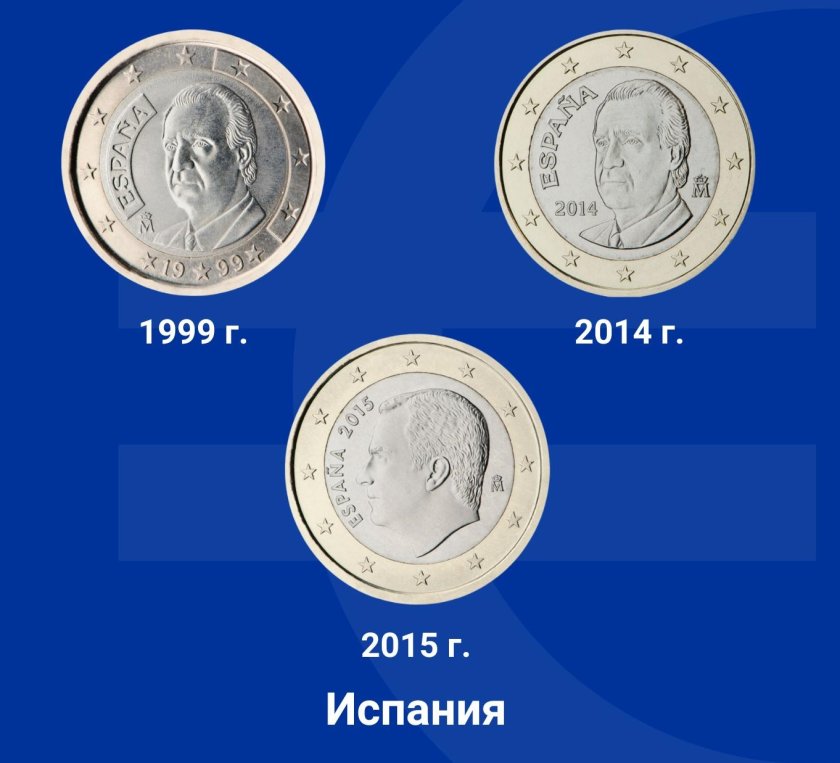
There are three series of Spanish euro coins currently in circulation, all of which are valid.
On the €1 coins of the first and second series, a portrait of King Juan Carlos I of Bourbon is depicted.
For the second series in 2010, minor design adjustments were made to comply with the European Commission’s guidelines, such as placing the year of issue on the inner part of the coin.
In 2015, Spain introduced a third series of €1 and €2 coins featuring the new King Felipe VI. To the left of the portrait is the inscription “ESPAÑA 2015,” and to the right is the mint mark.
Italy’s Euro Coins
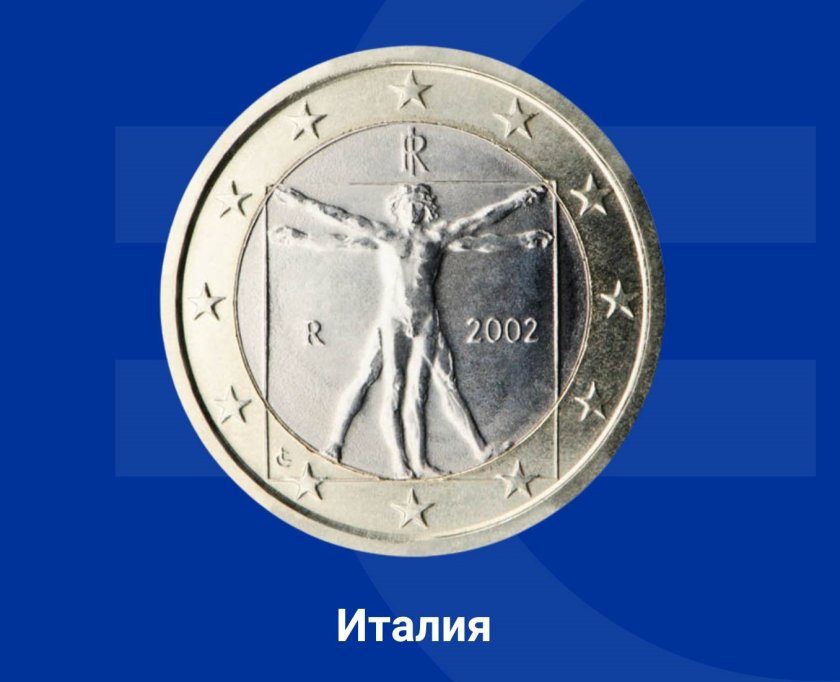
The designs of Italian euro coins are reviewed by a national technical and artistic commission and later presented to the public on Italy’s largest national television channel. Each denomination features a different artwork representing masterpieces by famous Italian artists.
On the €1 coin, the design depicts Leonardo da Vinci’s famous sketch, the “Vitruvian Man”, illustrating the perfect proportions of the human body. The original drawing is exhibited at the Gallerie dell’Accademia in Venice.
Cyprus’ Euro Coins
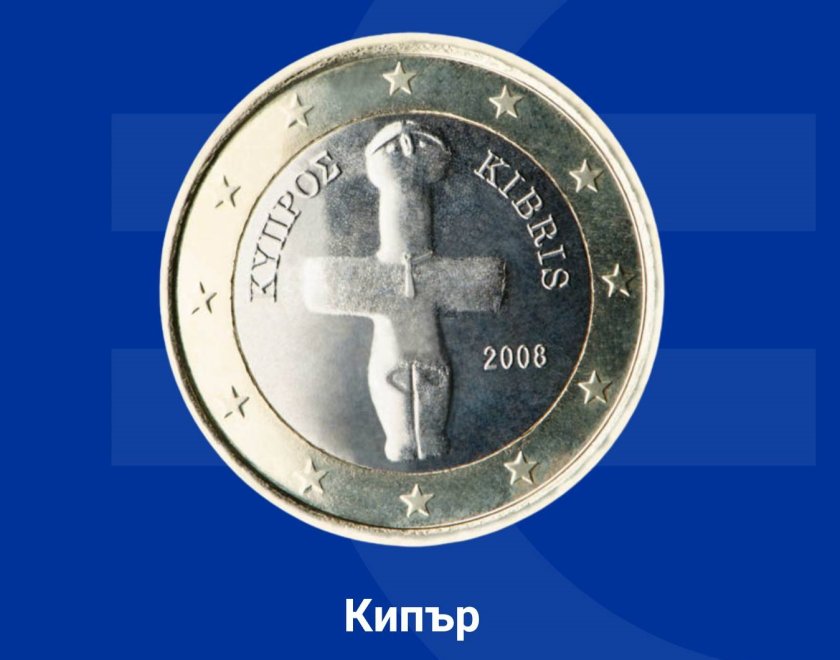
Three different designs are used for the various denominations of Cypriot euro coins.
On the €1 coin, a cross-shaped idol from the Chalcolithic period (Copper-Stone Age), dating back to around 3000 BCE, is depicted. This iconic example of prehistoric art from the island reflects Cyprus’s central place in early civilization and antiquity.
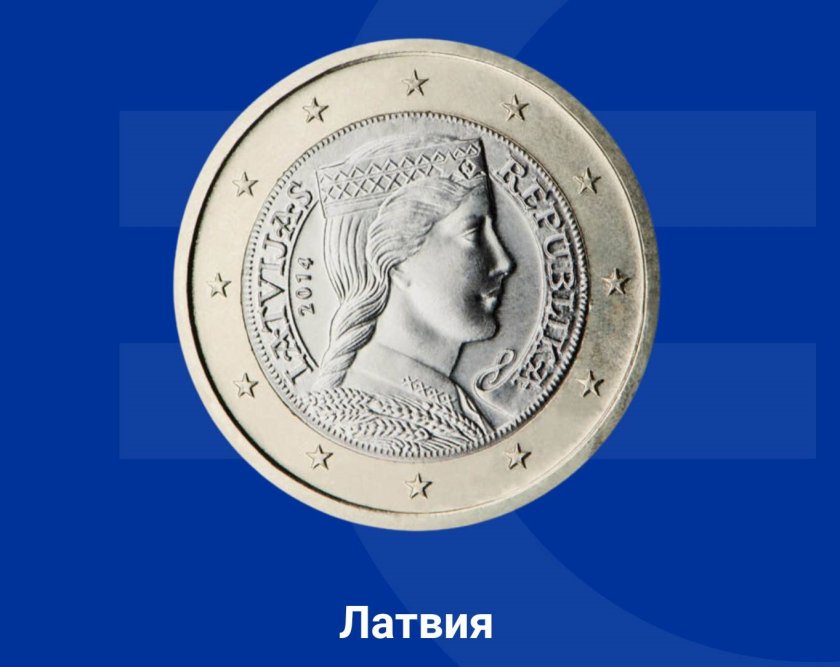
The national side of Latvia’s €1 coin features a girl in traditional folk costume. This design was originally used on the silver 5 lats coin in 1929.
The design was created by Guntars Šetins.
Lithuania’s Euro Coins
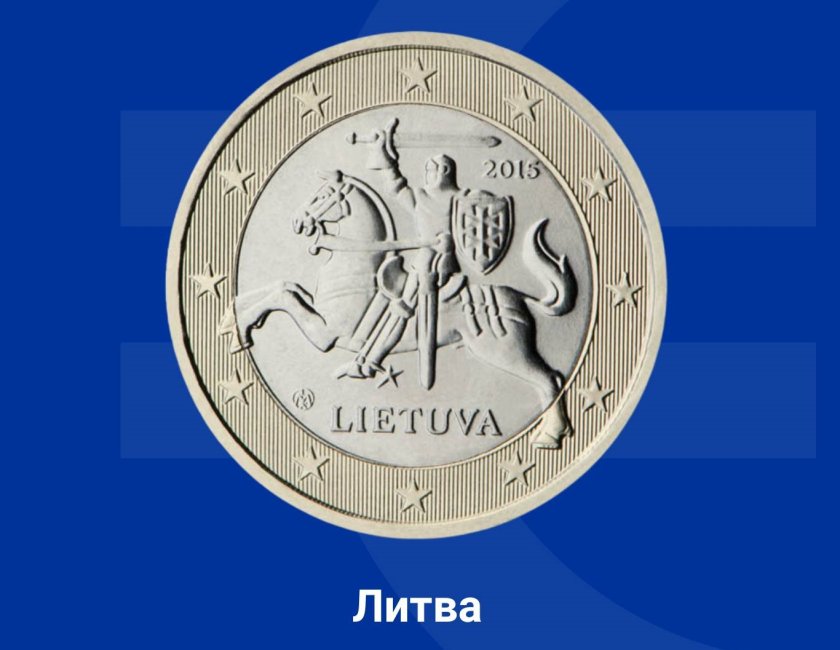
All Lithuanian euro coins feature the coat of arms of the Republic of Lithuania (Vytis), one of the oldest coats of arms in Europe still in use today.
The design also includes the name of the issuing country, “LIETUVA”, and the year of issue, 2015, along with the 12 stars of the European flag.
The design was created by sculptor Antanas Žukauskas.
Luxembourg’s Euro Coins
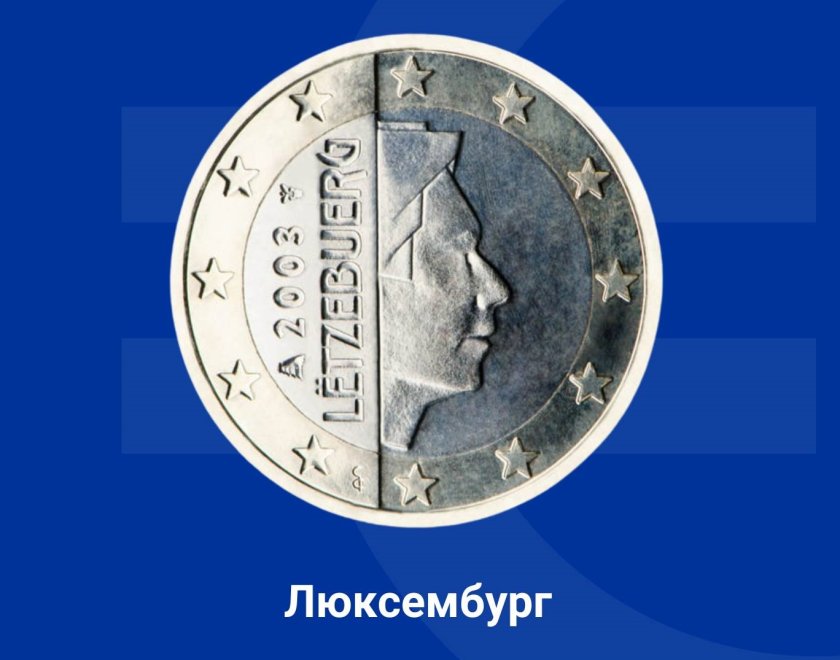
The design of Luxembourg’s euro coins was created by sculptor Yvette Gastauer-Claire under an agreement between the Grand Ducal Court and the government of Luxembourg.
All Luxembourgish coins feature the profile of His Royal Highness Grand Duke Henri, along with the year of issue and the inscription “Lëtzebuerg” (Luxembourg in Luxembourgish).
Malta’s Euro Coins – 1 Euro
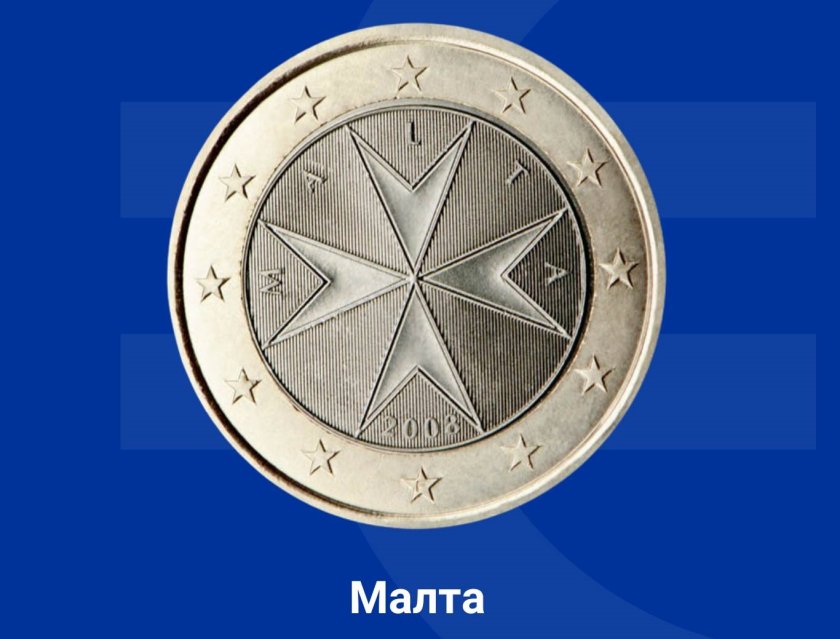
The 1-euro coin features the emblem of the Sovereign Military Order of Malta (also known as the Order of the Hospitallers of Saint John).
During the Order’s rule in Malta (1530–1798), the eight-pointed cross became associated with the island and is today commonly known as the Maltese Cross.
Netherlands’ Euro Coins
Two series of euro coins are currently in circulation in the Netherlands, both of which are valid.
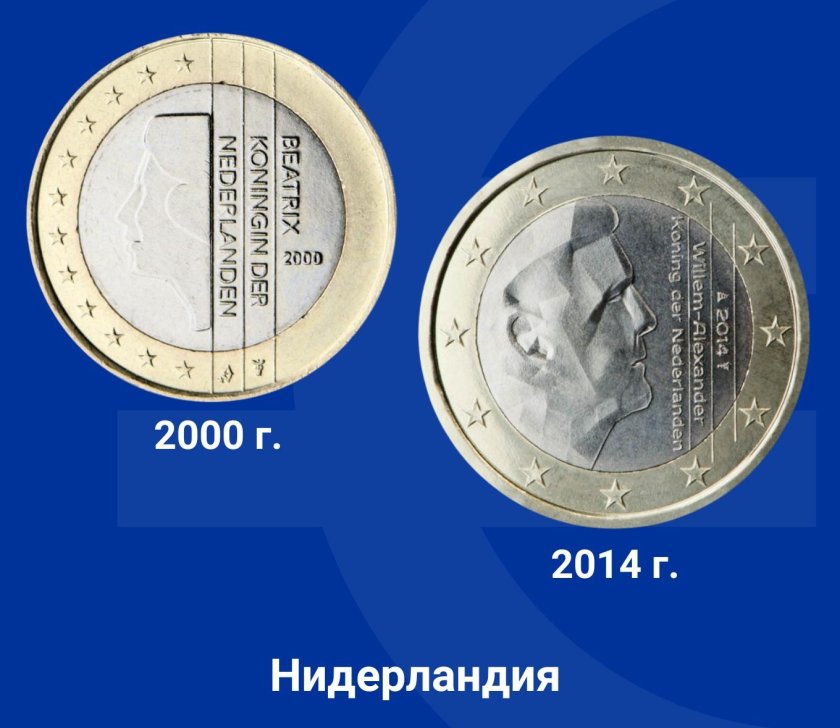
For the first series, the country chose two designs created by Dutch jeweller and industrial designer Bruno Ninaber van Eyben. The 1-euro coin features a portrait of Queen Beatrix with the inscription “Beatrix Koningin der Nederlanden” (Queen of the Netherlands).
The second series, introduced in 2014, depicts King Willem-Alexander with the inscription “Willem-Alexander Koning der Nederlanden” (King of the Netherlands). The mint mark is positioned on either side of the year of issue.
Portugal’s Euro Coins
Three different designs are used for the various Portuguese euro coins, created by designer Vítor Manuel Fernandes dos Santos, who won a national design competition.
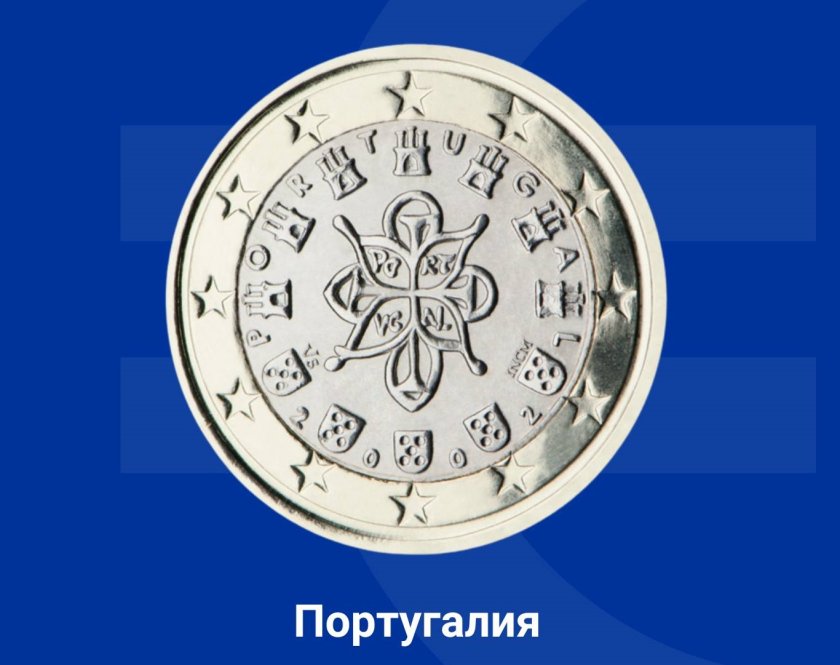
The coin designs are inspired by historical symbols of Portugal and the seals of the country’s first king, Afonso Henriques.
On the 1-euro coin, there are seven castles and five coats of arms of Portugal, surrounded by the 12 stars of the European Union. In the center is the royal seal from 1144.
These images symbolize dialogue, exchange of values, and the dynamic building of Europe.
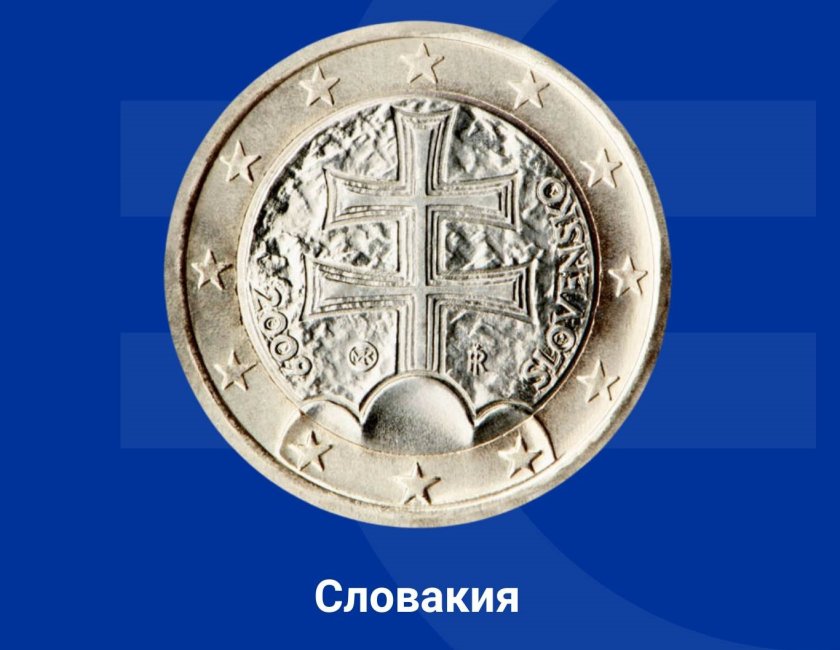
Slovakia’s Euro Coins – 1 Euro
Three different designs are used for Slovakia’s euro coins.
On the 1-euro coin, a double cross is depicted on three hills, as seen on the country’s national coat of arms.
- The double cross symbolizes Christian faith, brought to the region by Saints Cyril and Methodius.
- The three hills represent three mountain ranges: the Tatras, Fatra, and Matra (the latter now partly in Hungary).
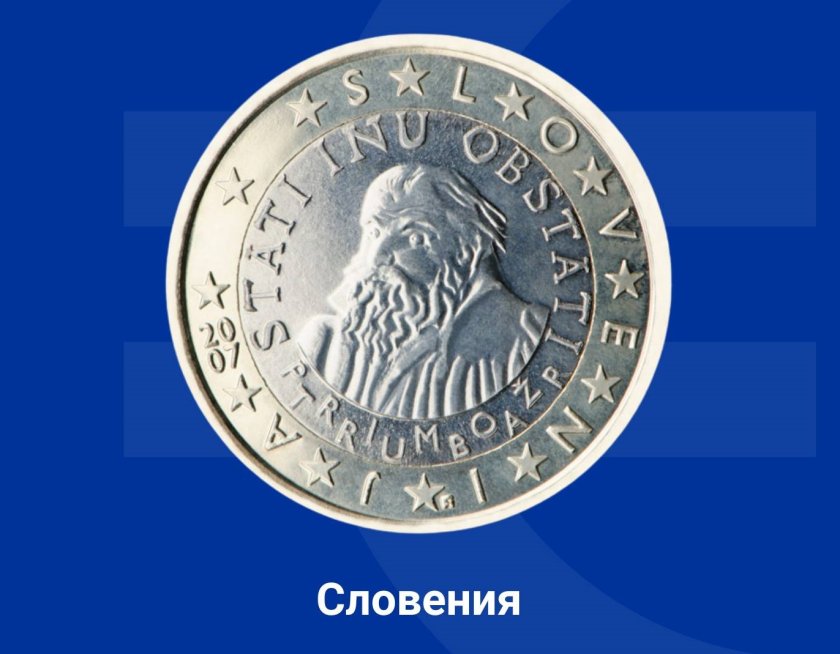
Each of the 8 denominations of the Slovenian euro coins has a different design.
The 1 euro coin features a portrait of Primož Trubar, author of the first printed book in Slovenian, and the inscription in Slovenian "Stati inu obstati".
The process of selecting images for the national side of the Slovenian euro is interesting. It involves several stages, the first of which involves a preliminary discussion with numismatists, designers and experts. The public was also invited to participate, and a total of 669 different proposals were collected. They were evaluated by a nine-member committee made up of experts and representatives of institutions including the finance ministry and the national bank.
In the next stage, the committee invited five well-known Slovenian designers to offer their visions of the selected proposals. Their work was evaluated by a special jury composed of artists, designers, professors and connoisseurs of Slovenian cultural heritage. The jury's decision was approved unanimously by the 9-member committee and subsequently by the government.
Finland’s €1 Coin
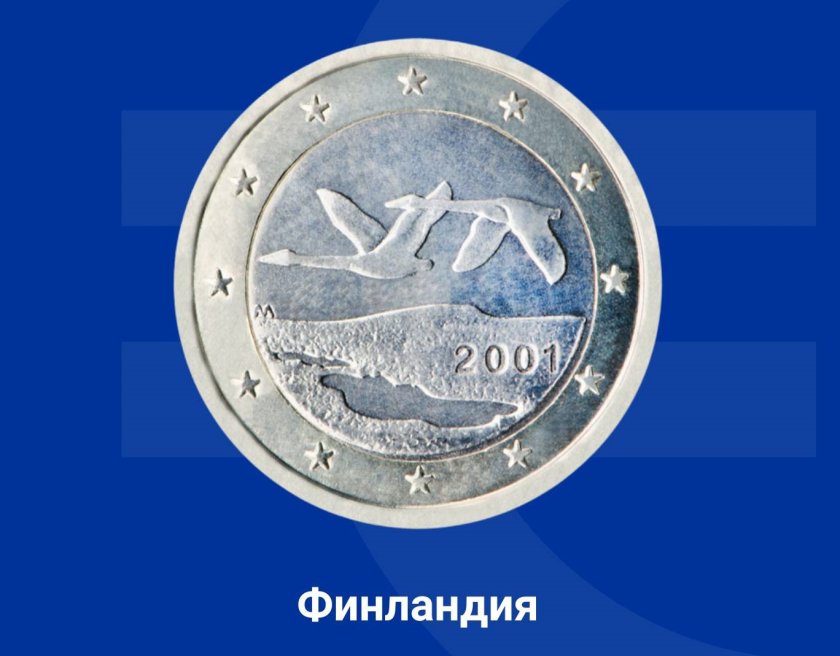
Finland chose three designs for its euro coins, inspired by the designs of its former national coins.
The 1-euro coin features two flying swans, designed by Pertti Mäkinen. This design was originally created for a commemorative coin marking the 80th anniversary of Finland’s independence.
The whooper swan, depicted on the coin, is the national bird of Finland.
France’s €1 Coin Designs
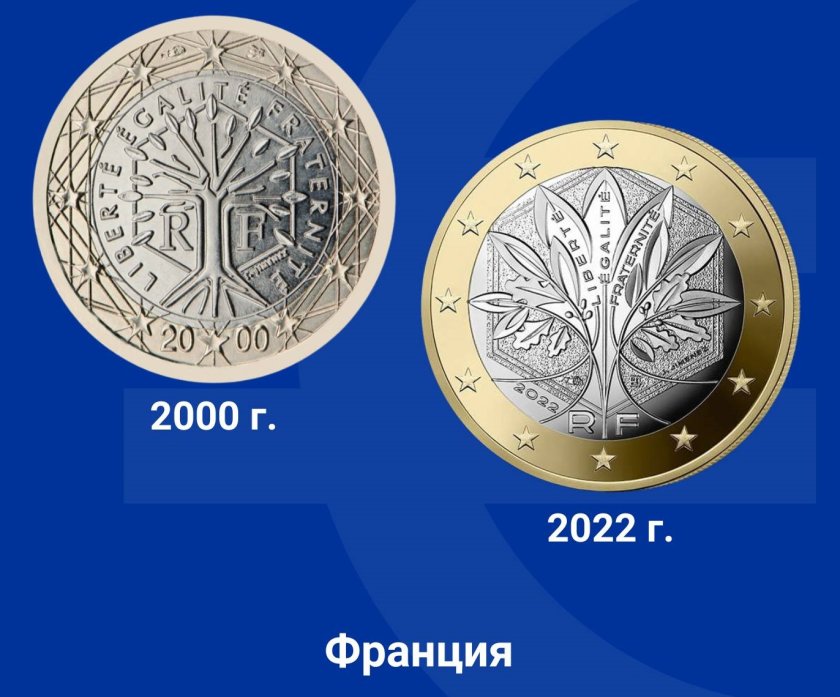
France currently has two series of euro coins in circulation.
First series:
Over 1,200 proposals were considered.
A committee led by the Minister of Economy and Finance selected three designs, one for each denomination.
The 1-euro coin features a tree, symbolizing life, continuity, and growth, set inside a hexagon.
The design was created by Joaquín Jiménez and is surrounded by the French national motto: "Liberté, Egalité, Fraternité" (Freedom, Equality, Brotherhood).
Second series (introduced in 2022):
The 1-euro and 2-euro coins feature oak and olive branches, forming the Tree of Life.
These symbols represent strength, stability, and peace.
Both the tree and the motto remain enclosed in a hexagon.
Croatia’s €1 Coin Design
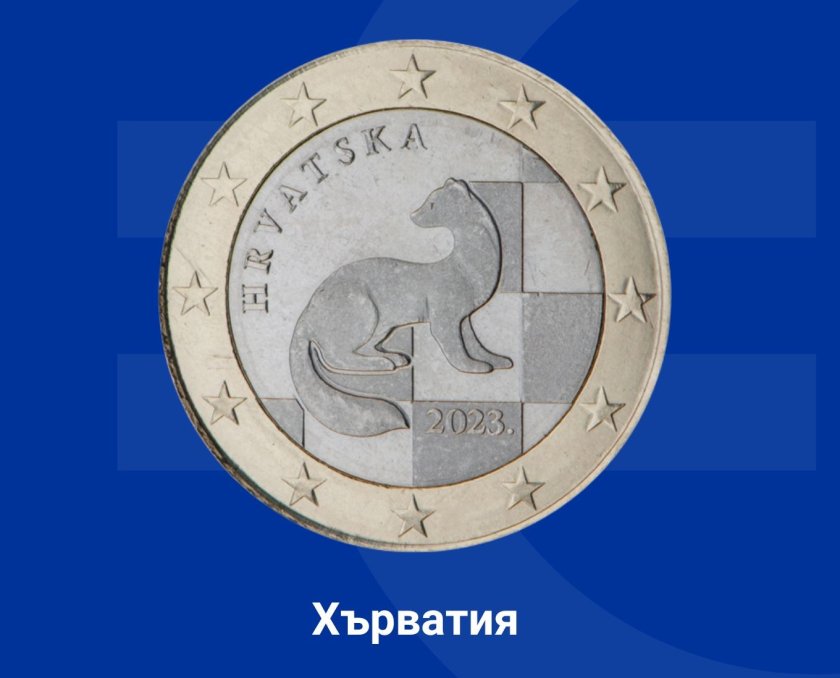
Croatia has chosen four designs for the national side of its euro coins, all featuring the distinctive Croatian checkerboard pattern in the background. Each coin also displays the 12 stars of the European flag.
The 1-euro coin, designed by Jagor Šunde, David Čemelić, and Fran Zekan, depicts a marten – a small mammal whose name was previously used for Croatia’s former currency, the kuna. The design also includes the year of issue and the inscription "HRVATSKA".
Andorra’s €1 Coin Design
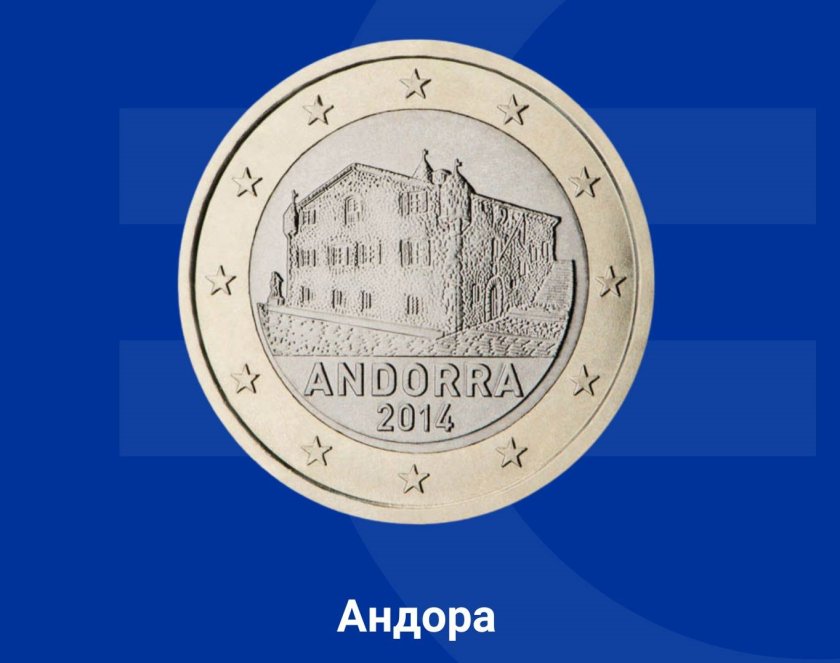
On June 30, 2011, Andorra signed a monetary agreement with the European Union, allowing it to use the euro as its official currency and issue its own euro coins. All Andorran coins feature the 12 stars of the European flag.
The 1-euro coin depicts Casa de la Vall, a building of cultural and historical significance in the country, which housed the Andorran Parliament until 2011.
Vatican Euro Coins
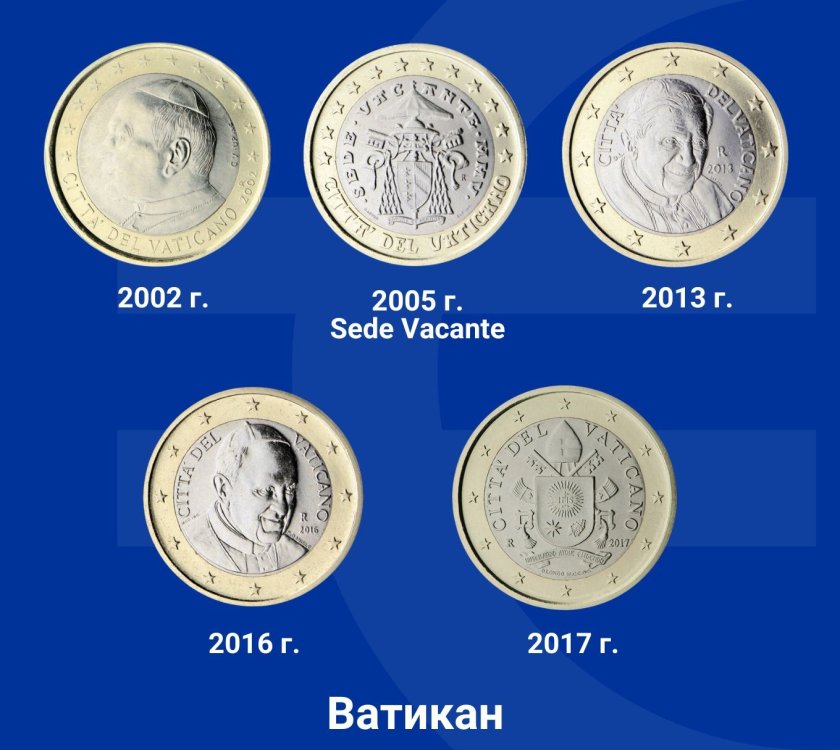
Vatican City has issued five series of euro coins, all of which are valid.
- First series (2002–2005): Features Pope John Paul II.
- Second series (June 2005–March 2006): Shows the coat of arms of the Cardinal Camerlengo (the temporary head of state) above the emblem of the Apostolic Chamber. The upper part of the coin displays the inscription "SEDE VACANTE" and the year in Roman numerals "MMV". The designer’s name "D. LONGO" appears on the lower left, with engraver initials on the right: MAC inc (1 & 20 cents), LDS inc (2 & 50 cents), ELF inc (5 cents & 1 €), MCC inc (10 cents & 2 €).
- Third series (April 2006–December 2013): Features Pope Benedict XVI, with the designer’s initials "DL" on the left.
- Fourth series (January 2014): Depicts Pope Francis.
- Fifth series (March 2017): Shows the coat of arms of the sovereign of Vatican City – Pope Francis.
All series include the 12 stars of the European flag, the inscription "CITTÀ DEL VATICANO", the year of issue, and the mint mark "R".
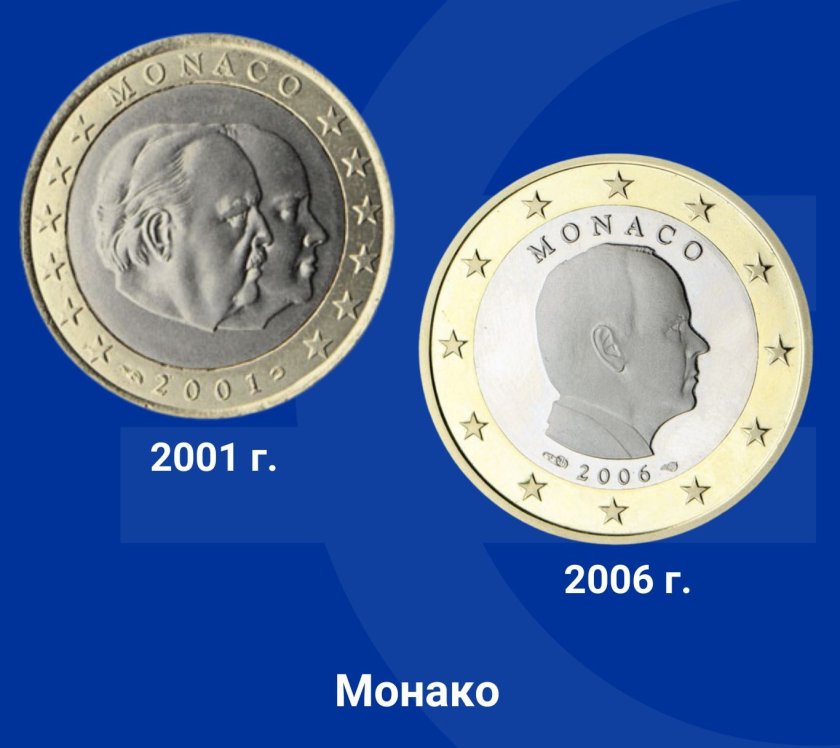
Two series of euro coins are in circulation in Monaco. The €1 coin in the first series features the profiles of Prince Renie III and the then Crown Prince Albert II.
The coins of the second series feature only the portrait of Prince Albert II, who has ruled Monaco since 2005.
San Marino Euro Coins
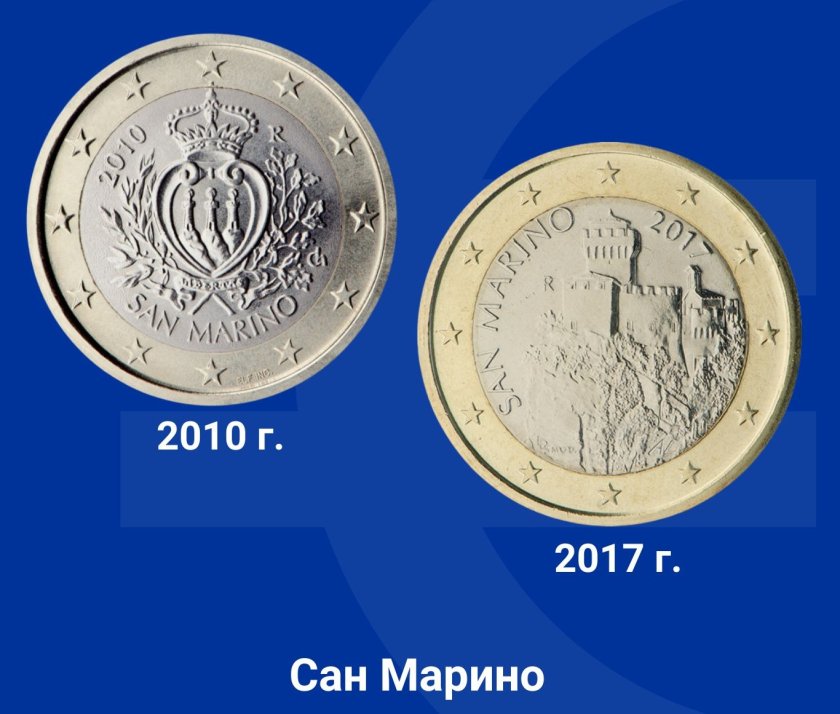
San Marino has issued two series of euro coins, with each of the eight denominations having a distinct design.
First series: The 1-euro coin features the official coat of arms of the Republic.
Second series: The 1-euro coin depicts the Cesta Fortress, also known as the Second Tower of San Marino.





 Чуй новините
 Подкаст