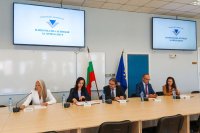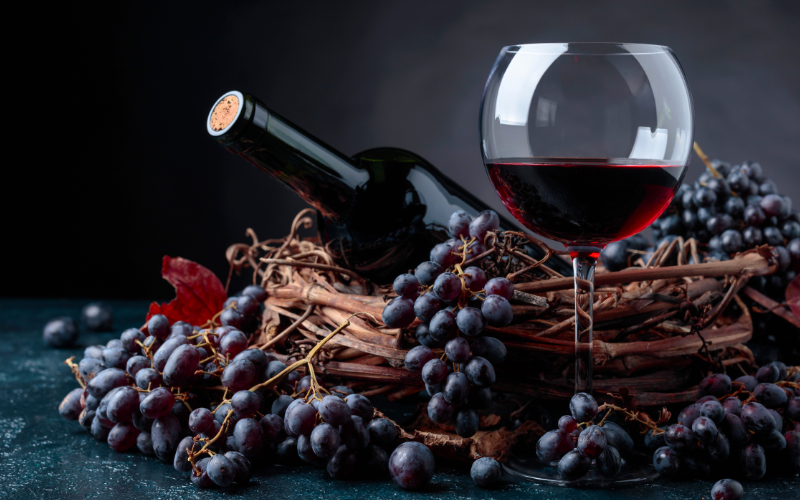
The European Parliament has examined the so-called “Wine Package”, aimed at supporting one of Europe’s most traditional industries. The sector is currently facing a crisis due to multiple factors, including climate change, declining global consumption, and new trade realities.
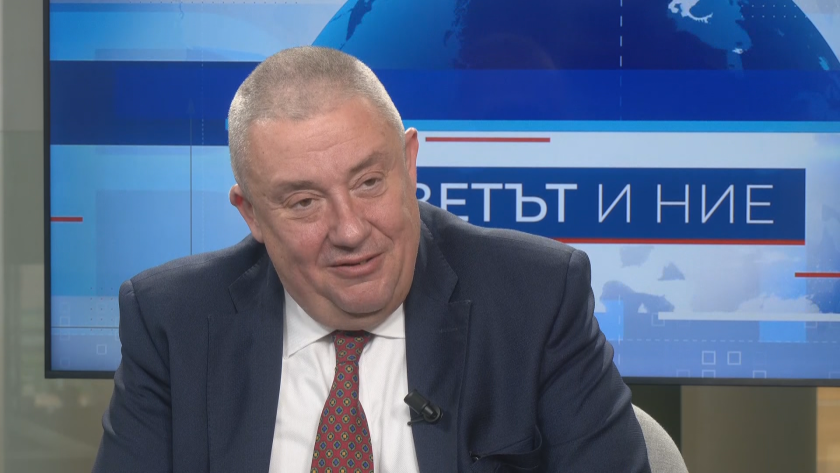
European wine remains the most popular on the world market, but competition is fierce. What opportunities European legislation offers to Bulgaria’s wine industry— MEP Iliya Lazarov commented.
Evgenia Atanasova, BNT: Mr. Lazarov, how can Bulgarian wine producers benefit from the Wine Package?

Iliya Lazarov, MEP: "During the visit of my colleague Éric Sargiacomo, he was very interested to learn that, for example, Sandanski Misket is a wine that could attract huge attention in Europe. He said in French, ‘Ce vin peut faire un malheur,’ meaning it could be a great success in France if properly promoted, because the French are already saturated with Chardonnay and Sauvignon Blanc. People are looking for something different.
Our Sandanski Misket, as well as other Bulgarian Miskets—Vrachanski, Karlovski, and so on—are among the varieties that could make a strong entry into the European market. These are opportunities that should be fully utilised. The package also includes provisions for uprooting old vineyards and planting new varieties that could be marketable and interesting. So this Wine Package is quite good, provided our producers can take advantage of it.
Another key aspect promoted by the Wine Package is cooperation. I often cite Galicia as an example, where estates are extremely small—even by our standards, between 2 and 20 decares. But they cooperate and enter the market together, rather than struggling individually, and as a result they achieve significant success."*
BNT: "Is this applicable in Bulgaria? Is there a way to incentivise producers?"
Iliya Lazarov, MEP:
"It is applicable. The problem is largely cultural. In Bulgaria, we tend not to like having partners—finding reliable collaborators has always been difficult. But we need to adapt to the current times. Small businesses and producers struggle to secure a place on the market on their own; they need to work together and cooperate."
BNT: "Is there cause for concern in the industry because of the Mercosur agreement?"
Iliya Lazarov, MEP:
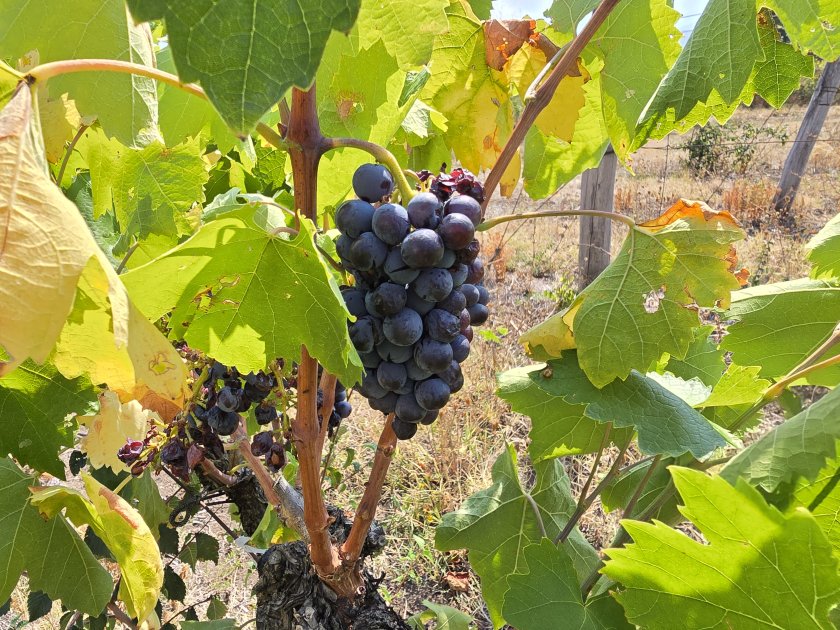
"They are worried about cheap table wines. Yes, there is some reason for concern, but table wines are a low-margin segment. Bulgarian wine needs to move away from the perception that it is cheap. I have always opposed this idea. We produce very fine wines and should not undercut our own prices. On the contrary, we should emphasise quality and distinctiveness.Our varieties—Mavrud, Miskets, and so on—are excellent. Gamza, for example, is a fantastic variety that could compete seriously with Beaujolais or Pinot in terms of taste. We should therefore target the mid-range and premium market. We cannot compete with cheap wines, but they will not arrive easily or quickly either, because the transport costs alone make them more expensive, putting them on a more level playing field with Bulgarian table wines."
BNT:
"The package also includes measures to support wine tourism. There are beginnings of this in Bulgaria. How can we make better use of it and develop the sector?"
This is again a matter for our associations. We already have one—the Wine Tourism Association. I believe Petya Minkova was its chair. That is a good start. We have begun developing so-called wine routes. One is in southwestern Bulgaria, around Petrich and Sandanski. Incidentally, it is being done very successfully there—it is sometimes called the ‘Bulgarian Tuscany.’
I don’t even think we need to compare ourselves to Tuscany. We have our own unique characteristics and very strong indicators, both geographically and climatically. Mineral waters, combined with SPA and wine tourism, offer enormous potential. The same applies to the areas around Karlovo, Plovdiv, Hisarya, and Starosel, where a wine tourism region is taking shape. In the Yambol region and along the Black Sea coast, there is also potential.
The more we develop the combination of wine and spa tourism, the better. Bulgaria ranks second in Europe for thermal mineral springs, after Italy. So we need to combine these attractions—quality relaxation goes hand in hand with both spa and wine."
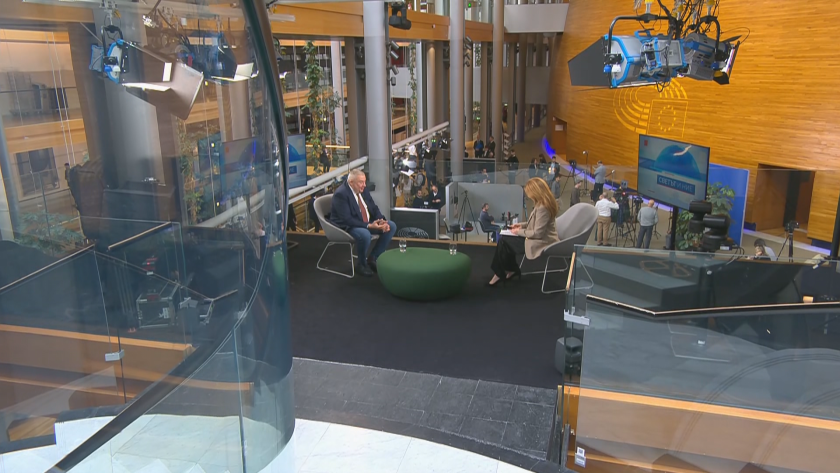
BNT: "European countries have a common strategy for presence in foreign markets, but at the same time they are competitors. How can we draw attention to Bulgarian wine?"
Iliya Lazarov, MEP:
"This is exactly what I mean—we compete with Italy and France, but at the same time we complement them. That is why developing our unique varieties, with our specific characteristics that others do not have, is what will position us on the market.We should not try to compete in the Cabernet or Merlot segment. Our opportunity lies in being different."
BNT: Final question, will the US tariffs affect European wines?
Iliya Lazarov, MEP:
"Yes, they will—mainly impacting spirits. That is a fact. However, there has also been a positive effect: even when the tariff increases were first announced, EU exports—including from Bulgaria—to the US actually rose.The unpredictability of Trump—saying one thing today and another tomorrow—means we must adapt and seek market diversification. For example, the upcoming free trade agreement with India is very important for the spirits industry, including for Bulgaria, because India is the largest consumer of spirits in the world. In terms of volume, India consumes as many litres of spirits as Europe consumes of beer. This is very good for the European spirits industry."


 Президентът Йотова: От деня на Съединението България се връща на географската карта на света
 Екзитпол: "Алтернатива за Германия" печели с над 44% вота в провинция Саксония-Анхалт








 Чуй новините
 Подкаст