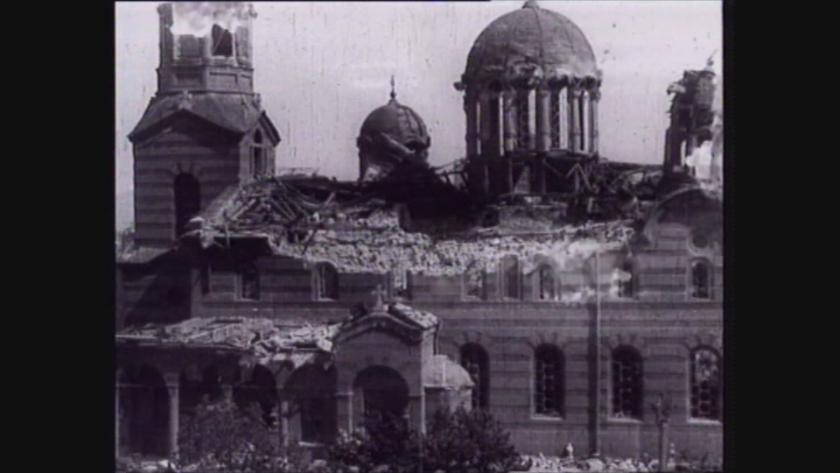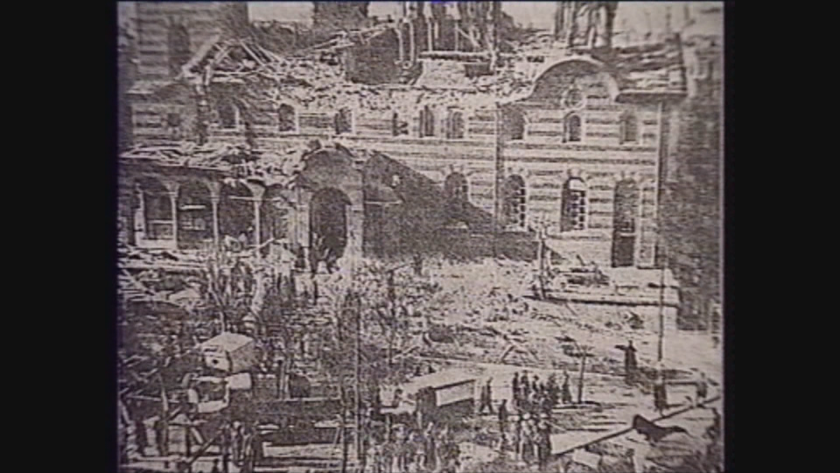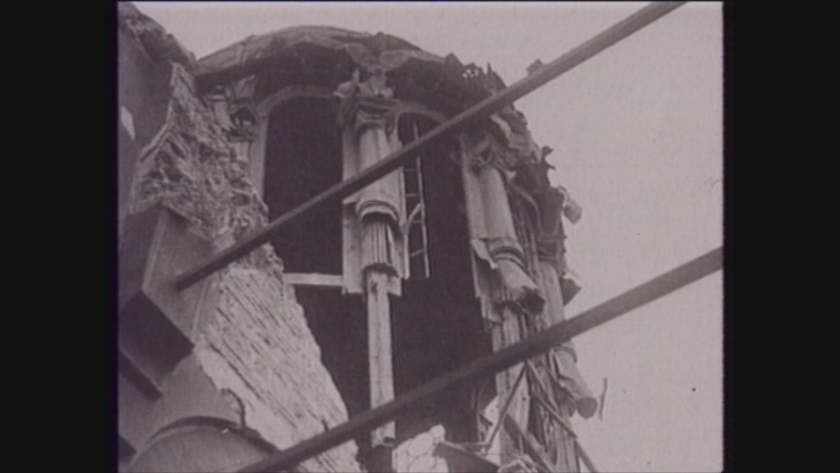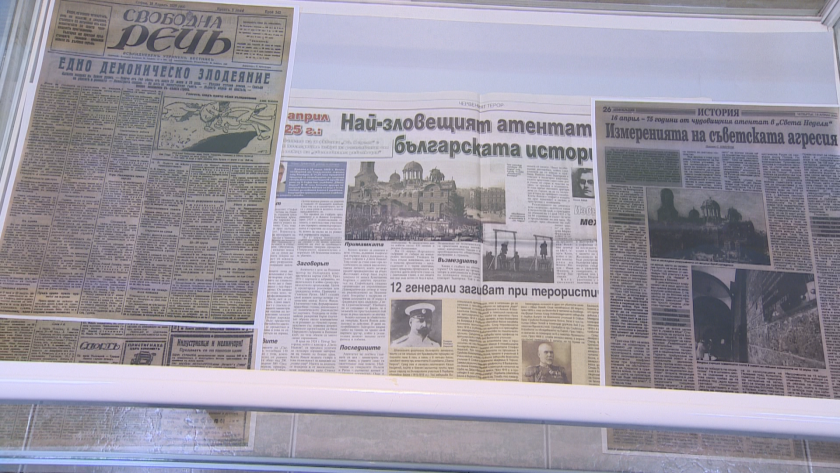

April 16, 2025, marks 100 years since the terrorist attack on St. Nedelya Church in Sofia.
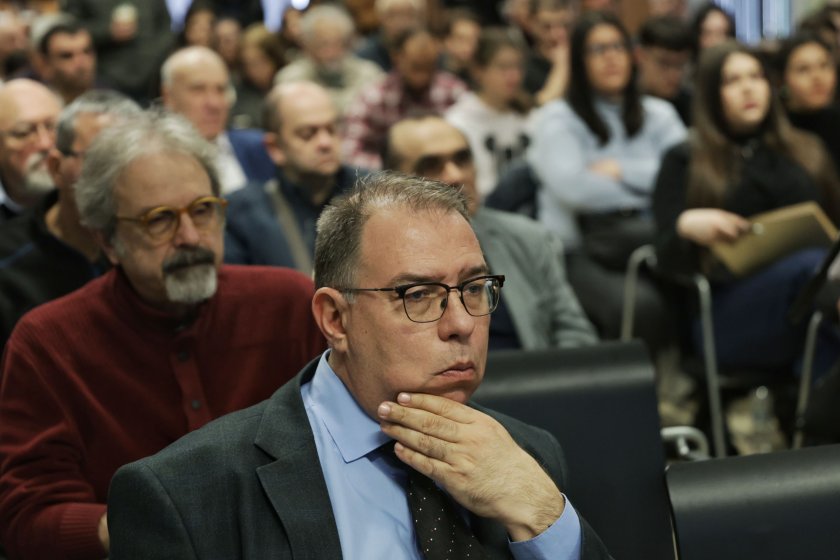
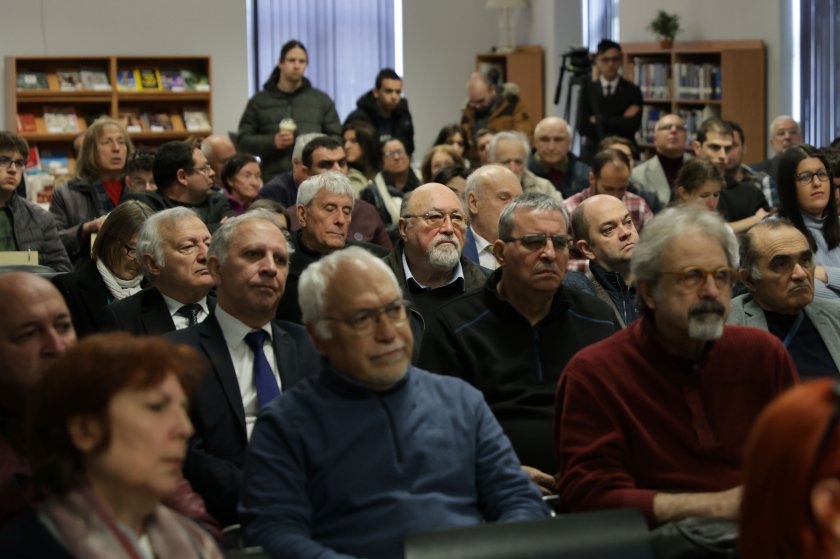
On April 16, 1925, far-left activists from the Bulgarian Communist Party (BCP) detonated an explosive device in the roof of the "St. Nedelya" church, killing 134 people. Their memory was honoured at a two-day academic conference "Terrorism, Violence, and Politics in Bulgaria Between the Two World Wars" at the Sofia City Library.
Historians reminded that such events should never happen again.

April 16, 1925. Holy Thursday. A funeral service for General Konstantin Georgiev, who was killed two days earlier by a communist activist, was held at "St. Nedelya" church. A group of far-left members of the BCP's military organisation bombed the church roof.

"This is the biggest terrorist act in Bulgarian history and one of the biggest in the world in the 20th century. It wasn't until the end of the century that this atrocity was surpassed in scale by the Lockerbie and Oklahoma City bombings. Unfortunately, it remains in the history of terrorism as one of the most destructive terrorist acts," stated Associate Professor Mihail Gruev, Chairman of the State Agency "Archives."

134 people died. Among them were the Mayor of Sofia, Pascal Pascaliev, 12 generals, colonels, MPs, civilians, and children. Over 500 were injured. At the time, Metropolitan Stefan, later the Bulgarian Exarch, wrote: "There is no greater destruction than fratricidal war." The Bulgarian Orthodox Church (BOC) condemned the attack as a "satanic act."
"The point of this conference, at least in my opinion - is just to remind how far the rhetoric of political violence, the perpetration of political violence and most importantly the perpetration of political violence by non-representative people, that is, by an active minority, can take us," commented Professor Momchil Methodiev, New Bulgarian University.

The far-left members of the BCP's military organisation who carried out the attack dreamed of a flourishing Soviet Bulgaria and were controlled by Soviet Bolsheviks, the scholars explained today. The goal was the elimination of the country's military and political elite.
"We will have to come to terms with the importance and the beginning of the great division in Bulgarian society. When did it begin? It began precisely in 1925, the culmination of long-standing efforts by both internal and external forces to internally destabilise Bulgarian society, the Bulgarian state, and the Bulgarian order," emphasised Professor Petar Stoyanovich from the Institute of Historical Studies, Bulgarian Academy of Sciences.

According to historians, we are called to make a calm and in-depth reading of history to prevent such events from occurring again. And civilized Europe should give a common response to any potential similar threats.
Bulgaria Marks National Day of Salvation in Memory of Those Who Died Saving Lives
Bulgarian Orthodox Church Celebrates the Great Christian Feast of the Assumption of the Virgin Mary
Representatives of Bulgaria's Foreign Ministry Spoke with Iva Mihaylova's Mother After Another Court Refusal to Allow Her to Leave North Macedonia for Medical Treatment
Ruse–Varna Road Closed after Crash Involving Two Cars and a Minibus, One Person Killed
70% спад: Нелегалните мигранти, успели да влязат в страната, са значително по-малко
След посещението на премиера в Струмяни: Пред БНТ говори задържаната Гергана Петрова
Какво бедствие е сполетяло "Хубавата църква" на цар Иван Александър и манастира на свети Теодосий Търновски?