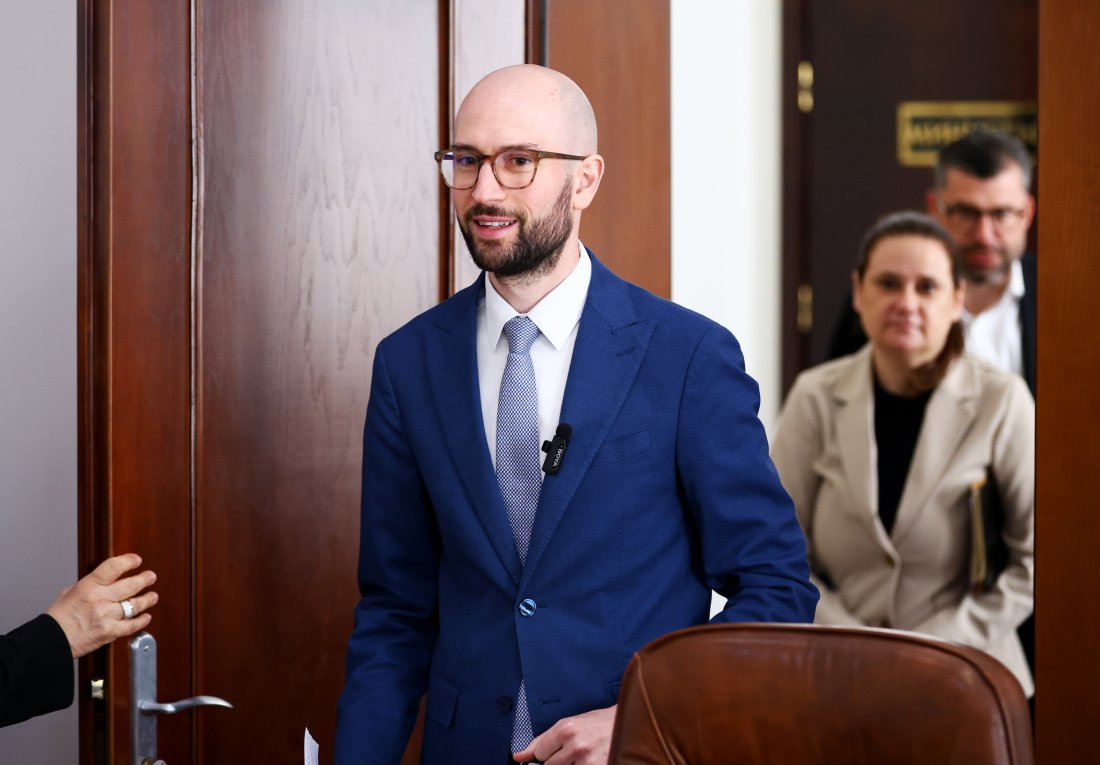
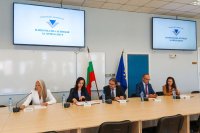
The Ministry of Finance will publish information on more than 7,000 public procurement contracts worth over €30bn, caretaker Finance Minister Georgi Klisurski announced on April 9. He said the data would be accessible to all in order to increase transparency in the use of public funds. He also confirmed that new measures are being prepared to support sectors most affected by high fuel prices, while stressing that taxes will not be changed.
The minister has ordered financial inspections into 62 public contracts where there are the strongest suspicions of misuse of public funds, and gave examples.
Georgi Klisurski, Caretaker Finance Minister, said: “I will mention three of them, which were quite shocking to me – in the Ministry of Health, cancer tests that appear to be priced five to ten times higher than expected; contracts for road repair and maintenance by the Road Infrastructure Agency, where more than three times the expected funds were spent in a single year; and a contract at the Bulgarian Food Safety Agency for incinerators and the culling of animals, where there is excessive overstatement of agreed values.”
According to the minister, the most concerning issue is that in 140 public contracts, advance payments exceed 50% of their total value.
Georgi Klisurski: “Of the nearly €30bn we are talking about, more than €4.4bn are advance payments. A large part of these are in the Ministry of Defence – you are aware of the advance payments for the F-16s – as well as in the Road Infrastructure Agency, for example the advances under contracts for the Hemus motorway. In total, within the Road Infrastructure Agency system, we have more than €1bn in advance payments.”
He added that if irregularities are identified in public contracts, they will be halted and the funds redirected to the state budget. Klisurski also called on citizens, non-governmental organisations and analysts to carry out checks and submit signals.
The caretaker minister said retail fuel prices are being monitored and that the state would intervene with new measures if necessary.
Georgi Klisurski: “For diesel used by agricultural producers, we can further reduce the excise duty reimbursed to them under a European directive. The Minister of Agriculture has already begun work on such a mechanism, so that within weeks producers can receive higher reimbursements on diesel excise. A reduction in excise components for natural gas and electricity in urban transport systems could also be considered.”
Klisurski also commented on a European Central Bank report, insisting that the introduction of the euro does not significantly affect inflation in Bulgaria.
Georgi Klisurski said: “According to the ECB’s assessment, the direct effect of the euro on inflation increases is only around 0.3 to 0.4 percent.”
He also addressed election costs, which are currently estimated at €66m but are likely to rise.








 Чуй новините
 Подкаст