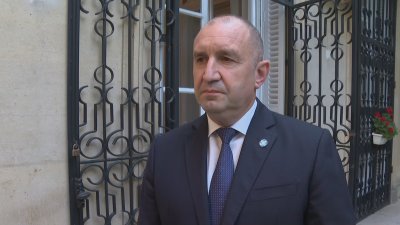
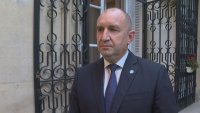
Preparations for Eurovision 2027 are far more than the organisation of a television show – they are a national project that will showcase Bulgaria to audiences across many countries, attract tourists and investors, and generate international attention the impact of which will be felt for months and years after the contest, Bulgarian National Television (BNT) Director General, Milena Milotinova, told 'The Day Begins' programme on July 14.
Milena Milotinova, Director General of BNT: "Our goal at BNT is not simply to stage an event in one city, but to create a national event. Hosting Eurovision is a national cause that will present Bulgaria to the world in the best possible way. Dozens of countries broadcast the contest, making it an enormous opportunity for Bulgaria to showcase its national identity," Milotinova said.
Burgas and Sofia remain in the race
It was announced yesterday that Burgas and Sofia have progressed to the final stage of the selection process to host Eurovision 2027, while Varna and Plovdiv have been eliminated following the first round of evaluation.
Milotinova stressed that selecting the host city is only the beginning of a lengthy process that will require almost ten months of daily collaboration between BNT, the European Broadcasting Union (EBU), and the hosts.
Milena Milotinova, Director General of BNT: "We expect the host city to work closely with BNT and to accompany us every step of the way, from their successful bid through to the Eurovision final itself. This is an almost ten-month process of daily work. The cities need to be prepared; this isn’t just about working from time to time or during the semifinals and the final— it’s not just about the last two months, when many events are actually concentrated, but about work from the announcement of the winning city all the way through to the finals and beyond.”
She emphasised that preparations extend well beyond the two semi-finals and the Grand Final.
"At the end of the preparation period, Eurovision consists of nine shows, including six dress rehearsals for which tickets will be sold, alongside the three televised broadcasts watched across dozens of countries around the world.”
The BNT Director General explained that the host city selection follows the European Broadcasting Union's established criteria and is being conducted jointly by Bulgarian specialists and international experts who have worked on Eurovision over the past 15 years.
"We are following the criteria established by the EBU, the organisation that has staged the contest for 70 years. The evaluation panel includes Bulgarian experts and EBU specialists, including international professionals with extensive experience in organising Eurovision."
She congratulated Burgas and Sofia on reaching the next stage, while also praising the bids submitted by Varna and Plovdiv.
The evaluation committee is expected to complete its task by 31 July, after which the host city will be announced, Milotinova explained.
"Congratulations also to Plovdiv and Varna. Although they have not progressed, they submitted very strong proposals. Their commitment to hosting the contest has prompted us to consider involving them in the wider programme of Eurovision-related events."
According to Milena Milotinova, the benefits will extend not only to the host city but to the entire country.
"The added value is enormous. The contest attracts huge numbers of visitors. It has major significance for tourism, hotels, logistics and the wider economy. Bulgaria will become the focus of international attention. It will be one of the biggest events of next year."
She also highlighted the government's swift response following Bulgaria's Eurovision victory, noting that a dedicated budget had already been allocated and a coordination centre established involving several ministries to oversee security, logistics and infrastructure.
"The national authorities reacted immediately after Bulgaria won Eurovision. They pledged their support to the host broadcaster, BNT, allocated a dedicated budget for the contest and established a coordination centre bringing together several ministries to assist with security, logistics and infrastructure."
Milotinova also outlined the scale of Eurovision's global reach. She said the final of the 70th contest achieved a television audience share of more than 40%, rising to almost 55% among viewers aged 15 to 24.
On social media, Eurovision's official TikTok account now has more than 4 million followers and has generated more than 870 million video views, while its Instagram content surpassed 1 billion views for the first time.
She concluded by recalling the significance of Bulgaria's victory.
"As Eurovision Director, Martin Green, noted during the EBU General Assembly in Prague, Bulgaria's victory in Vienna in 2026 was achieved with the largest combined margin in both the public vote and the jury vote in the contest's 70-year history."
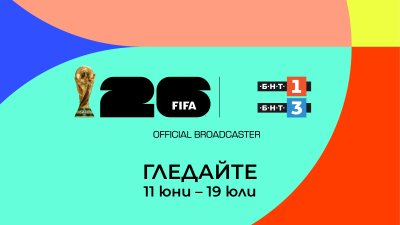
Alongside Eurovision preparations, Milotinova highlighted BNT's record audience figures during the 2026 FIFA World Cup. More than 5 million viewers watched the tournament on BNT, representing 82% of the potential television audience in Bulgaria.
The broadcaster also recorded significant digital growth. The bnt.bg website attracted nearly 2 million new users and almost 5 million sessions, a 95% increase compared with the previous period. Meanwhile, bntnews.bg reached 1 million new users and generated more than 27 million user interactions.
BNT's social media platforms also posted strong growth, with its official Facebook page recording 8.44 million views and reaching more than 1.8 million users, while its Instagram account generated 7.75 million views and nearly 245,000 interactions.






 Чуй новините
 Подкаст