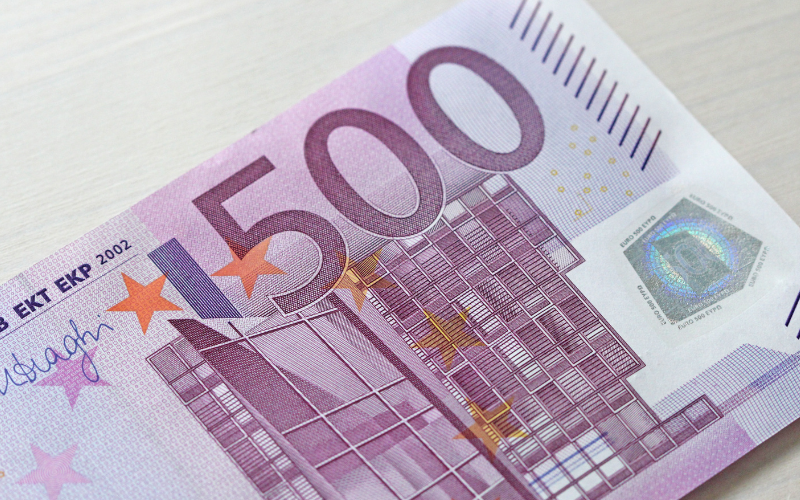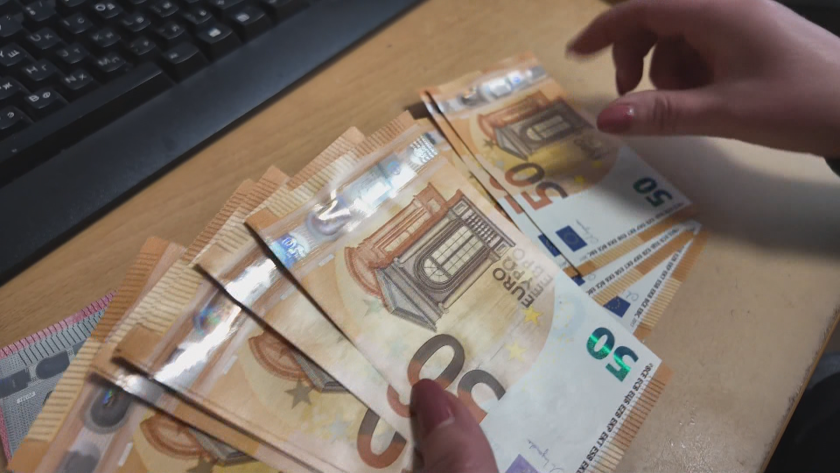


There have been multiple recent cases of counterfeit euro notes circulating in Bulgaria. In one incident, a customer received a fake €500 note at a casino and then attempted to buy a snack in Pernik. In the Veliko Tarnovo area, young people tried to make purchases with counterfeit euros intended as props. In Kazanlak, there have been reports of youths going from store to store using fake €100 notes. Authorities have issued advice on what to watch out for.
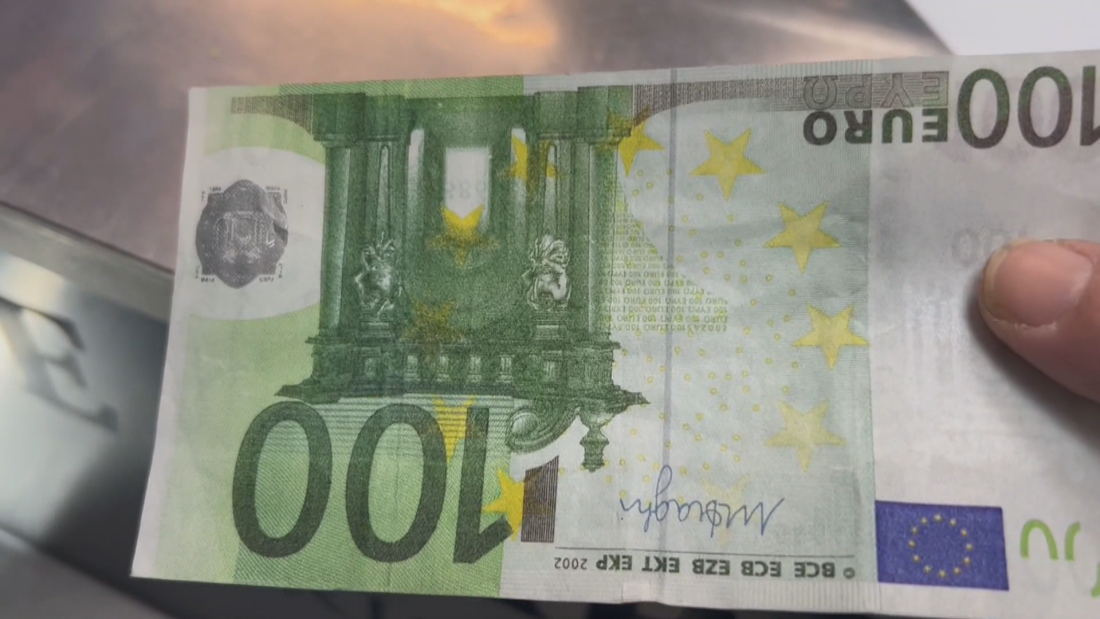
Radoslav Hristov, owner of a 24-hour shop in Kazanlak, discovered an unusual €100 note while reconciling his takings on Sunday. The note had been left by a young man who had purchased small items.

Radoslav Hristov, shop owner, Kazanlak:
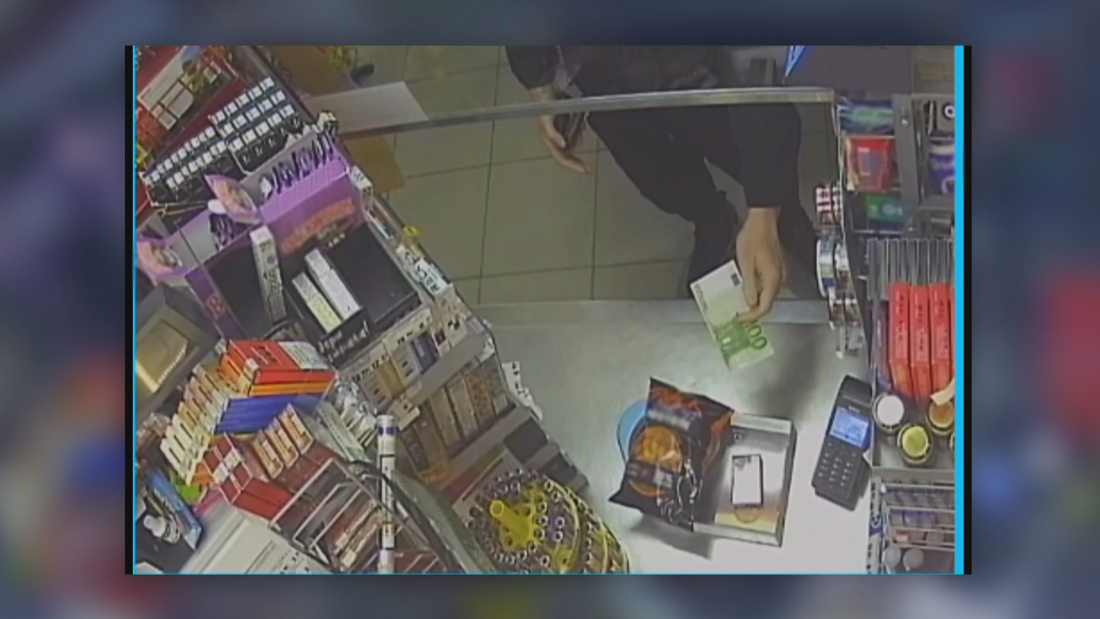
"Here is the note. At first glance, it has all the signs designed to deceive someone. To the touch, the paper already feels different, and upon closer inspection, it feels smoother. The individual first entered the shop wearing a hood and then removed it. Most likely, these are people intent on ‘spreading money,’ because this happened during the early hours – at 1:10 a.m. There was no time to react, no way to quickly verify it."

Following the report, law enforcement reviewed CCTV footage, which clearly shows the faces of both the youth who left the note and his companion. A pre-trial investigation has been opened, supervised by the District Prosecutor’s Office in Stara Zagora, with a three-month deadline for completion.
The General Directorate for Combatting Organised Crime advises the public not to immediately pocket unfamiliar notes, but to inspect them carefully.
Chief Inspector Viktor Stoymenov, General Directorate for Combatting Organised Crime:
"Start by checking the paper and embossing on the note. On the new ‘Europa’ series, the embossing is tactile at both ends of the note, with a distinct thickening in the middle. Counterfeit notes often use ordinary or different paper, and they make a characteristic sound. On this particular counterfeit, the watermark is either very faint or absent entirely, and the security thread is missing."
According to the European Central Bank, €20 and €50 notes are the most commonly counterfeited, while the €500 note is the least frequently faked—under 1%—and remains legal tender, even though production ceased in 2019. Statistics for the first twelve days of euro usage in Bulgaria are not yet available.
Chief Inspector Viktor Stoymenov, GDPO:
"We recommend that citizens pay special attention to all notes of €20 and above."
In Veliko Tarnovo, the youths who tried to pay with prop notes have been identified. Initially, the merchant did not notice the fraud, but later confirmed it and reported it to the police.

The counterfeit money is typically purchased via online ads offering various currencies, including US dollars and Turkish lira. These notes are easily distinguishable by the paper quality, the absence of watermarks and security threads, and especially by the disclaimer indicating they are for props. Such ads are widespread online, often promoting the notes as party props, with some packs selling for as little as 30 BGN.
The Directorate General for Combatting Organised Crime’s Anti-Counterfeit unit also advises vigilance with Bulgarian levs, as both currencies will remain in circulation until the end of January. The most commonly counterfeited Bulgarian note is the 50-lev note from the 2006 series.
Росен Желязков върна на президента мандата за съставяне на правителство неизпълнен