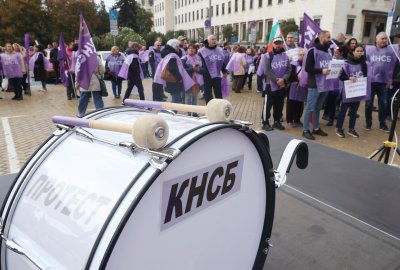
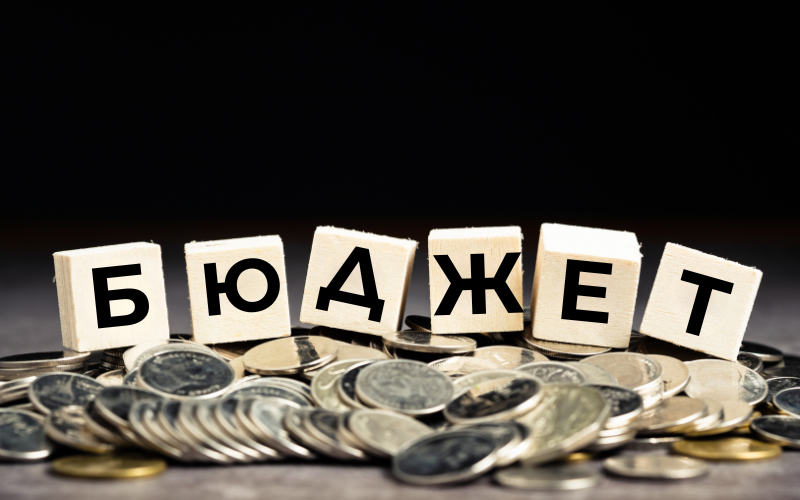
Bulgaria’s two largest trade unions, the Confederation of Independent Trade Unions in Bulgaria (CITUB and the Confederation of Labour 'Podkrepa', have called on lawmakers not to allow the state budget to become hostage to narrow party interests. The appeal comes in an open letter addressed to the Speaker of the National Assembly, Raya Nazaryan, and to the leaders of all parliamentary parties, in connection with the ongoing budget procedure.
“We at CITUB and Podkrepa recognise the complex political situation facing the country, but we do not understand why the budget procedure for 2026 should be halted when there is a functioning legislature and draft laws for the budgets of the State Social Security system, the National Health Insurance Fund and the State Budget have already been submitted,” the unions said.
They urged politicians not to allow the country’s financial framework — on which the entire economic policy is based — to become hostage to narrow party interests. According to the unions, regardless of any shortcomings in the three draft laws, there is sufficient time for amendments to be made between first and second readings, as has been the practice for many years.
The trade unions warn that adopting an extended, or rollover, budget would lead to public tension and serious problems.
“Withdrawing the current draft laws for the State Budget, the State Social Security Budget and the National Health Insurance Fund Budget, and adopting an extended Budget 2026 law, would create serious public tension and difficulties,” the letter says. “These problems should be clearly stated to the public and explained by all Members of Parliament.”
The unions point out that an extended budget would effectively “freeze” the incomes of around 600,000 public sector workers at their 2025 levels.
“This concerns 470,000 people working directly in the public sector — teachers, doctors, nurses, healthcare professionals, university lecturers, employees in cultural institutions, museums, community centres and libraries — as well as a further 130,000 employed in state- and municipally owned companies and enterprises, such as Bulgarian State Railways, Bulgarian Posts and public transport operators,” the letter states.
According to the unions, such a move would amount to a loss of real purchasing power for hundreds of thousands of Bulgarians, at a time when they had been promised and had negotiated pay rises of at least 10% following recent dialogue between the social partners.
The unions are adamant that maternity benefits, healthcare funding and the financial position of municipalities would also be affected.
“Secondly, failure to adopt the 2026 budget would mean a lower level of maternity benefits in the second year than originally planned,” they warn. “Thirdly, without an approved 2026 budget, the Bulgarian Medical Association will not sign a new National Framework Contract, meaning the current one will remain in force. This would deprive hospitals of higher revenues and the ability to offer competitive wages, with a negative impact on patients as well.”
“Fourthly, failure to adopt the 2026 budget on time would also deprive municipalities of the opportunity to develop, limiting their activities because they would be unable to approve their own financial frameworks. The entire municipal budget process would be delayed by at least six months, potentially creating serious problems for all 265 municipalities.”
CITUB and Podkrepa also warn that failing to adopt the 2026 budget on time would restrict investment policy, potentially creating difficulties even in accessing funds under the National Recovery and Resilience Plan. This is because those funds require a level of national co-financing that cannot be secured under the constraints of a rollover budget based on 2025 figures.
The unions highlight a further risk related to the overall electoral and political process — namely, a prolonged delay in adopting the 2026 budget, which they estimate might not be possible until May or even June, even under a favourable scenario.
“We believe such a delay would have serious negative consequences for Bulgarian society — for workers, mothers, municipalities and enterprises,” the letter says. “This would mean that incomes, second-year maternity benefits, subsidies for all municipalities and state-owned enterprises, as well as the level of state investment activity, would be frozen for half a year at their levels from the first half of 2025.”
They also stress that Bulgaria is approaching a major transition — the change of its national currency — which, they say, requires one thing above all: stability.
“The absence of a 2026 budget and the use of an extended budget do not correspond to the principles of stability, security and predictability,” the unions conclude. “In this regard, we insist that the National Assembly find a way to include the draft laws on the State Budget, the State Social Security Budget and the National Health Insurance Fund Budget in its agenda as soon as possible, and to complete the 2026 budget procedure before the end of the current calendar year.”








 Чуй новините
 Подкаст