

ИЗВЕСТИЯ

Моите новини

ЗАПАЗЕНИ

'We Need Three Times as Many Nurses', Outgoing Education Minister Says

bnt avatar logo от БНТ
A+ A-
Чете се за: 06:57 мин.

EN
краят годишна сага държавата придобива античния театър сердика

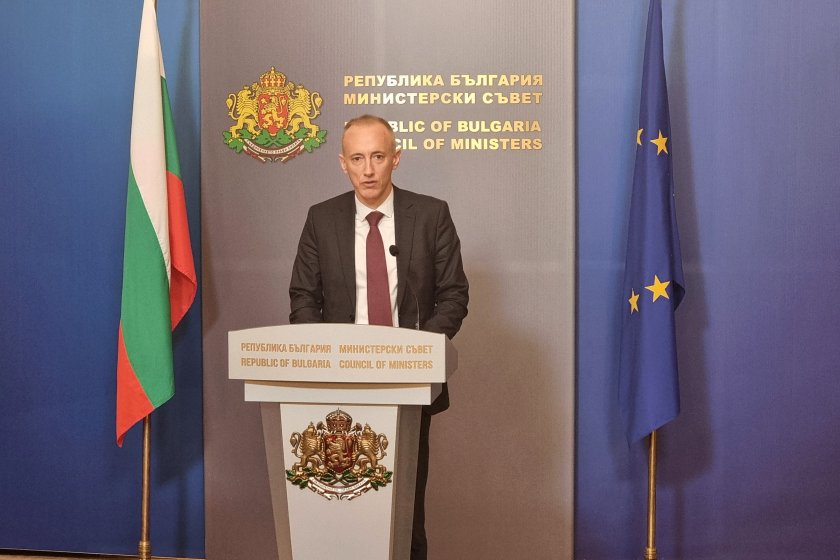
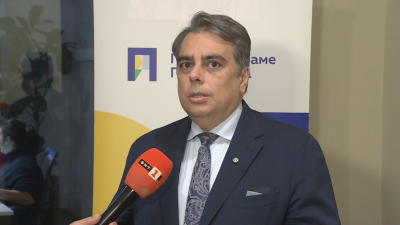
The shortage of nurses is one of the most serious problems facing Bulgaria’s healthcare system and is putting its normal functioning at risk. At least three times more students need to graduate in the speciality “Nursing”, outgoing Education Minister Krasimir Valchev said at a briefing after a Cabinet meeting on January 28.

He announced that “Nurse” and “Midwife” have been added to the list of protected specialities introduced last year.

“Last year, as a result of increased admissions and the exemption from tuition fees, we achieved a 36% rise in student intake in this speciality. That is not enough, but it is a step in the right direction and we hope this policy will continue,” Mr Valchev said.

The minister explained that admissions and funding in higher education are being increasingly linked to labour market needs and to the future needs of society.

“These policies have been in place for at least nine years. We are talking about two different markets: on the one hand, the education market, and on the other, the labour market and society’s future needs. They are not necessarily fully aligned. Demand for education sometimes does not match the real needs of the labour market. That is why we increase student intake in some professional fields and reduce it in others, focusing on those where future shortages are expected,” he said.

According to Mr Valchev, these include primarily engineering and technical disciplines, natural and mathematical sciences, as well as agricultural studies. There are also shortages of students in some humanities subjects.

Admissions in areas where the labour market faces shortages are being encouraged through additional scholarships.

“We define so-called priority professional fields, where we further stimulate admissions by providing extra scholarships. In addition, we have protected specialities. These are unique in their content and are offered by only one higher education institution, making them territorially unique as well. They receive additional funding in order to be preserved as centres of education, because society needs these specialities. At the same time, we exempt from tuition fees those specialities and professional fields where the greatest future labour market shortages are expected. Today we are complementing these policies with several regulatory changes,” he said.

Italian Studies, conducting of folk ensembles, conducting of a folk choir, and conducting of folk theatre have now been added to the list of protected specialities.

“Among the protected specialities there are already other rare philologies. To Italian Studies we add Arabic Studies, Armenian Studies, Japanese Studies, African Studies, Indian Studies, Iranian Studies, Romanian, Greek and Portuguese Studies. These are fields where student numbers are insufficient and which we must preserve, which is why we provide them with additional funding,” Mr Valchev said.

Preferences have also been introduced for the field of Metallurgy.

“Until now, the professional field of ‘Metallurgy’ was protected, but only the master’s degree in Metallurgy was exempt from tuition fees. However, there are other specialities within this field, so now all students studying Metallurgy will be exempt from fees. They are about 180 in total. At the same time, the metallurgy sector is one of the largest in Bulgaria, generating nearly 9% of the country’s gross value added. You can see how significant this sector is for our socio-economic development,” he added.

Two further changes have been proposed for public consultation.

“The first is that admissions in the professional fields of ‘Economics’ and ‘Administration and Management’ should be linked to mathematics. At least 20% of places will require a state matriculation exam in mathematics or a unified mathematics exam organised by the relevant public universities. Our aim is to encourage more applicants to choose economics with mathematics, as mathematical skills are essential for higher education in economics, as employers also point out,” Mr Valchev said.

“The second change is that admissions in technical professional fields should be linked to mathematics and physics, or, for some fields such as chemical technologies, to mathematics and chemistry. Again, this can be through a state matriculation exam or a unified exam organised by the universities themselves. We are currently in discussions with university rectors, and it is likely that these exams will be organised in the coming weeks.”


Последвайте ни

ТОП 24

Най-четени

Водещи новини

Product image
Новини Чуй новините Спорт На живо Аудио: На живо
Абонирай ме за най-важните новини?