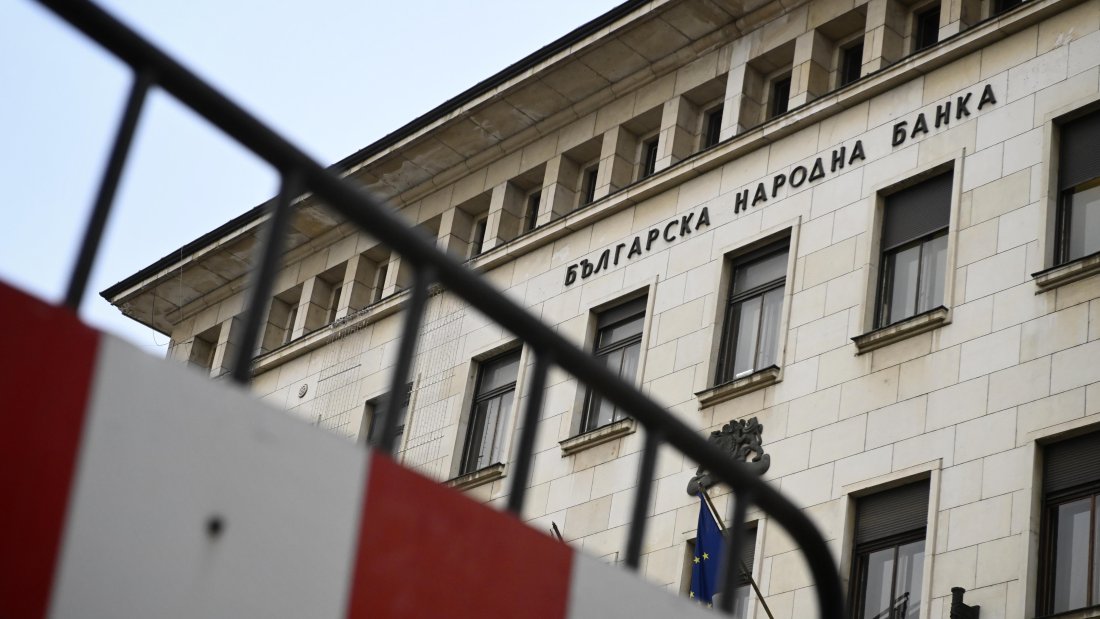
The Bulgarian National Bank (BNB) reports growing risks to inflation in the country due to the conflict in the Middle East, which is already affecting the prices of energy commodities. The central bank’s analysis suggests that, in an unfavourable scenario, inflation in Bulgaria could accelerate significantly in the coming years, despite the current stability of monetary policy in the euro area.
The conflict in the Middle East is seen as a source of heightened uncertainty regarding the dynamics of international energy prices, and consequently the outlook for inflation in both the euro area and Bulgaria.
At present, the BNB is focusing its efforts in two main areas: contributing to the formulation of monetary policy within the Eurosystem, and analysing the potential effects on inflation in Bulgaria.
At its meeting on 18–19 March 2026, the Governing Council of the European Central Bank (ECB) decided to keep key interest rates unchanged. The decision was taken unanimously and aligns with the objective of stabilising inflation at around 2% over the medium term.
However, according to estimates by the ECB and the BNB, the conflict in the Middle East will put upward pressure on inflation in the short term, mainly through rising energy prices. In the medium term, the effects will depend on the duration and intensity of the conflict, as well as on the extent to which price shocks are passed on to final consumer prices.
The BNB has developed a baseline scenario alongside two adverse scenarios for inflation in Bulgaria. Under the central projection, average annual inflation is expected to reach 3.7% in 2026, before easing to 3.2% in both 2027 and 2028.
In a more negative scenario, inflation could be higher by 0.7 percentage points in 2026 and by up to 1.4 percentage points in 2027. Under a severely adverse scenario, the increase could reach 1.2 percentage points in 2026 and as much as 3.4 percentage points in 2027.
The central bank emphasised that these scenarios are illustrative and do not take into account potential fiscal or monetary policy measures. Their purpose is to demonstrate how external price shocks — particularly in energy commodities — can be transmitted to the Bulgarian economy.


 Президентът Йотова: От деня на Съединението България се връща на географската карта на света
 Екзитпол: "Алтернатива за Германия" печели с над 44% вота в провинция Саксония-Анхалт










 Чуй новините
 Подкаст