Fuel prices - for third day average diesel price is 1.60 euro per litre
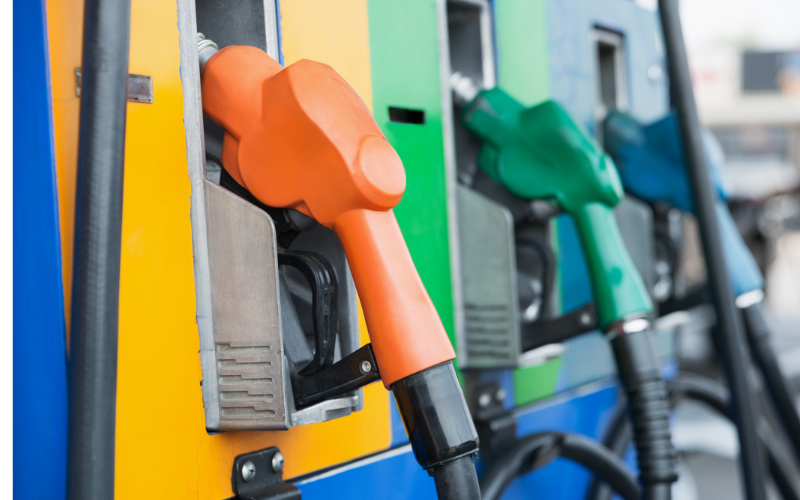
There is sufficient fuel on the market and no panic, according to Andrey Delchev, Executive Director of the Bulgarian Petroleum and Gas Association, speaking on BNT on March 25. However, he warned that if the derogation allowing the Burgas refinery to operate, set to expire on 29 April, is not extended, the facility could be forced to stop working.
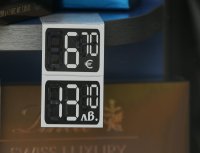
The National Revenue Agency (NAP) reported that diesel prices at petrol stations have reached €1.60 per litre for three consecutive days, while petrol remains lower at €1.43 per litre.
The government has activated its measure following a rise in fuel prices at petrol stations, with diesel now exceeding €1.60 per litre.
The Bulgarian Petroleum and Gas Association told BNT that there is sufficient fuel supply and no market panic. However, prices are climbing because oil is traded on the stock exchange; when its price increases there, refineries correspondingly pay more.
The association urged that neither price caps nor profit limits be imposed, calling on the government instead to consider compensatory measures for businesses.
The Energy Chamber's comment was along these lines.
Despite the recent increase in fuel prices, there is no shortage of supply, according to Andrey Delchev, executive director of the Bulgarian Petroleum and Gas Association.
Speaking to BNT, Delchev said: “There really is no panic on the market — you can see there are no queues at petrol stations. Mr. Spetsov, the special manager of Lukoil, made a serious statement confirming that there is sufficient crude oil. The refinery is capable of production and has secured supplies through April, meaning deliveries will continue uninterrupted.
“At the same time, the refinery purchases crude at the prices dictated by the international market, which are currently rising. Consequently, as the refinery produces fuel, the retail prices reflect these higher input costs. It simply cannot be otherwise.”
He also urged the caretaker cabinet to urgently renegotiate the derogation for the refinery’s operations.
Andrey Delchev, executive director of the Bulgarian Petroleum and Gas Association: “If the derogation, which I believe runs until 29 April, is not extended, the refinery would face serious problems and, in my view, would have to stop, which would be difficult for the market.”
Delchev warned against attempts to impose price caps.
Andrey Delchev, executive director of the Bulgarian Petroleum and Gas Association: “This was actually the more important point: the state should not slide into imposing maximum prices or profit limits, because in our view this is the wrong measure. Some countries do it. Bulgaria has gone in a different direction. I believe the correct approach is to provide compensation to those in energy poverty.”
Delchev also called for compensation for businesses.
Andrey Delchev, executive director of the Bulgarian Petroleum and Gas Association: “The issue is that, so far, we do not see measures to support businesses, which is a problem. Some of the organisations in the transport sector — there are quite a few — have reacted and requested that the government provide compensation similar to that given for electricity. So far, the government has not responded.”
In BNT’s podcast Business.BG, the chairman of the Energy Chamber called for any business support to be differentiated.
Valentin Kolev, chairman of the board of the Bulgarian Branch Chamber of Energy: “In my opinion, the measures should be linked to compensation, but these compensations should again be diversified. They should not be the same for all types of production.”
Besides the transport sector, the most affected by the price spikes are district heating companies, heavy industry, and nitrogen fertiliser plants.
.


 Президентът Йотова: От деня на Съединението България се връща на географската карта на света
 Екзитпол: "Алтернатива за Германия" печели с над 44% вота в провинция Саксония-Анхалт










 Чуй новините
 Подкаст