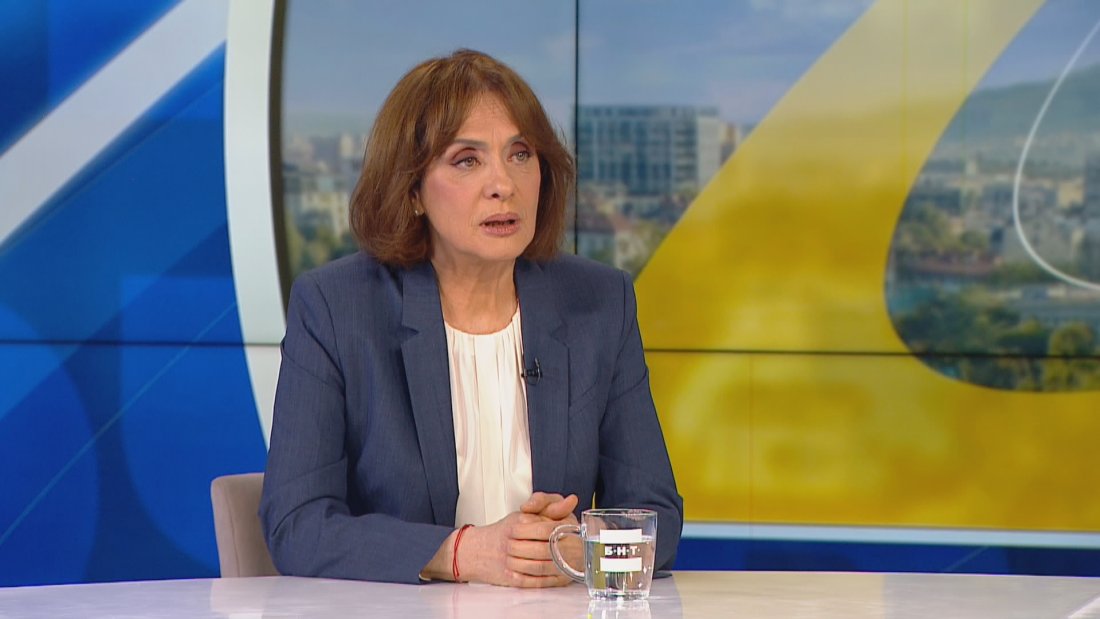
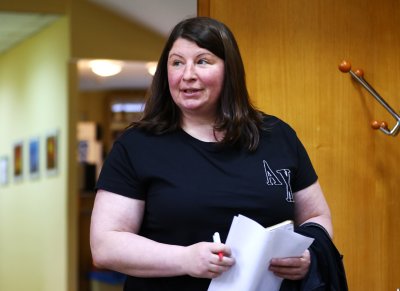
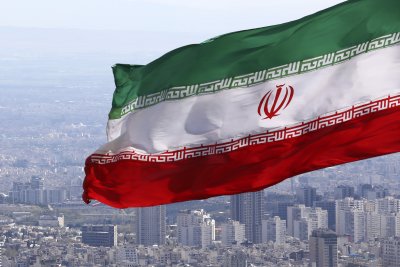
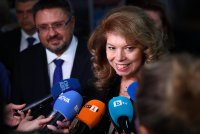
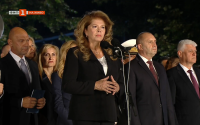
Caretaker Foreign Minister Nadezhda Neynski said the morning had brought relief for all those seeking an end to the conflict in the Middle East, commenting on the two-week ceasefire between the United States and Iran, announced shortly before the latest deadline set by Washington expired.
Speaking on “Denyat zapochva” (the Day Begins) programme on April 8, she added that the sustainability of the ceasefire would depend on whether Iran abandons its ambition to develop a nuclear bomb, provides sufficient guarantees that enriched uranium is not being used for nuclear weapons, halts attacks on Gulf states, and reopens the Strait of Hormuz.
Nadezhda Neynski said: “In practical terms, this ceasefire essentially sets out the clear lines along which its sustainability will be tested. Of course, it is too early for optimism, as the situation escalated over recent weeks has been extremely severe.
In any conflict, the most important factor is whether sufficient trust can be established to bring it to an end. So we should remain cautious and see how these negotiations unfold. Unfortunately, on several occasions we have had expectations that have not been fulfilled.”
Nadezhda Neynski said: “In practical terms, this ceasefire essentially sets out the clear lines along which its sustainability will be tested. Of course, it is too early for optimism, as the situation escalated over recent weeks has been extremely severe.
In any conflict, the most important factor is whether sufficient trust can be established to bring it to an end. So we should remain cautious and see how these negotiations unfold. Unfortunately, on several occasions we have had expectations that have not been fulfilled.”
Caretaker Foreign Minister Nadezhda Neynski said that, at this stage, the European Union is managing, through dialogue, to find the most appropriate responses to the war in Iran.
She also commented on her participation in a videoconference initiated by the British Foreign Secretary, noting that there had been discussions with countries from the Persian Gulf, which are among the most affected by the conflict.
“I spoke with the majority of my counterparts from the Gulf states, and they were extremely angry, particularly as, during the holy month of Ramadan, they were attacked by their neighbours in an utterly brutal and unprecedented manner,” Neynski said.
“The aim of the discussion was, first, to hear directly what is happening there and to bring our positions closer together. Bulgaria stated that it will not take part in any military operations in the Strait of Hormuz, but of course it joined efforts and appeals to Iran to reopen the strait, as it is suffering economic consequences.”
Neynski added that all efforts of the Bulgarian government are focused on providing maximum security guarantees for the country. According to her, these guarantees lie in Bulgaria’s policies, as well as in its membership of the European Union and NATO.
Nadezhda Neynski said: “What I want to make very clear is that the protection of Bulgaria’s national interests and national security requires an active, not a passive, foreign policy. The slogan of peace — everyone is for peace; no country would say ‘I am for war’ — is not the issue. The question is what guarantees can be secured for a peaceful solution, and how Bulgaria can safeguard its national security. This is where the real differences lie.”
Neynski reiterated that the publication of a note sent by Iran to Bulgaria is not standard practice.According to her, the aim was to create tension and fear in society.
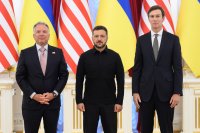
She also commented on the agreement with Ukraine, stressing that it sets out a political framework that does not impose obligations, but rather creates opportunities for Bulgaria.
Nadezhda Neynski: “Bulgaria is significantly late in signing this bilateral agreement. At the same time, Bulgaria seeks to benefit from Ukraine’s high-tech capabilities.
“Due to the demands of the war, Ukraine has had to develop, in just four years, an exceptionally advanced technological capacity for its armed forces. This is know-how that the Bulgarian army needs, and through cooperation under this agreement we can gain significant opportunities.
“Bulgaria’s defence industry can also benefit greatly, and we have assessed that this is in the country’s interest.”







 Чуй новините
 Подкаст