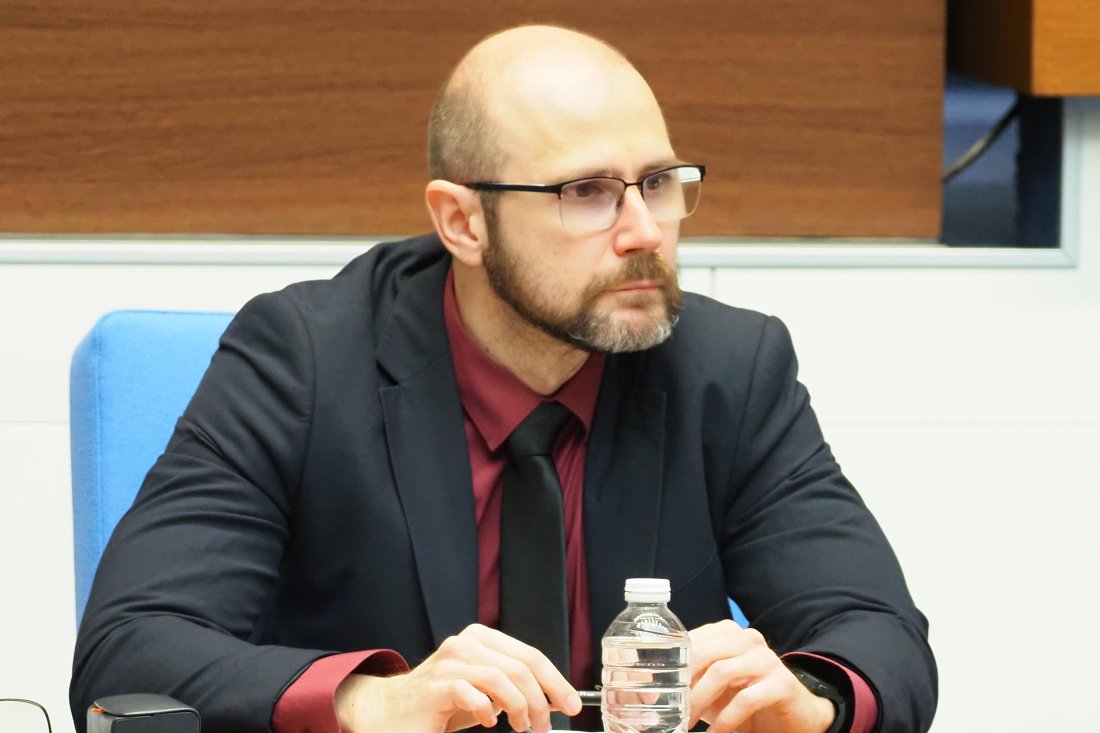
Caretaker Justice Minister Andrey Yankulov has proposed that the Prosecutors' College of the Supreme Judicial Council initiate disciplinary proceedings against Borislav Sarafov, who is currently acting as Prosecutor General, with a view to his dismissal over alleged disciplinary violations.
The proposal calls for the most severe disciplinary sanction – removal from office.
According to the minister, the disciplinary liability of Borislav Sarafov for actions and omissions carried out in his capacity as de facto acting Prosecutor General cannot be excluded on the grounds that his holding of the position is unlawful.
“In recent months, a series of written statements attributed to the Prosecutor's Office have been circulated in the public domain, creating significant institutional tension between the Bulgarian Prosecutor's Office and the courts, damaging the prestige of the judiciary and undermining public confidence in it,” the minister states in the proposal, which sets out five groups of relevant circumstances.
One of these is based primarily on the Prosecutor's Office own published official communication between the Bulgarian and the European Public Prosecutor’s Office concerning the case of the temporarily suspended European Prosecutor from Bulgaria, Teodora Georgieva.
According to the Prosecutor's Office publication and media reports, Borislav Sarafov stated at a meeting with European prosecutors that the Bulgarian Prosecutor's Office possessed evidence that Georgieva had received bribes, while the investigation during which that evidence was gathered was initiated only after that meeting.
Subsequently, although the as yet unidentified supervising prosecutor in the investigation made a written assertion, addressed to the European Chief Prosecutor Laura Kövesi, that sufficient evidence of corruption had been gathered against Georgieva, the Bulgarian prosecutor took no steps to initiate criminal proceedings, as he was obliged to do in such circumstances.
Despite being aware of this fact, Borislav Sarafov did not exercise oversight for legality over the prosecutor supervising the investigation.
Two of the remaining groups of grounds relate to a gross conflation by Borislav Sarafov of his public function with personal interest, as well as the impermissible use of the institutional authority of the Prosecutor's Office for purposes incompatible with the powers of the office he effectively holds.
These refer to widely known cases in which Borislav Sarafov requested the recusal of a judge from the Sofia City Court, who was due to rule on an appeal against the refusal by the “ad hoc prosecutor” Daniela Taleva to initiate pre-trial proceedings on materials that became known as “EuroLeaks”.
They also concern a request to the President and Vice-President of the Supreme Court of Cassation, as well as to the Prosecutorial College of the Supreme Judicial Council, to exclude more than five hundred judges from random allocation in the selection of the next “ad hoc prosecutor” – all members of the Union of Judges in Bulgaria.
Sarafov’s requests, although concerning him personally as an individual affected or potentially affected by an inspection or investigation by the special prosecutor, were submitted in the institutional capacity he claims to hold, thereby impermissibly engaging the entire institution of the Prosecutor's Office of the Republic of Bulgaria.
The fourth group of circumstances relates to one of the rare public statements made by the acting Prosecutor General – concerning the “Petrohan” case – in which Sarafov made an ill-judged public remark at the very outset of the investigation, when investigative hypotheses should have been at a very early stage of development.
From the statement, which provides specific assessments of individual facts related to the investigation, there is a real risk of influencing the internal conviction of the supervising prosecutor and the investigative authorities, which should be based on an objective, comprehensive and complete examination of all circumstances of the case, as well as on the law,” the reasoning states.
The fifth circumstance is linked to a response issued by the Prosecutor's Office, prompted by a publication on the website of the Supreme Court of Cassation, which stated that the powers of the acting Prosecutor General had been terminated by law and that a request to reopen a criminal case submitted by the acting Prosecutor General did not constitute valid referral to the court.
The response contains unacceptable assessments, such as: “the leadership of the Supreme Court of Cassation is involving the institution in an attempt to achieve illegitimate objectives”, and that “through its current actions it is openly contributing to the erosion of public authority towards the main pillar of the state – its justice system, in unison with certain political forces.”
It is stated that the Supreme Court of Cassation was “attempting to manipulate public opinion” and that “through its actions the leadership of the Supreme Court of Cassation is pursuing solely political objectives and further deepening the situation of instability within the judiciary, which in turn is driven by certain political circles and their individual representatives within the judiciary itself.”
As the de facto representative of the Prosecutor's Office, through the public position he expressed, Borislav Sarafov formulates highly extreme claims affecting the independence, reputation and authority of the Supreme Court of Cassation, leading to a breach of established institutional ethics.
In conclusion, caretaker Minister Yankulov emphasises that the actions and omissions of the acting Prosecutor General constitute serious disciplinary violations, for which the most severe disciplinary sanction should be imposed – removal from office. He calls on the Prosecutors' College of the Supreme Judicial Council to urgently initiate disciplinary proceedings.
All the circumstances set out in the caretakeer Minister’s proposal are based solely and exclusively on publicly available information, do not contain any previously undisclosed facts the confidentiality of which should be preserved, and therefore, given the very high public interest and the significance of the case, the Ministry of Justice has published the full document on its website.
According to the minister, a series of public statements issued on behalf of the prosecution service have contributed to heightened institutional tension between the judiciary and the prosecution, damaging the credibility of the judicial system and undermining public trust
According to the Minister, the disciplinary responsibility of Borislav Sarafov for the acts and omissions committed in his capacity as de facto acting Prosecutor General cannot be excluded by arguing the illegality of the position.
"Over the past months, a series of written statements involving the Prosecutor's Office of the Republic of Bulgaria have been circulated in the public domain, which have created high institutional tension between the Bulgarian prosecutor's office and the court, undermined the prestige of the judiciary and undermined public confidence in it," the minister's proposal, which sets out five sets of relevant circumstances, reads.
One of them is mainly based on the official communication of the Bulgarian Prosecutor's Office with the European Prosecutor's Office on the case of the suspended European prosecutor from Bulgaria, Teodora Georgieva, made public by the prosecutor's office itself. It is clear from the publication of the prosecutor's office and media information that Borislav Sarafov claimed at a meeting with European prosecutors that the Bulgarian prosecutor's office had evidence of bribes received by Georgieva, and the investigation during which the evidence in question was collected was only launched after this meeting.
Subsequently, although the unknown prosecutor overseeing this investigation made a written allegation, sent to the attention of the European prosecutor, Laura Kövesi, that sufficient evidence of corruption had been collected against Georgieva, the Bulgarian prosecutor did not take any prosecutorial action, as he was obliged to do upon such a finding. Even though he was aware of this fact, Borislav Sarafov failed to supervise the legality of the prosecutor supervising the investigation.
Two of the remaining sets of grounds relate to Borislav Sarafov's blatant confusion of his public function with his private interest and the impermissible use of the institutional authority of the prosecutor's office for purposes incompatible with the powers of the office which he actually holds. We are talking about the publicly known cases in which Borislav Sarafov requested the recusal of a judge of the Sofia City Court, who was to rule on an appeal against the refusal of the "ad hoc prosecutor" Daniela Taleva to initiate pre-trial proceedings on materials that became known as "EurotoLeaks", as well as a request to the President, Deputythe President of the Supreme Court of Cassation and the SCC of the Supreme Judicial Council to exclude more than five hundred judges - all members of the Union of Judges in Bulgaria - from the random allocation when determining the next "ad hoc prosecutor".
Sarafov's requests, although they concern him personally as one affected or potentially affected by an investigation or inquiry by the Special Prosecutor, are made in the institutional capacity he claims to possess, which impermissibly commits the entire institution of the Prosecutor's Office of the Republic of Bulgaria.
The fourth group of circumstances relates to one of the rare public statements of the Acting Prosecutor General - that on the Petrohan case, in which Mr Sarafov makes an ill-advised public statement at the very beginning of the investigation, when the investigative versions should be at a very early stage of clarification.
"From the statement, which gives specific assessments of individual facts related to the investigation, there is a real risk of influencing the internal conviction of the supervising prosecutor and the investigating authorities, which should be based on the objective, comprehensive and complete examination of all the circumstances of the case, as well as the law," the reasoning reads.
The fifth circumstance relates to the prosecution's position-response, provoked by a post on the SCC website, according to which the powers of the acting chief prosecutor have been terminated by law and a request to reopen a criminal case filed by the acting chief prosecutor does not constitute a valid referral to the court. The position-response contains unacceptable assessments such as "the leadership of the SCC is dragging the institution into an attempt to achieve illegitimate goals", with its "current actions openly contributes to the erosion of public authority vis-à-vis the main pedestal of the state - its justice system, in unison with certain political forces".
It is pointed out that the SCC made "an attempt to manipulate public opinion" and "by its actions, the SCC leadership pursues only political goals and deepening the created situation of instability in the judiciary, which in turn is dictated by certain political circles and their individual representatives in the judiciary itself". As the de facto representative of the Prosecutor's Office, Borislav Sarafov, through his public position, formulated extremely extreme statements affecting the independence, reputation and authority of the SCC and leading to a violation of the established institutional ethics.
In conclusion, Minister Yankulov stresses that the actions and omissions of the de facto Acting Prosecutor General constitute serious disciplinary violations for which the most severe disciplinary penalty should be imposed - disciplinary dismissal. He urges the SCM to urgently initiate disciplinary proceedings. All the circumstances set out in the Minister's proposal are based solely on public information, do not contain any previously undisclosed facts, the secrecy of which should be protected, and therefore, given the very high public interest and importance of the case, the Ministry of Justice has published the document in full on its website.
See Ivo Nikodimov's live inclusion







 Чуй новините
 Подкаст