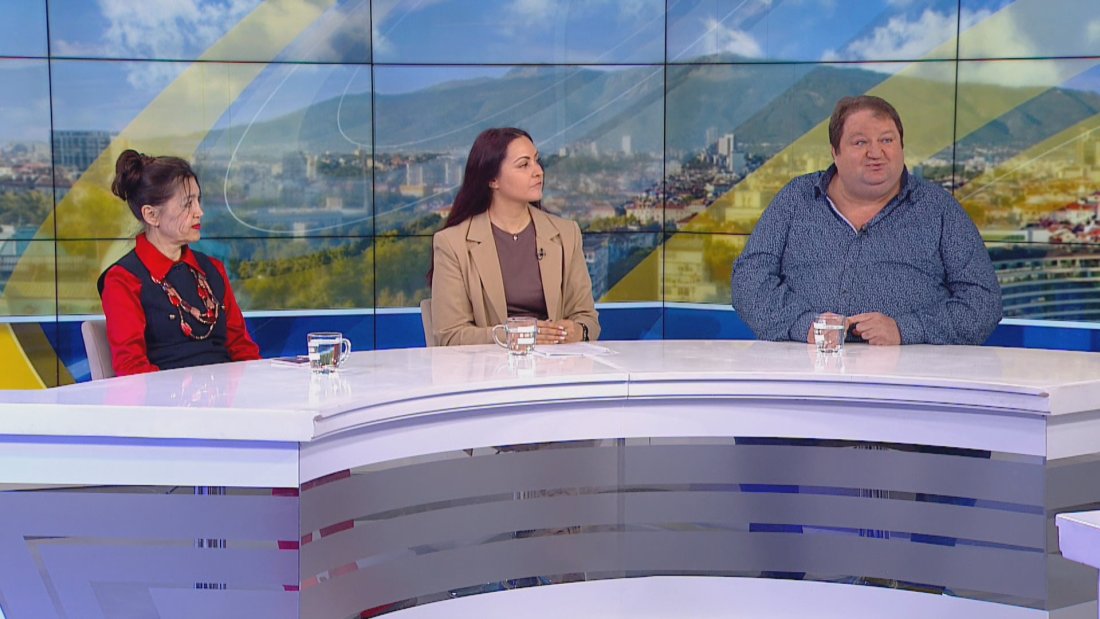
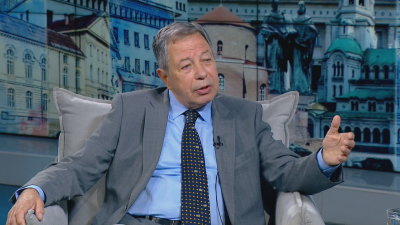
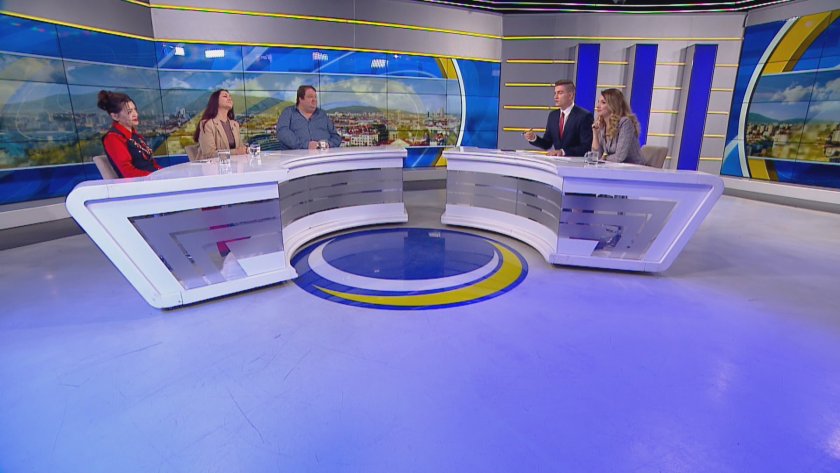
Political language, verbal aggression and clichés used during the election campaign were the focus of a discussion in a televised programme, where linguists Prof. Vladislav Milanov, Assoc. Prof. Dilyana Dencheva and Dr Antoneta Nacheva analysed how politicians’ rhetoric influences society and the consequences of the gap between words and actions.
Prof. Vladislav Milanov highlighted the dangers of verbal aggression on the BNT programme “The Day Begins” on April 21.
“This verbal aggression is very dangerous, and that is why we are obliged to speak about it. Moreover, this aggression has crossed boundaries and has become extremely cynical. It reflects cynical thinking and cynical speech, which is becoming a model for imitation. As a result, we are increasingly observing among young people more and more instances of verbal aggression, which often escalate into physical aggression,” he said.
The linguist stressed that this is not a new problem, but a process that has been observed for 20 years.
He is of the view that politicians bear direct responsibility for the language they use.
“We would very much like this to be the great lesson for Bulgarian politicians after these elections: to understand that language is a weapon, and this is not a cliché. To understand that language holds them accountable, because speech cannot be used irresponsibly. We cannot constantly hide behind clichés.”
The discussion also addressed linguistic practices during the election campaign and the use of clichés.
“In this election campaign, words such as ‘priority’, ‘vision’, ‘launch’, ‘resources’, ‘responsibility’, ‘the best’ were very often used. Education is always a priority, healthcare is always a priority. But when this mismatch occurs… what we colloquially call ‘empty talk’,” Prof. Milanov added.
Linguists also presented specific examples from the election campaign which, in their view, illustrate linguistic problems.
“It is high time that the Bulgarian voter stopped stepping on the same rake for 36 years,” said Dr Antoneta Nacheva.
She also offered an example of unclear and fragmented political speech:
“I lived in Brussels for five years and I dealt with various things. I know various people and I know a thing or two.”
Dr Nacheva also cited frequently used political formulae.
“This is what we will do: we will remove the tumour-like formation of the oligarchic model,” Dr Nacheva further noted.
Assoc. Prof. Dilyana Dencheva commented on the role of clichés in political speech and the risks of their excessive use.
“Before becoming clichés, they were vivid expressions, they were hits. It is precisely this that made them clichés, because they began to be used very widely.”
She explained that overuse leads to a loss of value.
“When a linguistic expression is used too often, it becomes worn out, it becomes conventionalised, it becomes dull and loses its stylistic value.”






 Чуй новините
 Подкаст