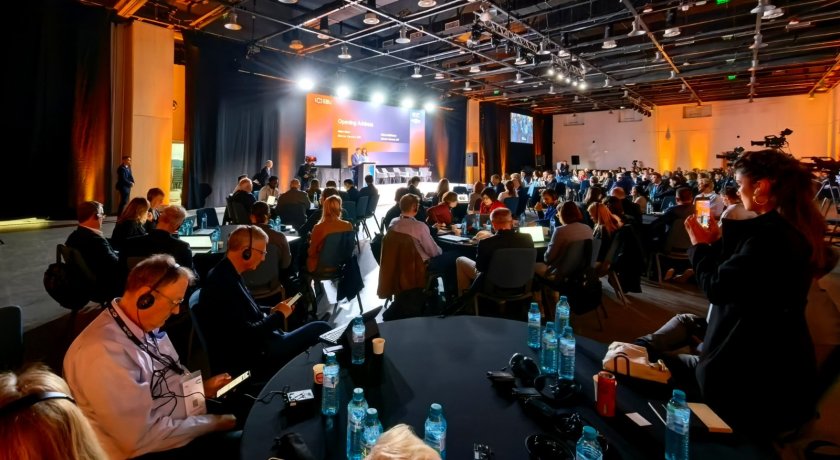
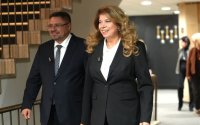
A total of 150 delegates from 40 countries are taking part in one of the most prestigious events in the European Union’s broadcasting calendar — the Media Summit, which for the first time is held in Bulgaria. The event is hosted by the Bulgarian National Television (BNT) and Bulgarian National Radio (BNR), with today, April 23, marking the second day of the forum.
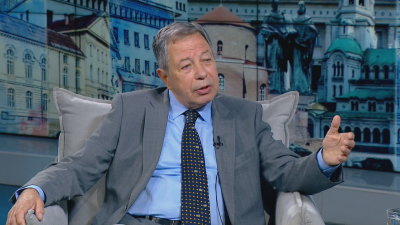
Public service media are a guarantee that audiences have access to independent content and news, according to a shared view expressed by BNT Director General Milena Milotinova and Jean Philip De Tender, Deputy Director General of the European Broadcasting Union, in an interview for the programme “Denyat zapochva” (“The Day Begins”).
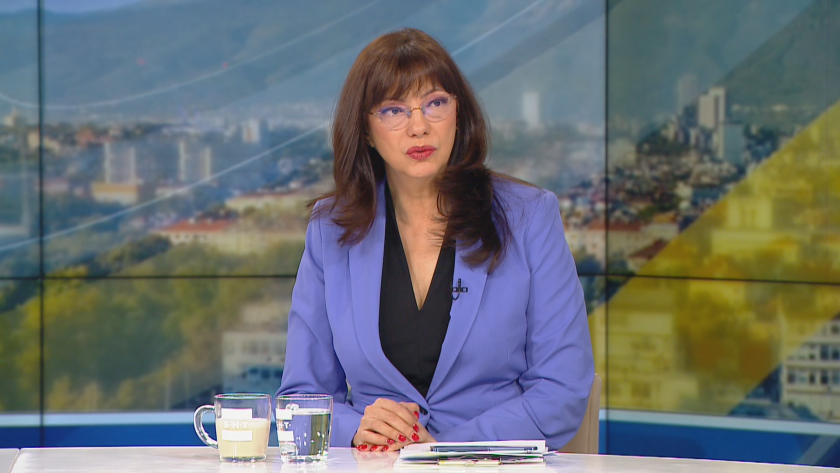
Milena Milotinova, Director General of Bulgarian National Television (BNT):
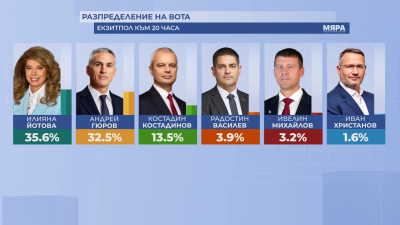
“The role of public service media is enormous, because audiences, especially in times of crisis, turn to public broadcasters and public media. Our broadcaster, BNT, traditionally enjoys a high level of public trust. Last year, a Reuters Institute study showed that we have the highest level of public trust when it comes to media in Bulgaria. We are naturally continuing this tradition and building on it, and we see how during election night we attracted a very large television audience. We also see how, during the election campaign, people increasingly turned to BNT to get information about the different platforms of the political parties and their various views on the development of our country. So we thank our audience for trusting us.
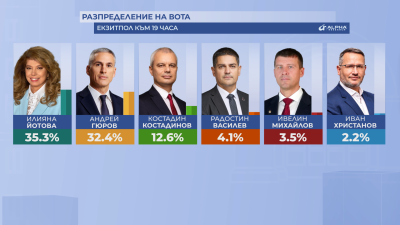
But of course, we do not rely solely on television broadcasting. We also rely on our online platforms, because BNT is a single organism. We have four television channels broadcast over the air and distributed via television content providers, as well as two online platforms that we are developing. We have podcasts, a Facebook page, and a strong presence across all social networks. We are trying in every possible way to reach audiences, which is why we created this 3D mapping during election night on the BNT building, projecting in real time the exit poll results onto the facade of the broadcaster — something no one in the Bulgarian television market had done before.”
The summit brings together public media executives and radio, TV and digital media professionals from across Europe.
It is a high-level strategic forum focused on the future of public service media — their sustainability, public role, digital transformation, and a common position in relation to global technology platforms.
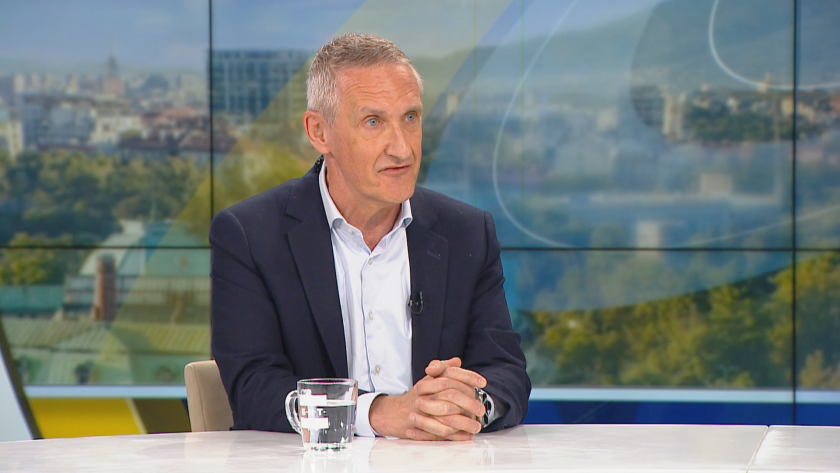
Jean Philip De Tender, Deputy Director General of the European Broadcasting Union:
“It is wonderful that BNT and BNR are hosting such an event for public broadcasters. We have representatives from broadcast media across Europe here — including the Director General of Radio France, representatives of BBC and many others.
It is very important to have independent media, and these are the public service media, which are a guarantee for our viewers that they have access to independent content and news. It is important for people to have access to such content, and BNT and BNR are such media.
There is a great deal of pressure on these media, both nationally and internationally, and they are fighting for their independence. The aim of the European Broadcasting Union is to support them so that viewers and listeners have access to this kind of content.”
The debate over the funding of public service media is a very serious one, the Director General of BNT stressed.
Milena Milotinova, Director General of BNT: "It is a major issue and has been debated for years. At present, there is a working group at the Ministry of Culture discussing amendments to the Radio and Television Act, including changes to the funding of public service media, so that they are no longer financed on the basis of the ‘hour-per-programme’ principle.
The ‘hour-per-programme’ principle is significantly undervalued. We currently have an hour of programming valued at 2,499 lev, which is far below its real cost. It has been like this for years. It has not been changed.
In fact, the ‘hour-per-programme’ principle is not a good one. The European Broadcasting Union has enormous expertise in how public service media are funded in different countries, which are the good funding models, and which guarantee the independence of public service media to the greatest extent.
Forums such as this one in Sofia, which we are jointly hosting with Bulgarian National Radio, are very useful for all participants — not only for the hosts, not only for us — because we exchange ideas that we can implement locally.”
Jean Philip De Tender, Deputy Director General of the European Broadcasting Union, said:
“Sustainable funding for public service media is extremely important. Research by the European Broadcasting Union shows that the more investment there is in public service media, the more democracy and its functions are supported.
Across Europe as a whole, funding stands at around €54 per citizen. In Bulgaria, it is below that level. Even that figure is very low compared with what people pay for national platforms and streaming services.
The only media that can guarantee democracy are public service media and local media, and politicians and governments should invest in them.
Yesterday it was encouraging to hear media being recognised as important for democracy. Unfortunately, across Europe we see that these investments in media are sometimes accompanied by attempts at political influence over public service media.
That is why there should be mechanisms to guarantee their independence — through licensing or by other means. There needs to be clarity about the role of public service media, what is expected of them, and how they can be more innovative in order to reach a broad audience, including through digital platforms.
Yes, public service media should provide accountability, but also independence.”







 Чуй новините
 Подкаст