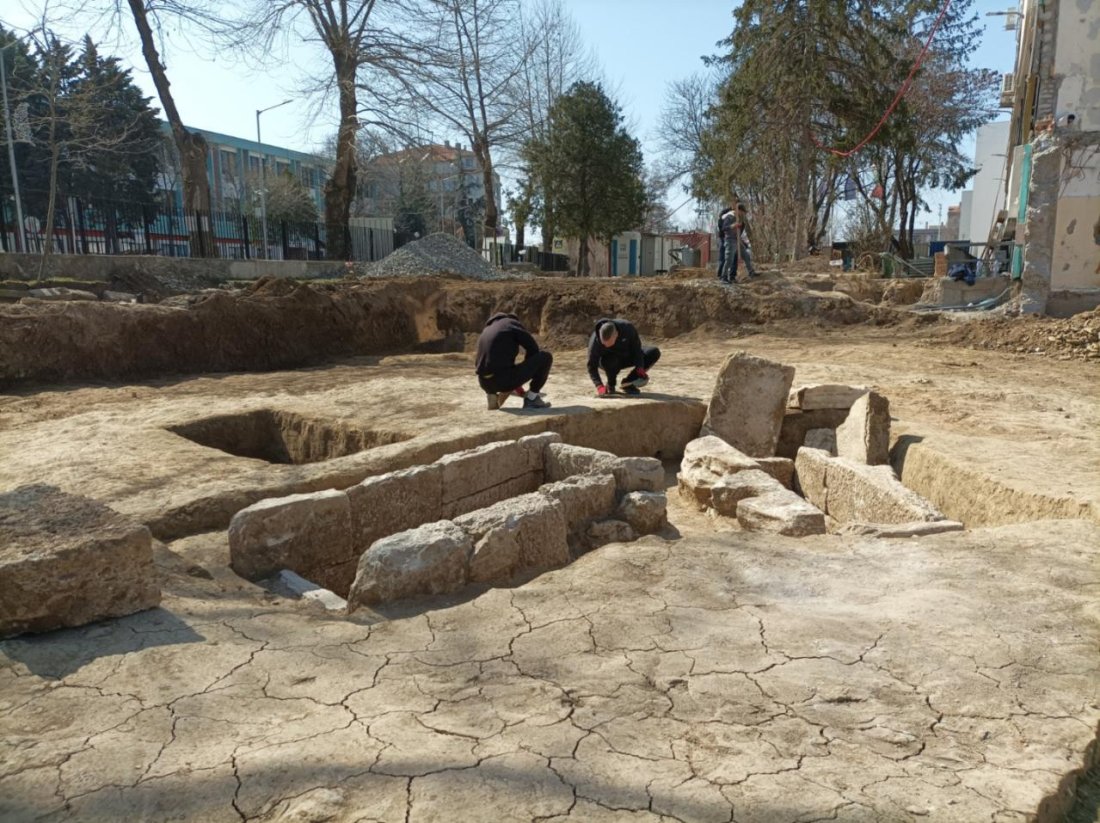
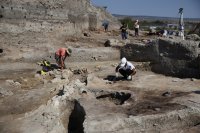
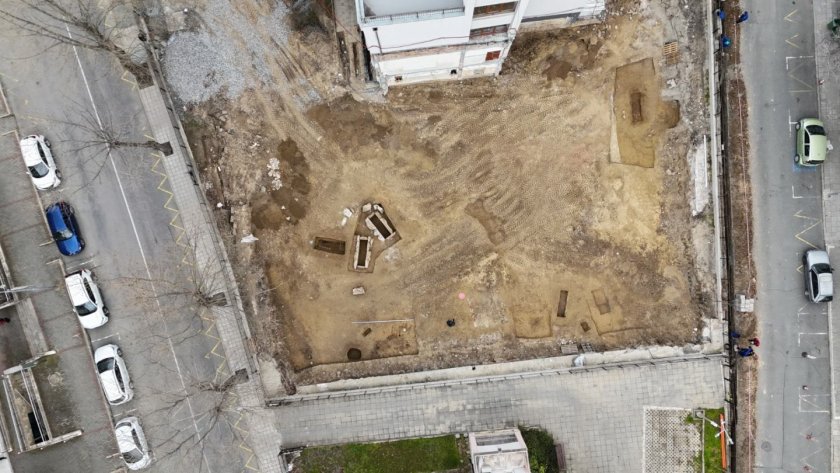
Archaeological finds dating from the Hellenistic period (3rd–2nd century BC) have been uncovered during excavations in the courtyard of' Lyuben Karavelov' Secondary School in the coastal town of Nessebar, the municipal press office said on March 18. The dig was initiated by a team from the “Old Nessebar” Museum following the start of construction work on a new school building.
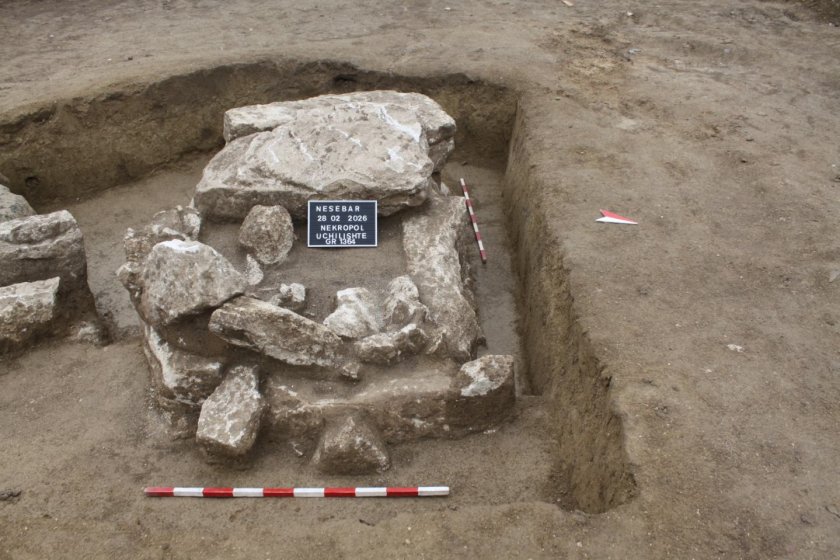
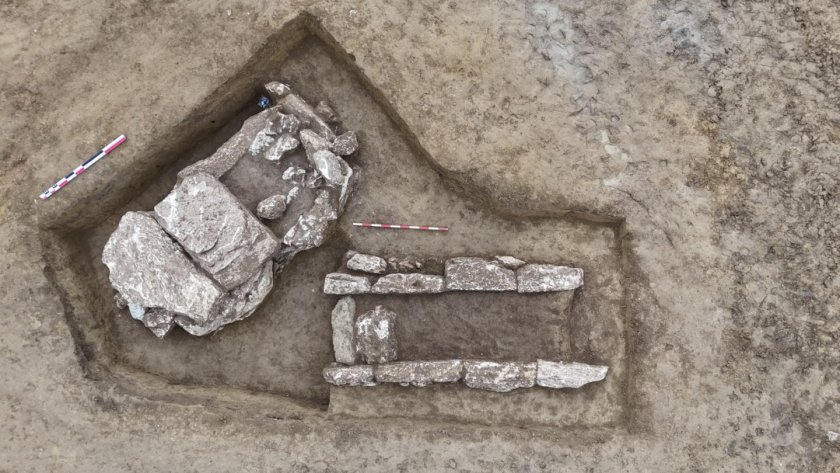
Among the most notable artefacts, discovered in a stepped pit—an uncommon feature for the necropolis of ancient Mesambria—are a gilded bronze wreath, a silver coin known as “Charon’s obol”, a jug, a strigil and astragali (knucklebones).
The excavations have also yielded silver and bronze coins, relief-decorated cups, lacrimaria, strigils, glass beads and ceramic vessels.
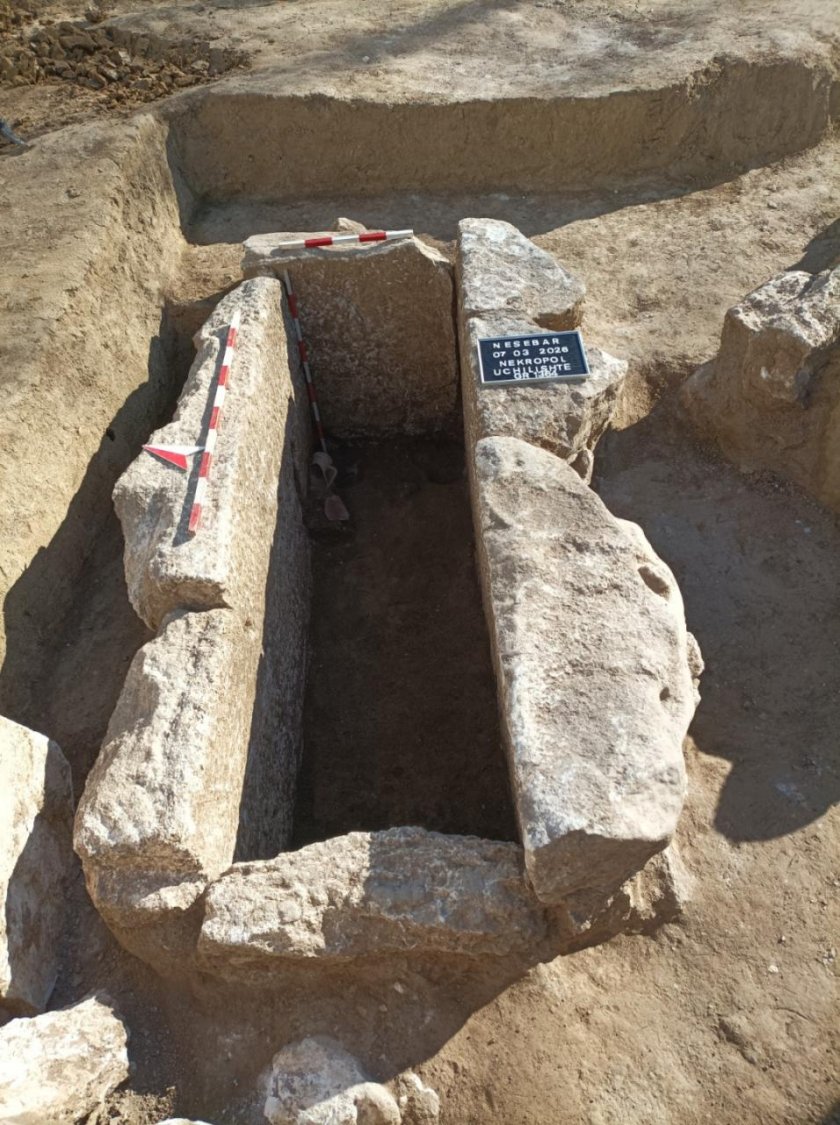
Researchers have further examined four medieval structures dating from the 13th–14th centuries, as well as three pits from different periods—one from the Hellenistic era and two from the Middle Ages. Some of the finds are fragmented and will undergo restoration.
All artefacts will be preserved in the collections of the “Old Nessebar” Museum and are expected to be displayed in the city’s Archaeological Museum in a temporary exhibition in the near future. The museum also plans to host a public lecture dedicated to the latest research in the necropolis area.








 Чуй новините
 Подкаст