The Council of Ministers adopted the national vaccination plan against COVID-19, Bulgaria’s Minister of Health Prof. Kostadin Angelov said at a briefing on the spread of COVID-19 in the country on December 4.
The plan was developed by a working group with the participation of specialists from the Ministry of Health and Regional Health Inspectorates, the Executive Agency for Medicines, leading medical specialists, the Bulgarian Medical Union, the Bulgarian Dental Association and the Bulgarian Pharmaceutical Union.
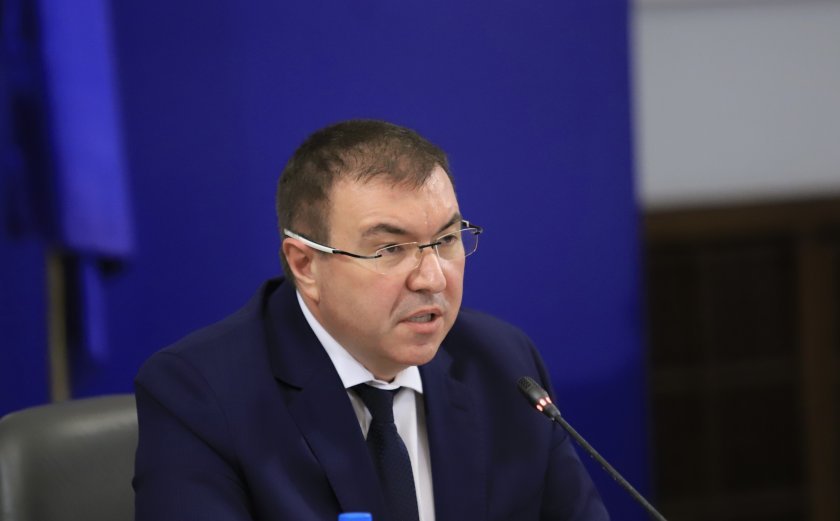
"The instructions of the World Health Organization, the plans of EU member states - Germany, France, Italy, England and some US states - have been used for the preparation of the plan. It is in line with the characteristics of the Bulgarian healthcare, territory and infrastructure," Angelov explained. He added that the plan is dynamic and prepared for adequate change depending on the situation.
The vaccination will allow to achieve immunity in a large part of the population, which will protect people who cannot be immunized and at the same time fall into the risk groups for more severe course and complications from the disease, the document says.
The Minister also confirmed that a National Vaccination Task Force is being established, chaired by Prof. Krassimir Gigov. 5 phases of vaccination have been developed. Prioritizing the target groups is based on epidemiological and ethical criteria.

Vaccines will first be given to doctors, nurses, healthcare assistants. According to Prof. Angelov, these are people at high risk of contracting and transmitting the infection. 243,600 people are expected to be vaccinated in this phase. These include 30,000 physicians, 10,000 dentists, 46,000 health care professionals, 6,600 pharmacists, 2,000 assistant pharmacists, and 150,000 support staff.
Vaccination will be voluntary, the minister reminded again.
Phase 2 includes users and staff of social institutions, pedagogical specialists and staff of mink farms.
Phase 3: Employees involved in state maintenance activities, such as those in the water supply sector. Their number depends on the lists prepared by the RHI.
Phase 4: Elderly people over the age of 65 and people with concomitant diseases. The expected number of users in this phase is 1.8 million people.
Phase 5: Vulnerable populations due to the high epidemiological risk of infection associated with their lifestyle.
The country will be divided into 6 regions according to the National Vaccination Plan and each of them will have a person in charge who will perform the central logistics - RHI-Vratsa, RHI-Veliko Turnovo, RHI-Varna, RHI-Bourgas, RHI-Plovdiv, RHI -Sofia. They will work in cooperation with the head of the Coordination Task Force, Krassimir Gigov.
Kardzhali district is the first to leave the red zone, said Assoc. Prof. Angel Kunchev. He acknowledged that there has been an improvement in the data since the introduction of the new measures, but it is too early to rejoice. However, he expressed hope that there would be positive news soon.
The vaccines will be applied after permission of the European Medicines Agency. At this stage, two of the vaccines are the most advanced, the chief state health inspector said.
"When an epidemic occurs, immunizations start immediately. We have to reach 75% of immunisation in order to protect the public as a whole. The vaccines, however, remain voluntary," explained Assoc. Prof. Kunchev.

images by BGNES






 Чуй новините
 Подкаст