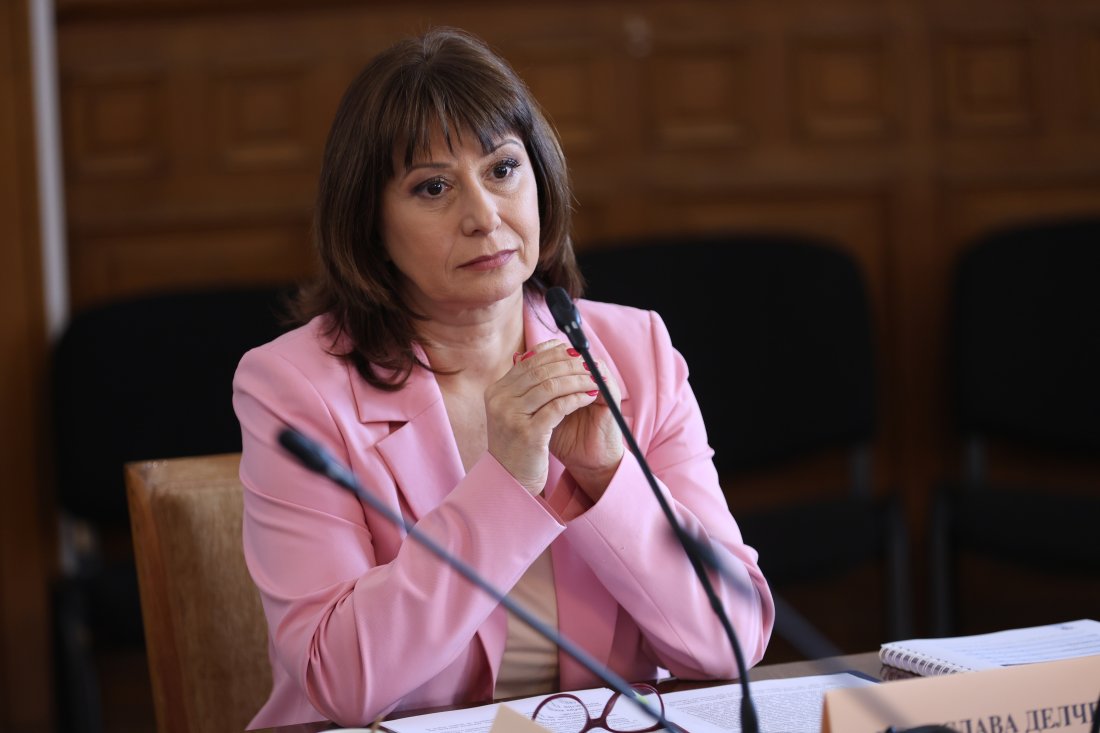
Ombudsman Velislava Delcheva has submitted three opinions to the National Assembly on the draft State Budget Act, the State Social Insurance Budget and the National Health Insurance Fund (NHIF) Budget for 2027.
She supports increased social spending and investment in children, education, young people and healthcare. At the same time, she is calling for additional measures to ensure that nominal increases in funding translate into tangible support for citizens. The emphasis is on the purchasing power of incomes, access to social assistance and the protection of vulnerable groups.
“Fiscal stability and social protection are not conflicting goals,” Delcheva stresses.
In her opinion on the State Budget, she welcomes the increase in family allowances and the income thresholds for eligibility. However, she considers the proposed amounts insufficient in view of the rising costs of raising children. Delcheva proposes that family income should be calculated on the basis of actual disposable income, after tax and social security contributions have been deducted.
The Ombudsman also highlights the problem of benefits being withdrawn abruptly when income exceeds the eligibility threshold by even a small amount. She proposes introducing a more gradual mechanism for reducing support, rather than families losing their entitlement to assistance as a result of a marginal increase in income.
Her assessment of the allowance for raising twins is particularly critical. The budget provides for an increase of just €0.45 per child.
“The proposed increase of just €0.45 per child in the one-off allowance for raising twins cannot be regarded as a genuine increase in state support for these families,” the Ombudsman writes.
Velislava Delcheva is calling for a substantial increase in the allowance and for it to be adjusted periodically in line with rising prices of goods and services. She welcomes the increase in the one-off allowance for schoolchildren from €153.39 to €175 for the 2027–28 school year, but warns that account must be taken of cumulative inflation, rather than solely the forecast for the coming year.
In her opinion, Delcheva also raises the issue of teachers’ pay. The planned 7.5% increase in funding for the remuneration of teaching professionals must be supported by detailed calculations. These should demonstrate whether the commitment to ensure that teachers’ salaries are no lower than 125% of the national average gross monthly wage will be fulfilled.
The Ombudsman also expresses concern about the expanded range of exemptions from the planned 5% pay rise for employees in publicly funded organisations. She supports the mechanism for maintaining civil servants’ net salaries but warns that this must not come at the expense of their social security income and future pension entitlements.
She points out that investment in child healthcare is also among the key priorities of the State Budget. Delcheva welcomes the additional €50 million earmarked for the construction of the National Children's Hospital. However, she insists on sustainable funding at every stage of the project – construction, equipment, commissioning and associated infrastructure. In her view, a clear timetable is needed to ensure that the project suffers no further delays.
The Ombudsman stresses that the situation regarding psychiatric care remains particularly alarming. Inspections carried out by her in her capacity as the National Preventive Mechanism between 2012 and 2026 have revealed long-standing underfunding, shortages of psychiatrists and medical staff, low pay and poor working conditions. Delcheva is therefore calling for the 2027 Budget and the three-year budget forecast to provide for a long-term state mental health policy, with specific objectives, deadlines and guaranteed funding.
Other key issues highlighted in the Ombudsman's opinion include more adequate support for children with disabilities, university students, doctoral students, young medical professionals and unemployed people. The Ombudsman welcomes the guarantees that social assistance payments will continue regardless of restrictions on certain categories of public expenditure, as well as the removal of the initially proposed ban on clothing allowances for employees in publicly funded organisations.
“At a time of inflationary pressures and rising household living costs, it is particularly important to ensure that the most vulnerable groups in society do not bear a disproportionately heavy social cost in the effort to address budgetary imbalances,” Delcheva insists.
With regard to the State Social Insurance Budget, she identifies the incomes and living standards of older people as a top priority. The proposed minimum pension for individuals with the required insurance record and retirement age is €374.62. She points out that, with the poverty line set at €443, the shortfall remains €68.38.
According to the Ombudsman, the minimum pension should reach, and even exceed, the poverty line, so that older people can have an income that enables them not merely to survive, but to live in dignity.
“It is high time for the minimum pension for individuals with the required insurance record and retirement age to reach, and even exceed, the nationally established poverty line. This would ensure that older people receive an income that not only protects them from poverty and social exclusion, but also enables them to live more dignified lives and meet their basic needs,” the Ombudsman stresses.
Delcheva is calling for pensions to be recalculated from 1 January on the basis of the average monthly social security income for the preceding year. The aim is to narrow the gap between older and newly awarded pensions. Her proposals also include abolishing the pension ceiling and assessing the impact of increasing the maximum social security income threshold on insured individuals and their future pension entitlements.
The Ombudsman also draws attention to unemployment benefits and the allowance for raising a child up to the age of two. She supports the proposed increases but believes that the childcare allowance should be brought into line with the minimum wage for 2027, so that it can serve as a genuine demographic measure supporting young families.
Regarding benefits for temporary incapacity for work, Velislava Delcheva supports the proposed changes but calls for effective measures to prevent abuse. These must not restrict the rights of insured individuals who comply with the rules.
In her opinion on the budget of the National Health Insurance Fund (NHIF), the Ombudsman warns that, despite increased healthcare funding, access to medical services and their quality are not improving sufficiently, while the number of complaints from citizens continues to rise.
For the Ombudsman, a particularly serious concern is the transfer to the NHIF of the costs of treatment for children and adults in Bulgaria and abroad, as well as the costs of assistive devices, aids, equipment and medical devices for people with disabilities. According to Delcheva, these are social responsibilities of the state and should not be transferred entirely to health insurance contributions.
“As Ombudsman, what concerns me most about this draft budget is the state's abdication of responsibility for paying for the treatment of children and adults, both in Bulgaria and abroad, and for assistive devices, aids, equipment and medical devices (PSPSMI) for people with disabilities, with the exception of individuals who are not covered by health insurance. Children, as well as people with disabilities, are vulnerable groups and should be protected by the state and society. I believe that transferring these costs entirely to the NHIF, using contributions paid by insured individuals, imposes social responsibilities on the Fund that fall outside its remit. At the same time, it creates a real risk that, once the allocated funding has been exhausted, access to treatment could be restricted and the rights of patients and people with disabilities could be violated,” the Ombudsman explains.
The Ombudsman insists that sufficient funding must be provided for the treatment of children and adults, including treatment abroad. In her view, funding is also needed for medical devices, highly specialised equipment, medicines and dietary foods, to ensure that no patient is left without treatment because the allocated budget has been exhausted.
Delcheva also raises the issue of insufficient funding for general practitioners, early diagnosis and child healthcare. She calls for improved access to specialists and medical tests, as well as adequate funding for medical devices, high-cost medical consumables, rehabilitation, long-term treatment and palliative care.
She is also critical of the retention of limits on specialist consultations, diagnostic tests and hospital activities. In her view, these continue to restrict patients' access to the medical care they need.
“I also note with regret that this is yet another budget in which the practice of restricting patients' access to specialists, diagnostic tests and hospital services through the introduction of limits (regulatory standards) is being maintained. This approach has become firmly established over the years as a means of controlling NHIF expenditure, but at the same time it creates a real risk to the rights of people covered by health insurance,” the Ombudsman stresses.
Among the positive measures identified by Delcheva are the coverage of antibiotics and anti-infective medicines for children under the age of seven receiving treatment at home; the expansion of preventive health examinations for children and school pupils; and funding for biomarker testing and next-generation sequencing in oncology. She insists that sufficient funding must be allocated to ensure the implementation of these measures.
The Ombudsman also raises the issue of fair remuneration for medical professionals, staff shortages and the uneven distribution of healthcare services across the country. In her view, support must be provided not only to healthcare facilities but also to pharmacies in remote and hard-to-reach areas.
In all three opinions, Velislava Delcheva insists that budgetary decisions must be assessed in terms of their real impact on people's lives. She argues that fiscal discipline is necessary, but must not come at the expense of social rights and citizens' living standards. Increased funding, she says, must translate into better social protection, more dignified incomes and guaranteed access to healthcare.








 Чуй новините
 Подкаст