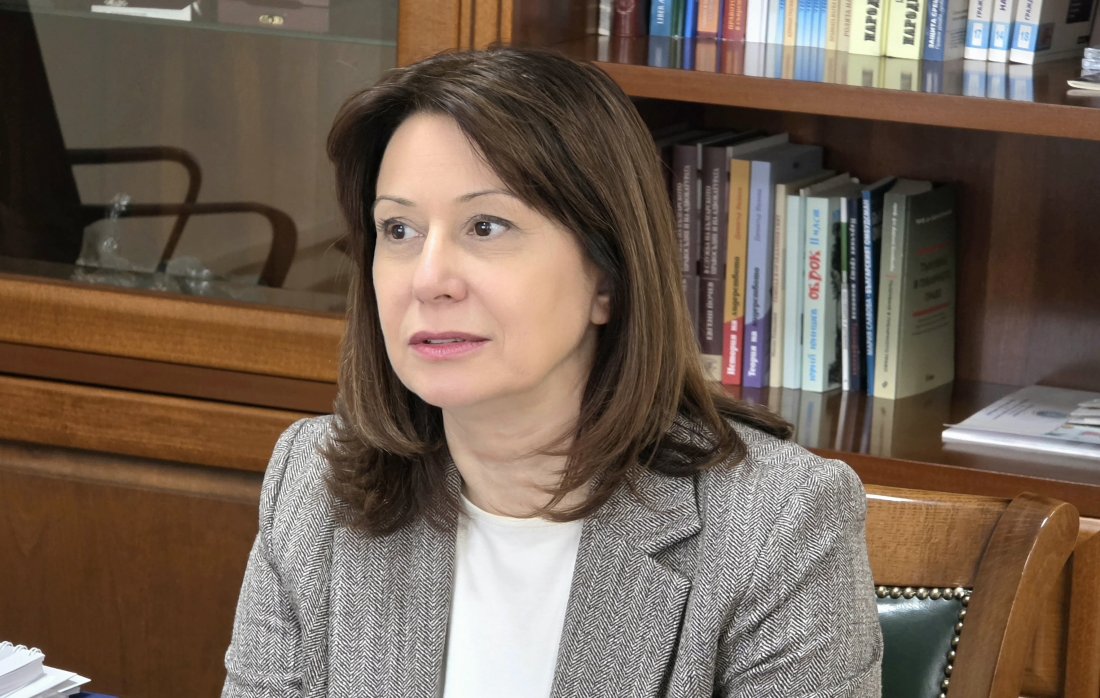

The Ombudsman, Velislava Delcheva, has sent a proposal to Prime Minister Rumen Radev and Finance Minister Galab Donev calling for consideration of a temporary reduction in the 20% VAT rate on natural gas supplied to household consumers during the 2026–2027 heating season, the institution announced on November 6.
The proposal comes in response to a sharp increase in natural gas prices. As of 1 November 2026, approved prices for household consumers had risen by between 46.33% and 56.50% compared with the same period last year.
“In my capacity as Ombudsman, and with a view to ensuring affordable heating and reducing the risk of households falling into debt, I propose that the Government consider amending and supplementing the Value Added Tax Act to temporarily reduce the 20% VAT rate on supplies of natural gas for the domestic use of final household consumers during the 2026–2027 heating season. I propose that the measure cover the period from 1 December 2026 to 30 April 2027,” Velislava Delcheva wrote.
She pointed out that the price increase also exceeds the projections set out in the Ministry of Finance's Autumn 2026 Macroeconomic Forecast, which envisaged a natural gas price of €68/MWh.
At the same time, there is no protection mechanism in place for households using natural gas to offset the rising prices. Unlike consumers of heating and electricity, for whom the Energy and Water Regulatory Commission (EWRC) has already announced the possibility of keeping prices unchanged after 1 January 2027, household gas consumers remain exposed to monthly price fluctuations.
The Ombudsman stressed that switching to an alternative heating method within a single heating season would entail significant and unforeseen costs for households with existing gas heating systems.
The proposed measure is also compatible with European legislation. Directive 2006/112/EC, as amended by Directive (EU) 2022/542, allows a reduced VAT rate to be applied to natural gas supplies until 1 January 2030.
The tax reduction would apply exclusively to household consumers. This is because VAT represents a final cost for households, whereas business consumers entitled to full input VAT deduction can offset the tax burden through the VAT deduction mechanism.
2027 Budget: Higher Revenue and Spending, New Borrowing and Cuts to Public Administration
Konstantin Trenchev Dies – One of the Defining Figures of the Trade Union Movement and Bulgaria’s Transition
Konstantin Trenchev, Founder of "Podkrepa" Trade Union Confederation, Has Passed Away
Seven People Charged with Involvement in Criminal Group, Four Linked to Customs Control
Гълъб Донев: Ако не спрем галопиращите дефицити и дълга, неминуемо катастрофата е сигурна
Опозицията разкритикува Бюджет 2027: Води страната към рецесия и трайно обедняване