The April Uprising stands as an expression of will, choice and a longed-for act of self-sacrifice that carried the light of the Bulgarian National Revival towards statehood. Freedom, she said, is not a mere dream, but a conscious choice that undermines the dictate of lawlessness as the only path to historic change.
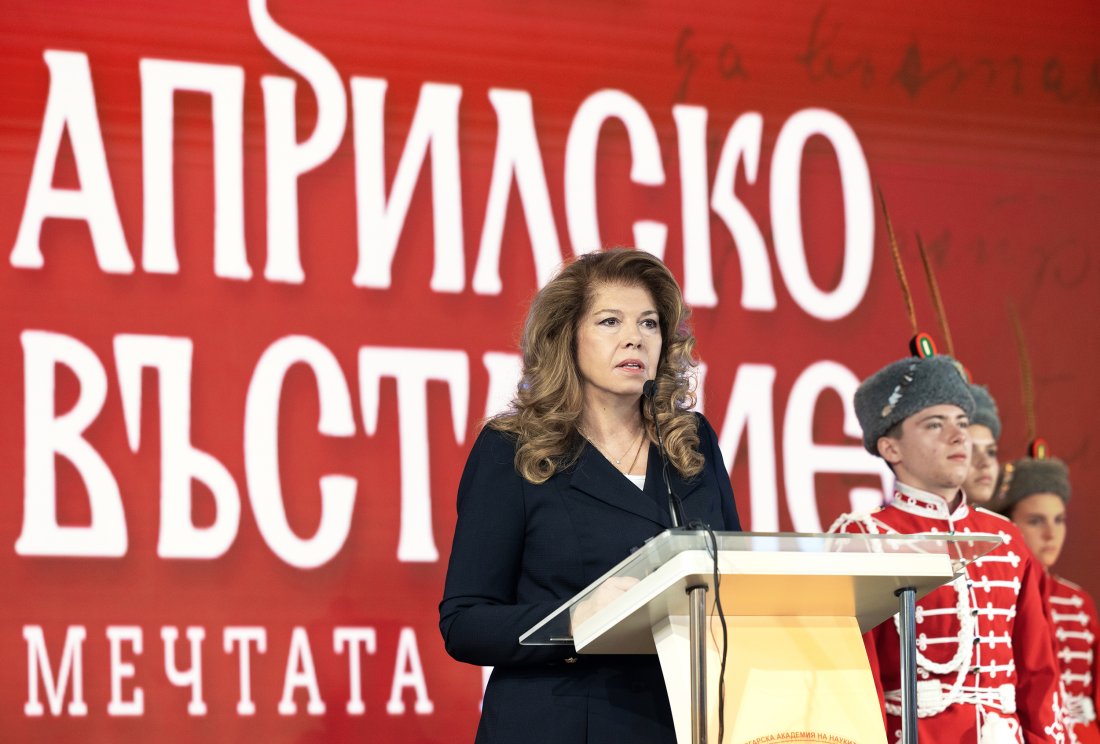
This was stated by Bulgarian President Iliana Iotova during the nationwide commemorative assembly on April 27 marking the 150th anniversary of the April Uprising.
The event, organised by the Bulgarian Academy of Sciences, formed part of the commemorations of the anniversary of the April Uprising, which are being held under the President’s patronage. The Head of State expressed her gratitude to the leadership of the Bulgarian Academy of Sciences for its active role in the commemorative celebrations.
Iliana Iotova, President of Bulgaria: "You have once again rekindled the buried embers of our national memory and inspired the whole of Bulgarian society to remain true to its duty.”
The President also expressed her appreciation to local authorities, to towns and villages, schools, community cultural centres, amateur ensembles, professional orchestras, and to all the people across Bulgaria whose efforts are contributing to the dignified commemoration of the anniversary.
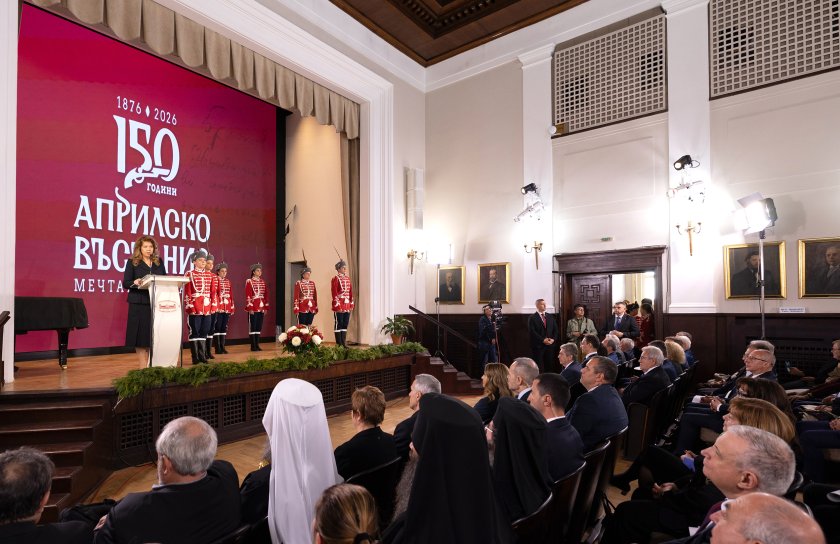
Iliana Iotova, President of Bulgaria: “Even today, we wish, if only for a moment, to put on the embroidered garments of freedom that made the proud insurgents feel that freedom and become heralds of a new Bulgaria.”
According to her, the defiant spirit of that cause—forever seeking freedom and justice—remains alive because it is in our genes, and because we feel the need to follow those ideals and identify with the heroes.
Iliana Iotova, President of Bulgaria: “Our forefathers’ aspiration for freedom and human justice is especially necessary to us now, at this complex moment in national, European and world history.”
The Head of State highlighted the role of Bulgarian education and enlightenment, which has left an enduring mark on the nation’s destiny, creating, inspiring and illuminating our history from its earliest days to the present.
The President underscored the importance of the Bulgarian Literary Society, the Bulgarian Exarchate, and Bulgarian schools and community cultural centres, where the spiritual elite of the nation prepared the future revolution through education, faith, history and language.
The beginning was set by two Bulgarian saints—Paisius, who blessed it from his dark monastic cell on the heights of Mount Athos, and Deacon Levski, who from the height of the “glorious gallows”, with his lion-hearted leap through time, continues to inspire us, the President recalled.
She also emphasised the power of the written word of Dobri Voynikov, Dobri Chintulov, Vasil Drumev, Iliya Blaskov and Nayden Gerov, as well as the fiery words of Georgi Rakovski, Hristo Botev and Lyuben Karavelov.
Iliana Iotova, President of Bulgaria: “Freedom already exists, because in the words and images of their writings lives the free individual, and self-sacrifice in the name of the homeland is not death, but immortality. Word merges with deed, and the spiritual awakening of the nation becomes an inevitable precondition for the uprising.”
She stressed that above spirit, word and weapon stands only the Cross, as a living bond between the oath before Father Gruyu—who swore in the delegates at Oborishte and consecrated the banner of the uprising—and the act of self-sacrifice.
Iliana Iotova, President of Bulgaria: “The priest raises it high above the smoke of gunpowder—not as a symbol of submission, but as a blessing of sacred wrath that transforms the slave into a dignified human being. It is the only support when earth merges with sky in the flames of rebellion, illuminating our path to Golgotha before being resurrected in Freedom.”
According to the Head of State, the April Uprising crowned the brilliant revolutionary strategy of the leaders of the Bulgarian National Revival. The April insurgents embraced the ideal of a “pure and holy republic”, of equality before the law, and of transcending ethnic and religious prejudice.
Iliana Iotova underlined that, for the insurgents, the exhilaration of being free—even if only for a few moments—was far stronger than fear.
Iliana Iotova, President of Bulgaria: “To know that you will not live to see freedom, yet to bestow it upon others—this is the highest form of self-sacrifice. The world was shaken after the suppression of the uprising; Europe awoke horrified by the bloody flames engulfing burning villages and towns. You kill your child, your wife and yourself—but you will not live as a slave!”
The President recalled this in reference to the insurgent residents of Perushtitsa at the time, who lost their lives in the Church of St Archangel Michael.
Iotova stressed that the chains of slavery were melted in streams of blood. Humanitarian Europe raised its voice in defence—louder than arrogant diplomacy and so-called “great considerations”, she said, recalling the Emperor’s appeal in Russia and the liberation campaign undertaken by ordinary people.
Iliana Iotova, President of Bulgaria: “The resonance of the 150th anniversary of the April Epic will not end in April 2026; together with it, we shall enter the 14th century of the Bulgarian state.”
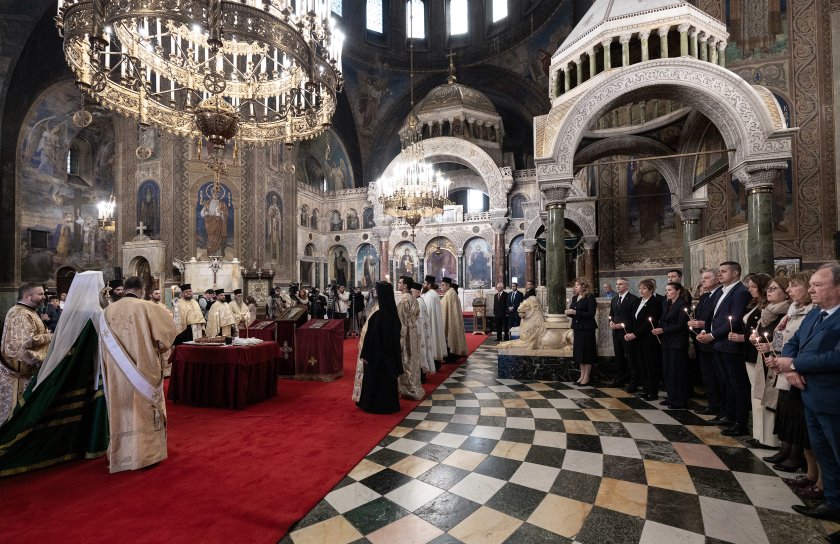
Before the commemorative ceremony, the Head of State attended a memorial service for the victims of the April Uprising, officiated by the Bulgarian Patriarch and Metropolitan of Sofia, Daniil, at the St Alexander Nevsky Cathedral in Sofia.
The President and the Bulgarian Patriarch led a procession to the building of the Bulgarian Academy of Sciences, joined by representatives of the academic community.
***
The April Uprising broke out prematurely on April 20 in 1876 (May 2, New Style calendar). It was suppressed by the Ottoman authorities, but produced a wide international response and indirectly resulted in the establishment of Bulgaria as an independent nation in 1878.
Despite the defeat and atrocities committed by the Ottoman Empire in Batak, Perushtitsa, Klisura, Panagyurishte, the action was a political success, making the Bulgarian question part of the agenda of European diplomacy at the time.







 Чуй новините
 Подкаст