More than 8,000 checks, fines for more than 1 million euros and increased controls before the holidays - what the data show
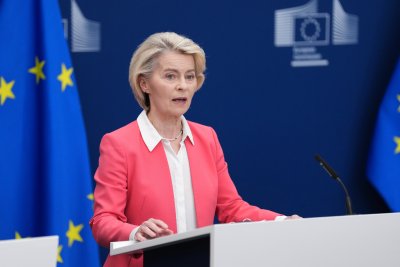
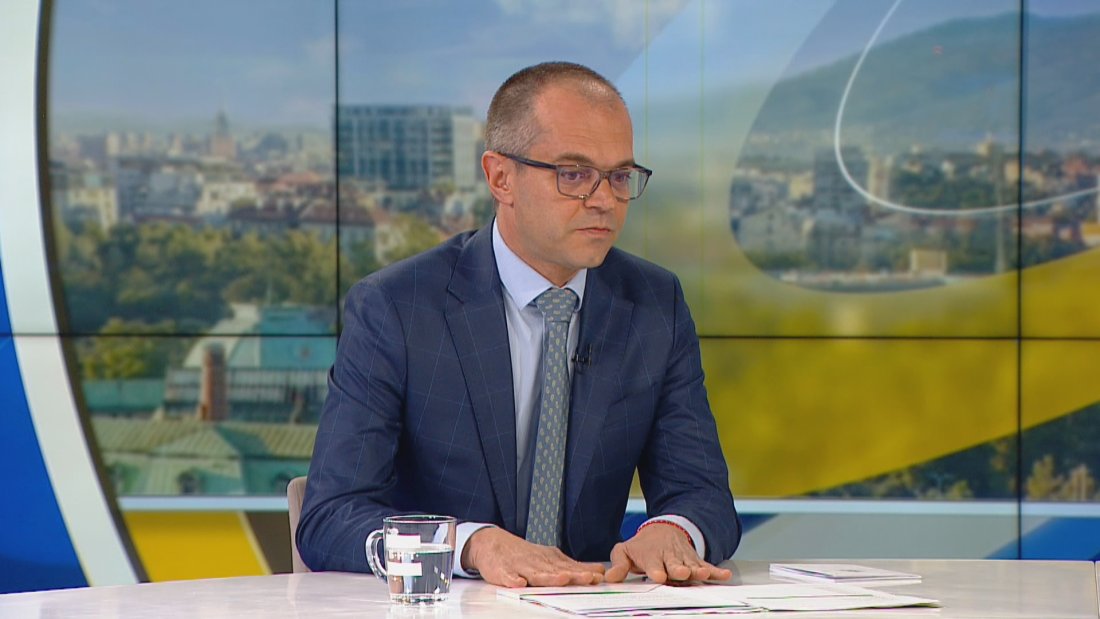
The Chair of the Consumer Protection Commission (CPC), Alexander Kolyachev, said on the programme “The Day Begins” on March 31 that there is currently no significant increase in the prices of staple food products, despite a widespread public perception of rising costs. His comments come amid heightened public interest, institutional meetings, and upcoming mass inspections ahead of the Easter holidays.
He stressed the need for clear distinction:
“When we talk about price increases, we need to clearly distinguish what prices are rising – goods or services. With regard to the goods we monitor, namely staple food products, which are our primary focus across a large number of retail outlets in the country, from the introduction of the euro to the present moment, we have not observed any serious increase in prices.”
He added that the institution acts immediately when irregularities are identified:
“Where we have identified such price increases, we have intervened in the market immediately and taken all measures available to us under the law.”
Since the law introducing the euro came into force, thousands of inspections have been carried out:
“Since the law on the introduction of the euro came into force, we have conducted more than 8,000 inspections and imposed over €1 million in fines. However, that is not the most important thing.”
Nevertheless, Kolyachev acknowledged that the situation is not uniform across all sectors:
“We do not observe an increase in the prices of staple food products, but that does not mean there are no increases in some sectors, such as the restaurant business, services, tourism, and transport.”
photo
According to him, the commission does not have the authority to regulate prices themselves, but only monitors for unfair practices at the final point of sale:
“Our legal powers are to monitor whether the final point of sale – that is, the shop, the hair salon, the taxi driver – is engaging in unjustified price increases. However, how the product arrives, at what prices, who resells it, and what mark-ups are applied – we have no authority there.”
He also highlighted the role of market mechanisms:
“The price of a product, as we still live in a market economy, is determined at every level along the chain. From the producer, who knows their production costs and pays workers’ wages – if those increase, they will, of course, raise the price of their product.”
Addressing the key question of why people feel prices are rising while institutions report stability, Kolyachev said:
“I cannot engage in that line of argument, because if we are talking about food products, it is not true. If we are talking about your bills, which you pay every month, the fees you are required to pay, increased taxes and various other services that create the perception of rising costs – then yes. But as for food products, there is really no point in talking about.”
Data indicate a change in price dynamics in March:
“In March, we observed some deviations from normal price movements through monitoring on our website. What did we notice? The number of price increases became higher than the number of price decreases.”
Particular attention is being paid to the dairy sector:
“We are currently seeing a slight distortion, for which we have immediately taken measures. We have requested data from companies to determine the cause.”
From 1 April, mass inspections will begin, focusing on traditional Easter products and retail practices:
“Every year during the holidays, we plan a strong presence in markets to ensure consumers are not misled by false advertising or announced prices that are not actually honoured.”
The focus will be on key goods:
“Sweet Easter bread, eggs, lamb meat. Also home decorations, online trade during the Easter holidays, and even travel.”
Despite public concern, the number of complaints submitted to the commission has decreased:
“I can tell you that complaints have significantly declined, which is reassuring for us, as it shows we are managing to do our work in a timely manner and generally meet deadlines.”
Kolyachev also pointed to other areas of concern, such as electricity bills:
“This is a serious issue. We are holding ongoing discussions and working in various directions within our competences. Yes, we see that, for example, there were unacceptable clauses in the general terms and conditions of some companies.”
The commission will continue to monitor the market, particularly in the context of the euro’s introduction and the upcoming holiday period.


 Президентът Йотова: От деня на Съединението България се връща на географската карта на света
 Екзитпол: "Алтернатива за Германия" печели с над 44% вота в провинция Саксония-Анхалт










 Чуй новините
 Подкаст