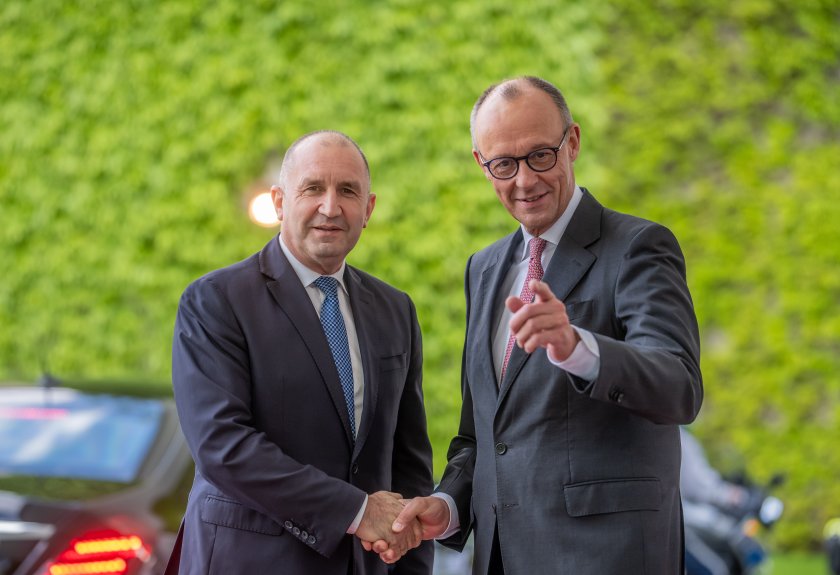
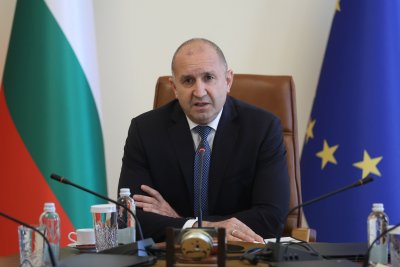
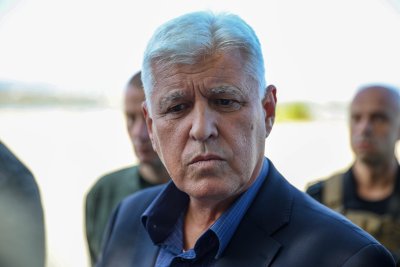
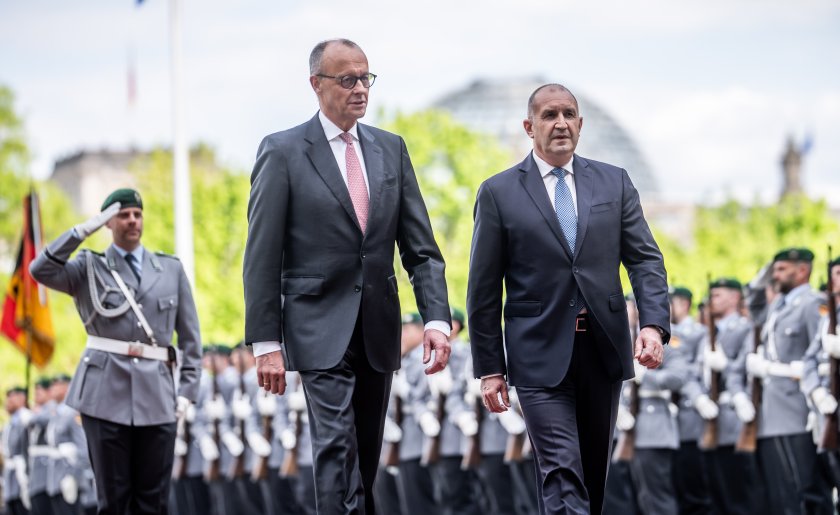
Prime Minister Rumen Radev has begun his first official visit to Berlin, with the trip not accidentally chosen to start in Germany, which he described as Bulgaria’s strategic partner.
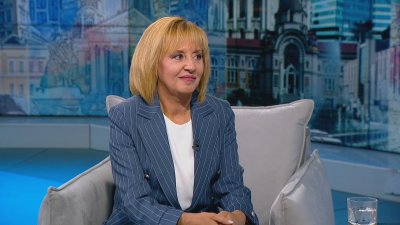
Reporting from Berlin, Milena Kirova said the Prime Minister was received at the Chancellery, where he held a one-to-one meeting with German Chancellor Friedrich Merz. A plenary session of the two delegations followed, attended by the Deputy Prime Minister and the Minister of Economy, as well as the Foreign Minister.
Discussions between Merz and Radev focused on investment, strengthening bilateral cooperation, and ongoing conflicts in Iran and Ukraine. The agenda also included European defence, military production and investment in Bulgaria, as well as cohesion policy and its long-term sustainability.
Prime Minister Rumen Radev has said Bulgaria is now positioned as an important partner within Europe, rather than a peripheral state.
He added that political instability in recent years had limited the country’s potential.
“Due to political instability, we have not been able to fully unlock our potential. For the first time in 30 years, we have a single political force that has won the elections. We now have a new government, and our aim is to strengthen the rule of law and introduce high-tech industries.
We are accelerating infrastructure and energy projects, alongside an assertive approach to attracting and safeguarding foreign investment, strengthening security and enhancing Europe’s industrial resilience.
In a context of war, Europe must play a much stronger role in diplomacy to de-escalate tensions and restore peace. We also need a clear strategy for our own investment capacity,” he said.
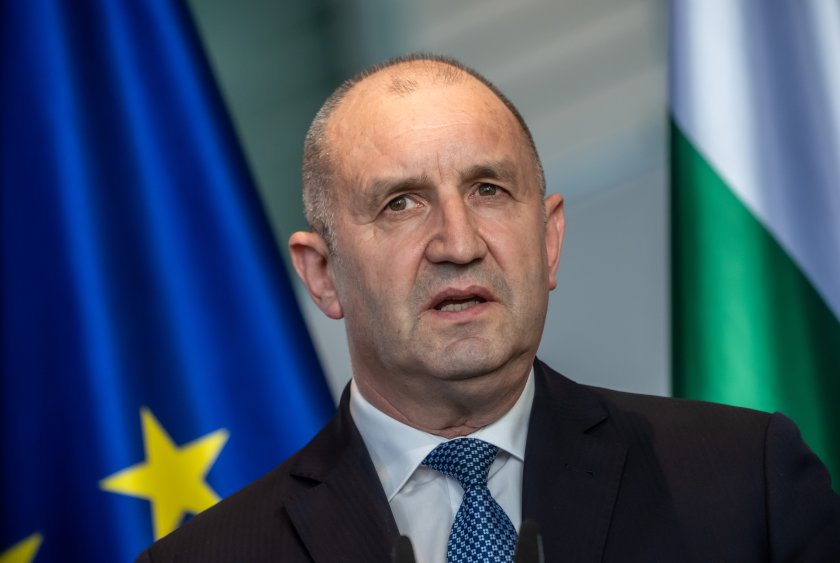
German Chancellor Friedrich Merz said Germany remains Bulgaria’s largest trading partner and expressed satisfaction that the two countries can continue strengthening their ties within the European Union.
“Germany is the largest trading partner for Bulgaria. I am pleased that we can continue these links within the EU. Strengthening the competitiveness of the EU is one of our main goals. We must reduce corruption and expand cooperation,” he said.
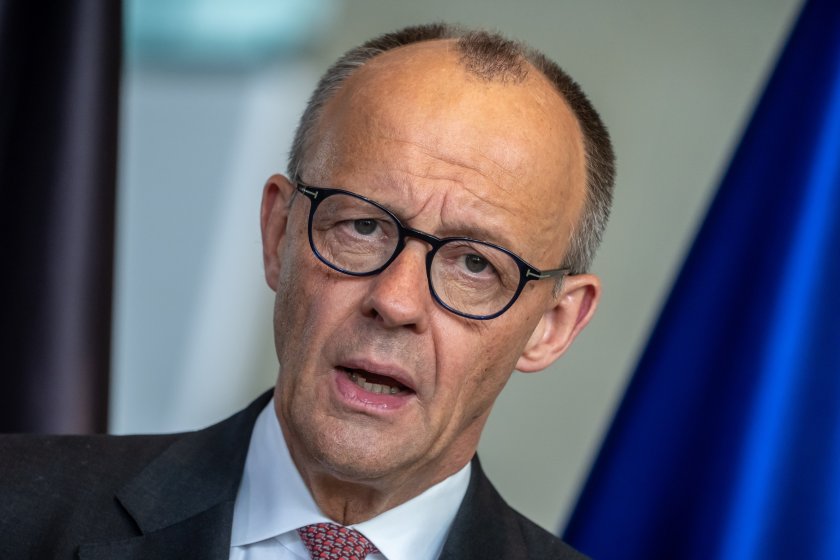
German Chancellor Friedrich Merz said that Europe will continue efforts to achieve a lasting and just peace settlement in Ukraine, following discussions held during the talks.
“On the security challenges facing Europe, I can say that we will continue our efforts for a lasting and fair peace solution in Ukraine, and this is what we discussed. We are increasing, and will continue to increase, pressure on Moscow. Kyiv can rely on our consistent and unwavering support.
Europe is ready to sit at the negotiating table with Ukraine, Russia, and the United States. I am pleased, dear Rumen Radev, that Bulgaria will follow this path of European solidarity. The fact that, since the new Hungarian government took office, a new cohesion has emerged in Europe will bring us closer to peace,” he said.
He also underlined that Iran should not hold the world as hostage.
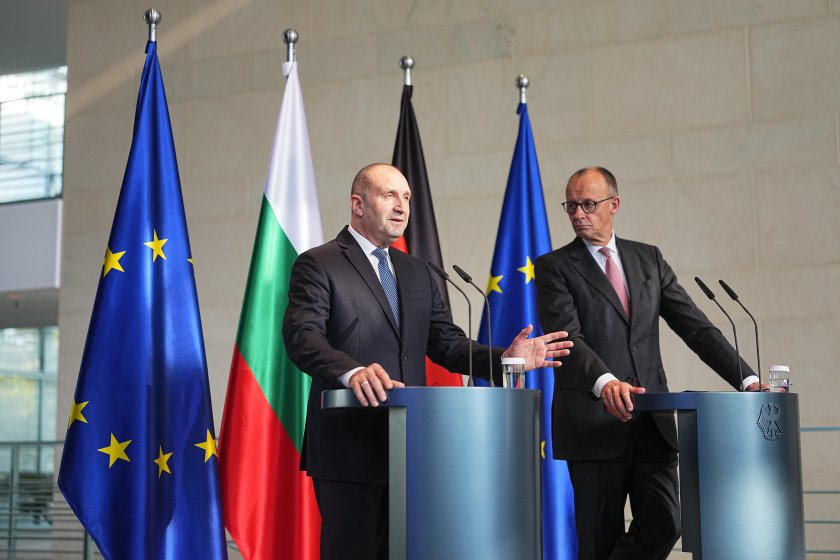
Photos by AP/BTA
“Iran should no longer hold the entire world hostage. Its military nuclear programme must be ended, and in a way that can be verified. We will not tolerate attacks against Israel and our partners in the region.
Iran must reopen the Strait of Hormuz for free and unrestricted navigation, and we will continue to advocate for this. Last Friday I spoke with President Trump — we were in agreement on the objectives and the need for a negotiated solution,” he said.
Prime Minister Rumen Radev has said there is strong potential for joint projects beyond Rheinmetall, highlighting opportunities in defence and high-technology cooperation.
He pointed to IST systems within the broader European defence shield, the procurement of various types of ammunition, and the integration of weapons systems, including anti-ship capabilities.
“For us, it is important to be able to maintain these high-tech platforms ourselves. In terms of drones, Bulgaria is becoming increasingly capable,” he said.
He added that defence should not be understood solely in terms of weapons, noting a major joint project for a large-capacity “gigafactory”.
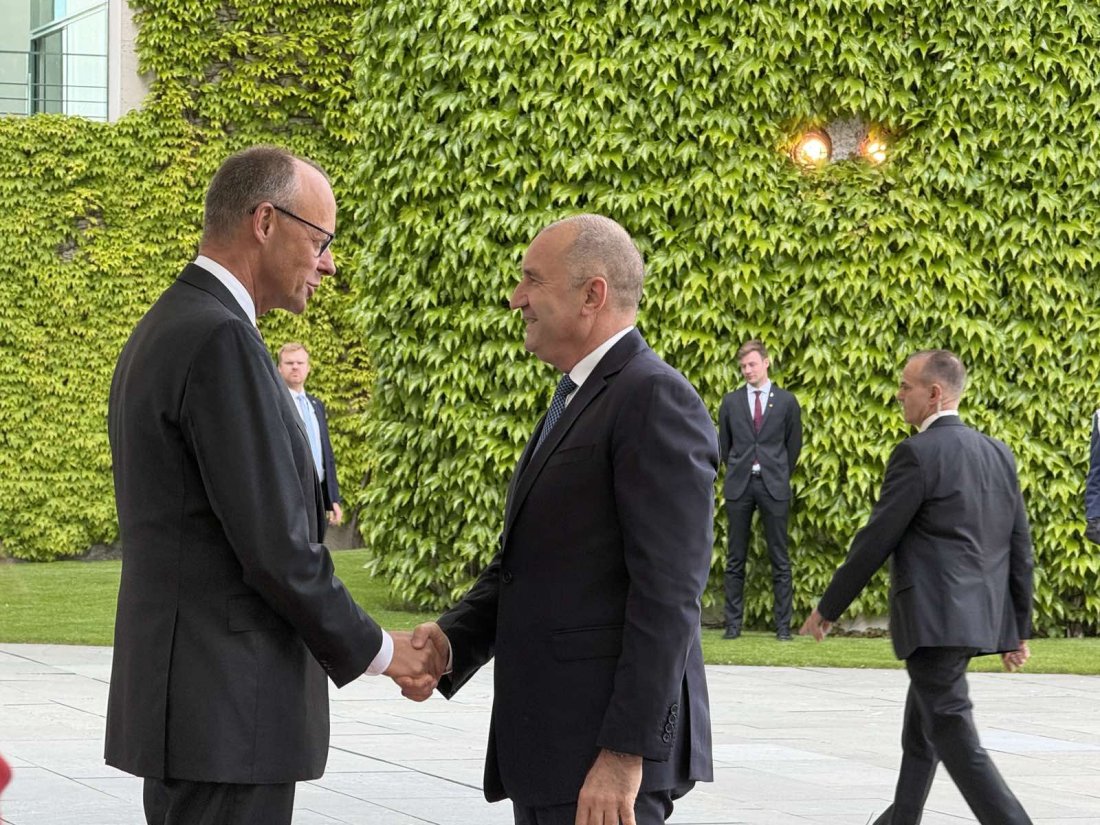
German Chancellor Friedrich Merz said that deeper cooperation in defence production is essential, arguing that scaling up manufacturing would help reduce costs and strengthen Europe’s overall defence capacity.
“There should be cooperation, production volumes must increase, and in this way prices will be reduced. Only then will we have a serious European defence capability. The systems we produce must be in large quantities,” he said.
Separately, Prime Minister Rumen Radev said Bulgaria must also work towards achieving food sovereignty.
Prime Minister Rumen Radev said that a sustainable cohesion policy and a strong Common Agricultural Policy are essential for Europe’s long-term food security.
“For us, it is important to have a sustainable cohesion and Common Agricultural Policy. This means food security. In this way, we will guarantee Europe’s overall security so that it can be a global factor,” he said.
German Chancellor Friedrich Merz called for a more rational agricultural policy, with less bureaucracy and more open markets.
“We need a sensible agricultural policy — less bureaucracy and more open markets,” he said.
He also noted the importance of stable financing for public service media/
"The two public media depend on a floating budget. It is important for us to ensure stable funding for public media without depending on the government."






 Чуй новините
 Подкаст