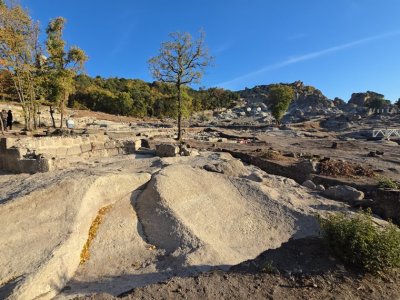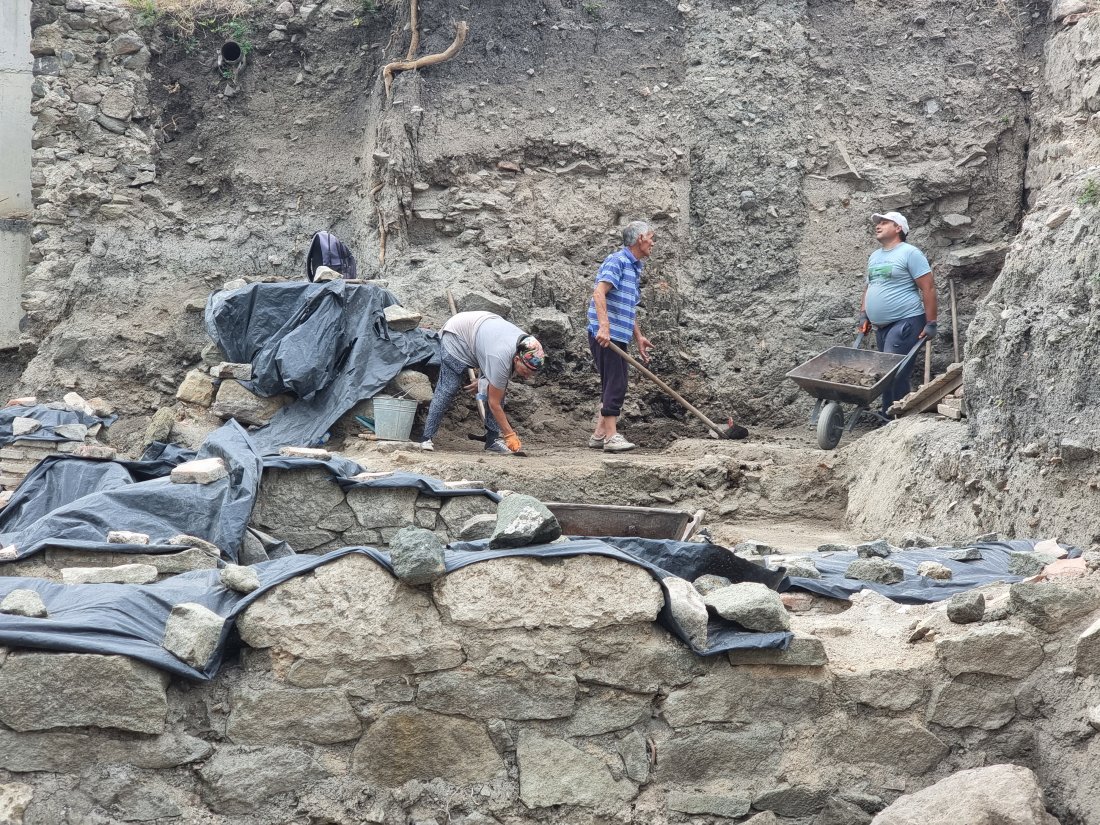
An inscription dating from the reign of Roman Emperor Trajan (AD 98–117) has been discovered during archaeological excavations at the ancient city of Aquae Calidae near Burgas, the Regional Museum of History in the coastal city said. The artefact provides evidence of Aquae Calidae’s development and importance during the Roman era and adds to the written monuments already known from the site.
The excavations are being led by Associate Professor Dimcho Momchilov, while epigraphist Dr Nikolay Sharankov of Sofia University “St Kliment Ohridski” is working on deciphering and scientifically interpreting the newly discovered inscription.
Several Roman inscriptions in Latin dating from the first and second centuries have been discovered at Aquae Calidae in recent years. One of them dates from the reign of Emperor Nero. Several votive altars with second-century dedications have also been found. The archaeological excavations are being carried out by the Burgas museum with financial support from Burgas Municipality.
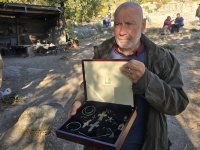
Earlier this year, the archaeological team working at the site summarised the most significant discoveries made in 2025 – part of a Roman marble pool, a medieval church and dozens of artefacts, including seals, coins and fine pottery. A year earlier, archaeologists discovered a nymphaeum during excavations at Aquae Calidae. It occupies a central position in the former Roman baths and was part of a fountain featuring an inscription and a statue of the three nymphs who were believed to protect the mineral springs.
Source: BTA


 Гледайте първия епизод от новия, шести сезон на култовия сериал "Под прикритие" по БНТ










 Чуй новините
 Подкаст