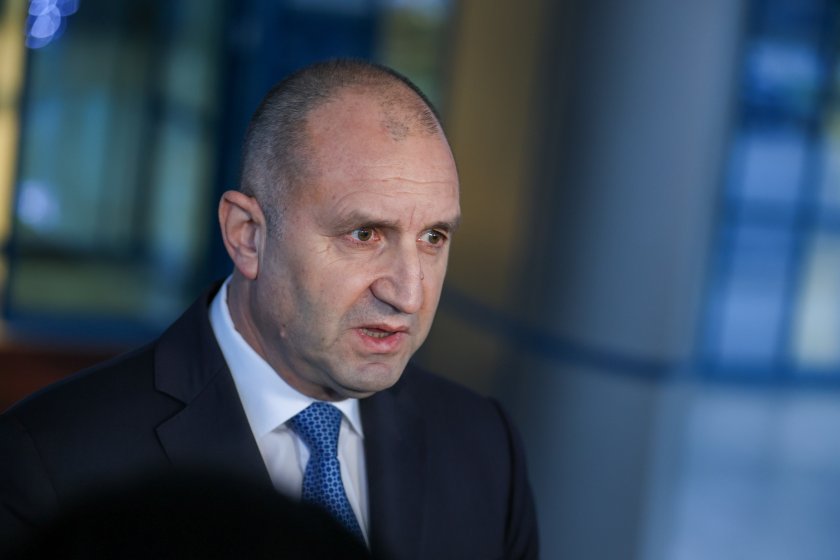
After the composition of the caretaker government became clear, Bulgaria’s President from 2017 to 2026, Rumen Radev, wrote on Facebook on February 18 that the "assemblage" had excluded the presidential institution from formation of caretaker governments.
“The result is visible today,” Radev wrote, adding that the caretaker cabinet includes “clearly partisan and politically affiliated figures”. According to the former President, responsibility for the government rests solely with the Prime Minister and the parties participating in it.
“In essence, this is a partisan cabinet,” he said, calling on the public to closely monitor both the actions of the caretaker government and the preparation and conduct of the elections.
Rumen Radev, President 2017-2026: The assemblage sidelined the presidential institution from the formation of a caretaker government. The result we see today: a caretaker cabinet with pronounced partisan and political affiliations. Responsibility for it rests solely with the Prime Minister and the parties involved in his government. In essence, this is a partisan cabinet. I call on our entire society to closely monitor the actions of the caretaker cabinet and the preparation and conduct of the elections. Let us, through our vote in April, hold accountable the parties that encroached upon the Constitution in the name of power.”
Political Reactions to the Proposed Caretaker Government Line-Up
The New Caretaker Cabinet: Who Are the Ministers in Andrey Gyurov's Government?
***
The "assemblage" (referred to in Bulgarian political discourse as sglobkata or "the assemblage/patchwork") is a term often used to refer informally to the power-sharing cooperation between the two main political blocs in the Bulgarian government from June 2023 to March 2024: "We Continue the Change – Democratic Bulgaria" (WCC-DB) and GERB-UDF. The term highlighted the nature of the arrangement as a potentially reluctant or temporary gathering of different political entities, rather than a traditional, cohesive coalition government. The "assemblage" was designed to rotate prime ministers every nine months, but it fell apart before the agreed rotation.
Constitutional changes passed in December 2023 reduced the power of the President, specifically targeting the ability to appoint caretaker governments. Previously, the President had total discretion in appointing a caretaker Prime Minister.
The new rules restricted the President to choosing a caretaker PM from a limited list of 10 senior officials: the Speaker of Parliament, the Governor/Deputy Governor of the Bulgarian National Bank (BNB), the Chair/Deputy Chair of the National Audit Office, or the Ombudsman/Deputy Ombudsman.








 Чуй новините
 Подкаст