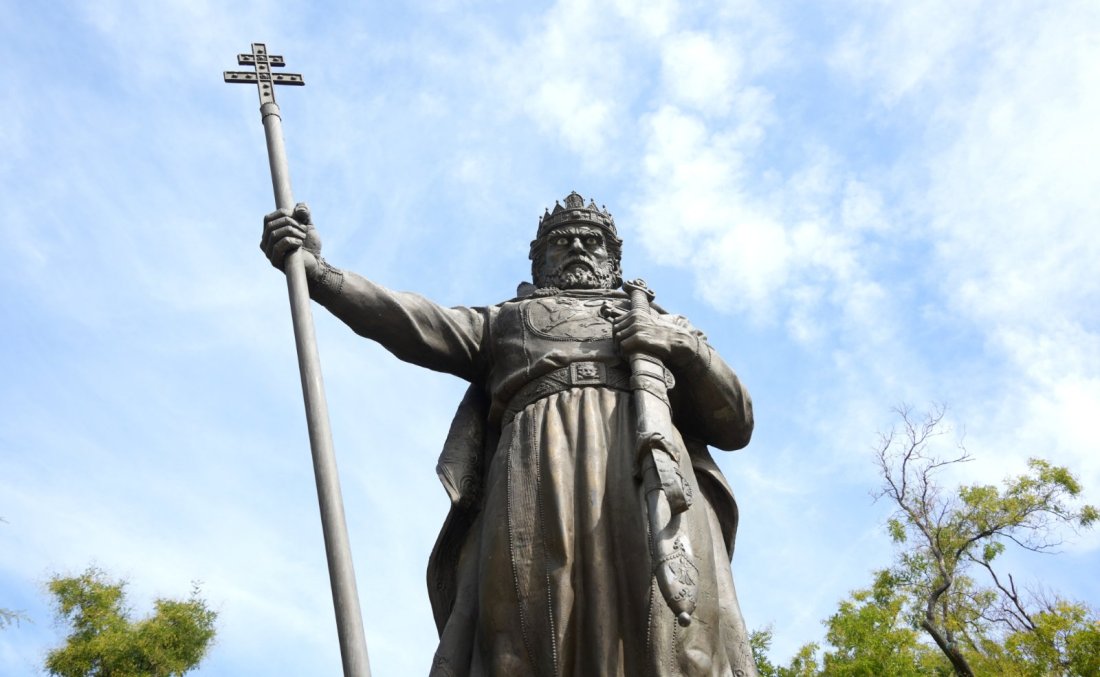
Who was Tsar Samuil of Bulgaria? How did he become ruler, which battles against Byzantium did he win, and which did he lose? And how did he come to be remembered as the Bulgarian ruler with the most tragic fate? Associate Professor Albena Milanova of the Prof Ivan Duychev Centre for Slavo-Byzantine Studies explains.
Tsar Samuil of Bulgaria was born in 958. He belonged to the Cometopuli dynasty. His father, Count Nikola, ruled Sredets. His mother was named Ripsimia and is believed to have been of Armenian origin.
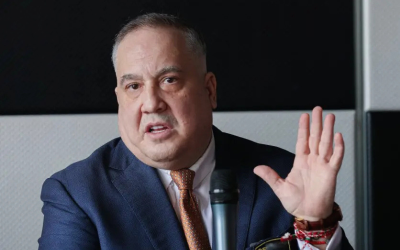
Associate Professor Albena Milanova, 'Prof Ivan Duychev' Centre for Slavo-Byzantine Studies: “And perhaps she was connected, through a much more distant line, indirectly with the Bulgarian royal court and the Krum dynasty. But there is no direct connection. He was the first indirect heir to power who was not directly linked to the Krum dynasty.”
Samuil had three older brothers – David, Moses and Aaron. Towards the end of the first millennium, the Byzantine Empire regained its power in the Balkans as a result of the successes of rulers from the Macedonian dynasty. Emperor John Tzimiskes conquered Great Preslav. Samuil managed to preserve the Bulgarian state in its western territories.
Associate Professor Albena Milanova, 'Prof Ivan Duychev' Centre for Slavo-Byzantine Studies: “He had sufficient political wisdom not to provoke a dynastic crisis in the country at such a difficult time. While the last direct heir of the Krum dynasty, Roman, was alive, he respected his authority, and only after Roman’s death did he assume the title of Bulgarian tsar.”
For nearly half a century, Bulgaria remained on a war footing, engaged in continuous battles with Byzantium. Samuil commanded the army. He not only defended Bulgarian lands, but also conquered new ones.
Associate Professor Albena Milanova, 'Prof Ivan Duychev' Centre for Slavo-Byzantine Studies: “The Byzantines describe him as a very energetic man who knew no rest and was highly warlike. He was a stern, strong warrior who forged his place in the state through his personal qualities.”
David and Moses were killed in battles with Byzantium. The third brother, Aaron, was killed in order to preserve the unity of the state. Samuil’s wars with Byzantium brought a succession of victories and defeats.
His greatest victory came in 986 at the Battle of Trajan’s Gate. Byzantine Emperor Basil II only narrowly escaped. At the Spercheios River, however, Samuil suffered a defeat.
Associate Professor Albena Milanova, 'Prof Ivan Duychev' Centre for Slavo-Byzantine Studies: “A tactical error by the Bulgarian army led to both him and the heir to the throne, Gavril Radomir, being wounded. They survived only because they pretended to be dead. They then fled.”
The wound Samuil sustained at the Spercheios River is one of the anthropological markers used to identify his skeleton on St Achilleios Island.
The second major defeat came near the village of Klyuch in 1014. There, Basil II captured 15,000 Bulgarian soldiers, blinded them and sent them back to Samuil, leaving one man in every 100 with one eye to lead the others. This proved too much for the ruler.
Associate Professor Albena Milanova,' Prof Ivan Duychev' Centre for Slavo-Byzantine Studies: “According to the sources, he became unwell, asked for water, drank some water and died two days later. This has led some scholars to suggest that there may have been an internal coup and that the ruler was poisoned... But in any case, the initial shock came from that tragic sight.”
Samuil died at the age of about 70. He was succeeded by his son, Gavril Radomir, but only briefly. His cousin, Ivan Vladislav, killed him.
What is Tsar Samuil’s significance in Bulgarian history?
Associate Professor Albena Milanova, 'Prof Ivan Duychev' Centre for Slavo-Byzantine Studies: “Samuil embodies this exceptionally resilient Bulgarian spirit and a strong sense of statesmanship. He managed to lead the state through an extremely difficult period and to do so with dignity, at the cost of many personal sacrifices, through his personal example and with great selflessness.”
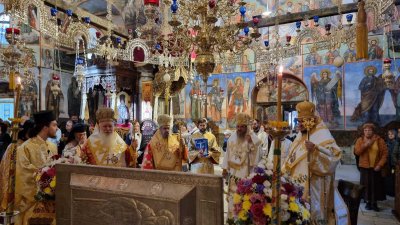
Perhaps it is precisely because of these qualities that, in an irony of history, Tsar Samuil will also be the only medieval Bulgarian ruler whose remains will find their final resting place in the heart of Bulgaria.







 Чуй новините
 Подкаст